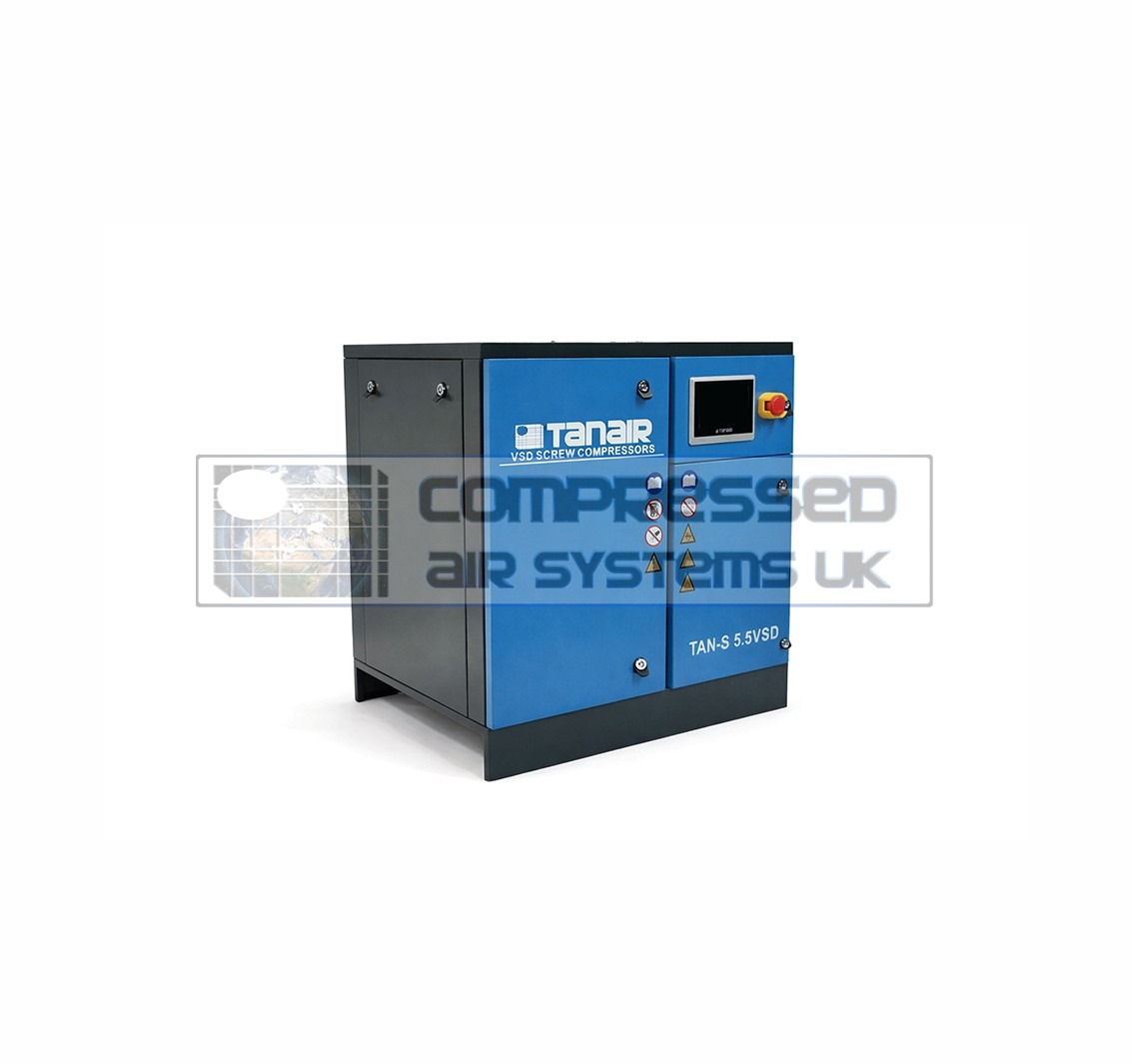
TAN-S 5.5 VSD
5.5 kW · 19 CFM @ 10 barCompact PM-VSD option for suitable workshop and light-industrial duties.
View Compressor →For UK workshops and manufacturers with changing air demand, a correctly sized variable speed compressor could reduce electricity costs. But is it the right investment for your business?
Explore Potential Savings → Request a Quotation →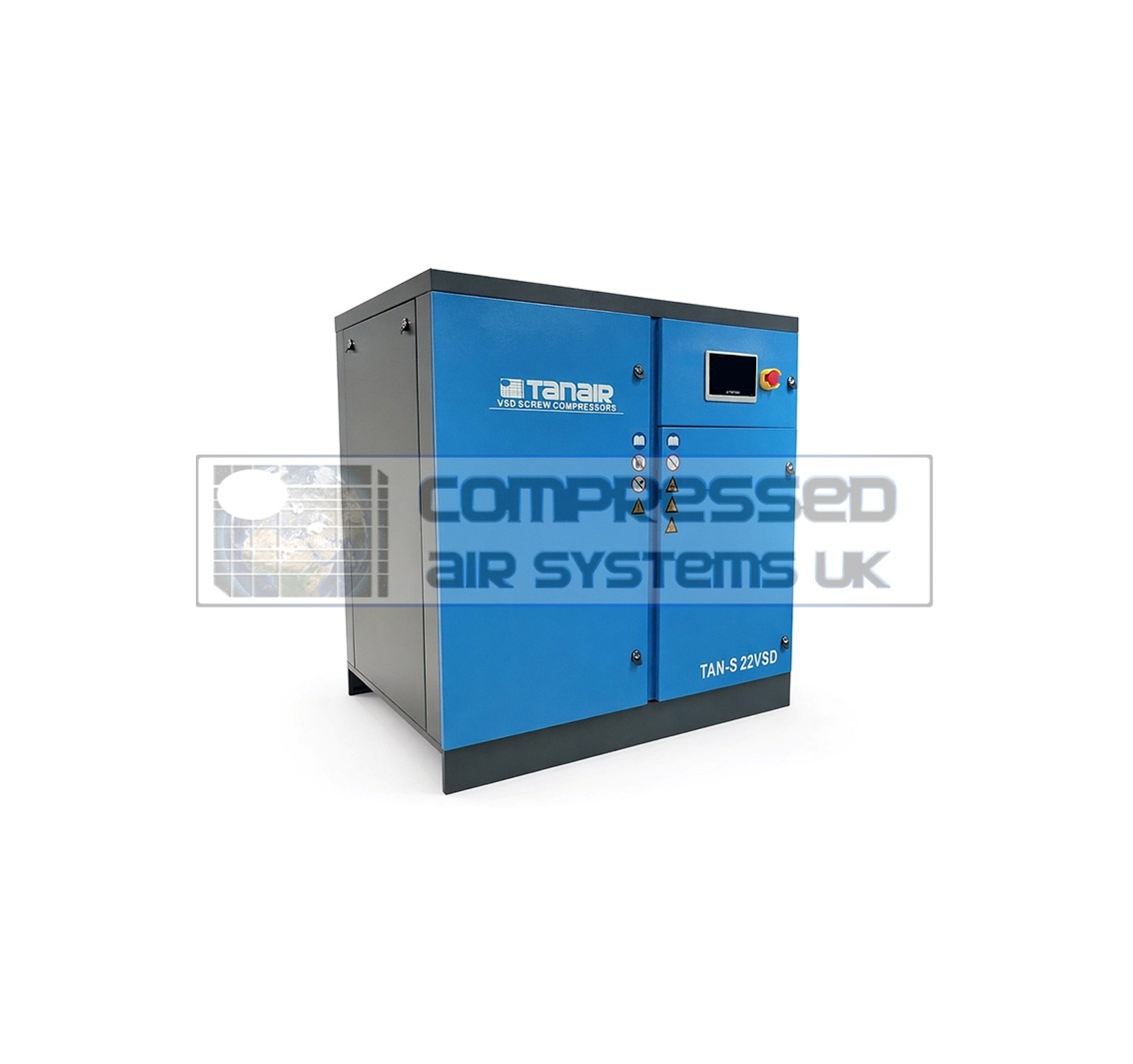
A VSD compressor can be a smart investment, but only when its output and operating range suit the way your site actually uses air.
Fixed-speed machines may be the more economical choice where demand is steady. If production demand rises and falls, however, variable speed drive (VSD) control may reduce wasted electrical power and shorten the payback period. The starting point is understanding your current operating profile, not simply choosing the newest technology.
A conventional fixed-speed rotary screw compressor generally runs at a set motor speed when loaded. When air demand falls, it may continue running unloaded before stopping, depending on the controls and system configuration.
A variable speed drive compressor adjusts motor speed to follow compressed air demand within its designed operating range. This can reduce inefficient unloaded operation and help stabilise system pressure.
VSD is not a guarantee of lower running costs. A machine operating near full output for almost every shift may see less benefit than a workshop with substantially changing demand.
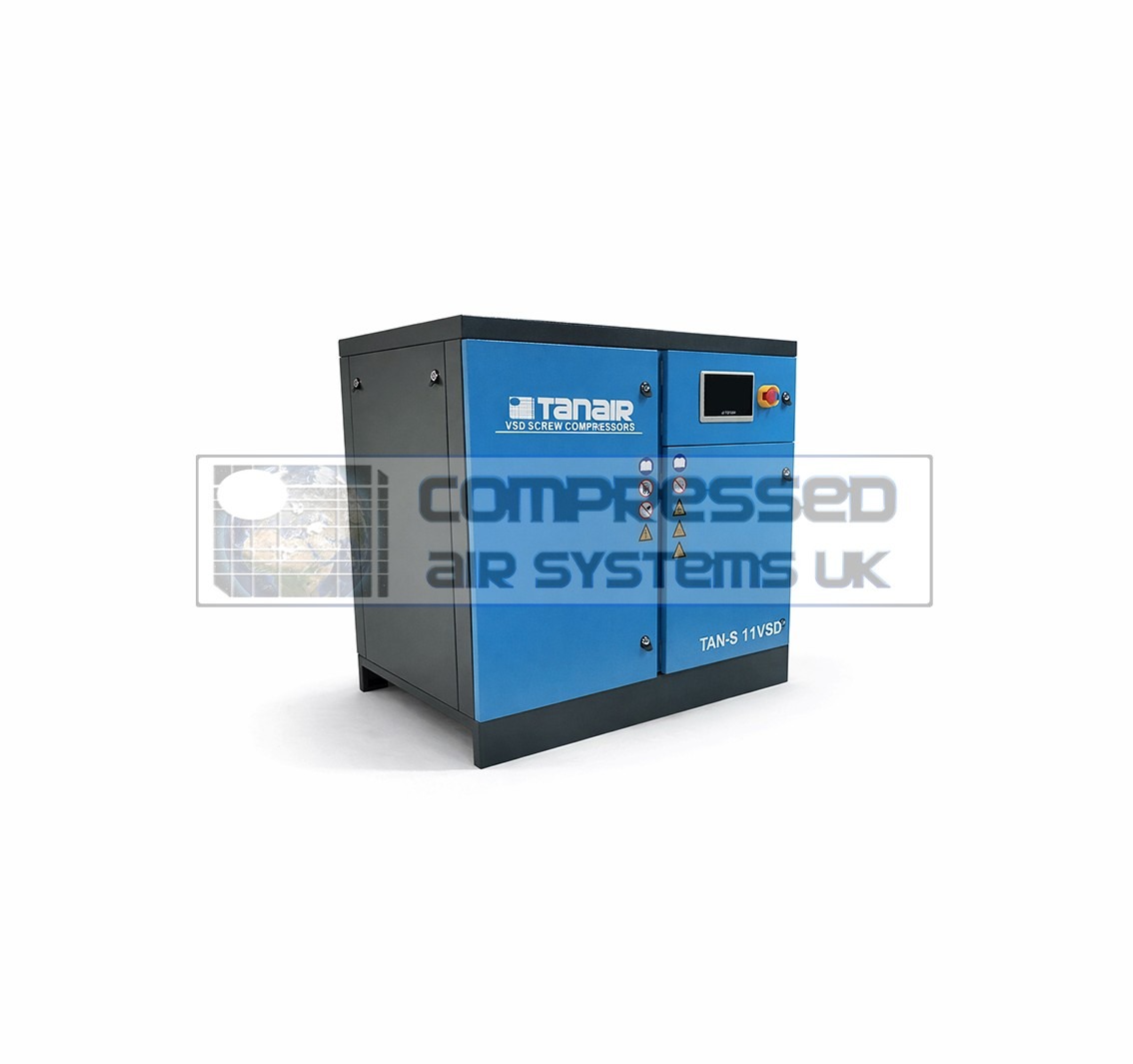
An existing 11 kW compressor does not automatically mean your business needs another 11 kW machine. Air demand, working pressure, duty cycle and future capacity requirements should all be reviewed.
For illustration, assume a workshop uses compressed air for 2,000 hours per year and pays 25p per kWh for electricity. If a properly selected replacement reduces its measured average electrical input from 10 kW to 8 kW, the annual comparison would look like this:
| Example metric | Existing system | Replacement system |
|---|---|---|
| Average electrical input | 10 kW | 8 kW |
| Annual operating hours | 2,000 | 2,000 |
| Annual electricity usage | 20,000 kWh | 16,000 kWh |
| Electricity cost at £0.25/kWh | £5,000 | £4,000 |
In this example, electricity savings are £1,000 per year. If the VSD machine costs £1,500 more than an otherwise suitable fixed-speed option, the simple energy payback would be 18 months.
That is only a calculation example, not a Tanair product savings promise. A proper comparison should include capital costs, servicing, installation, operating conditions, and the actual electrical consumption of the alternatives.
Try Our ROI Calculator →Important: Figures above are hypothetical inputs used to explain the calculation, not measured results from a specific fixed-speed or Tanair VSD model. Actual savings vary with load profile, tariff, installation and operating conditions.
The Tanair TAN-S PM-VSD range includes the following 415 V three-phase machines. Rated airflow and operating requirements should be confirmed when selecting a model for your application.
Compact PM-VSD option for suitable workshop and light-industrial duties.
View Compressor →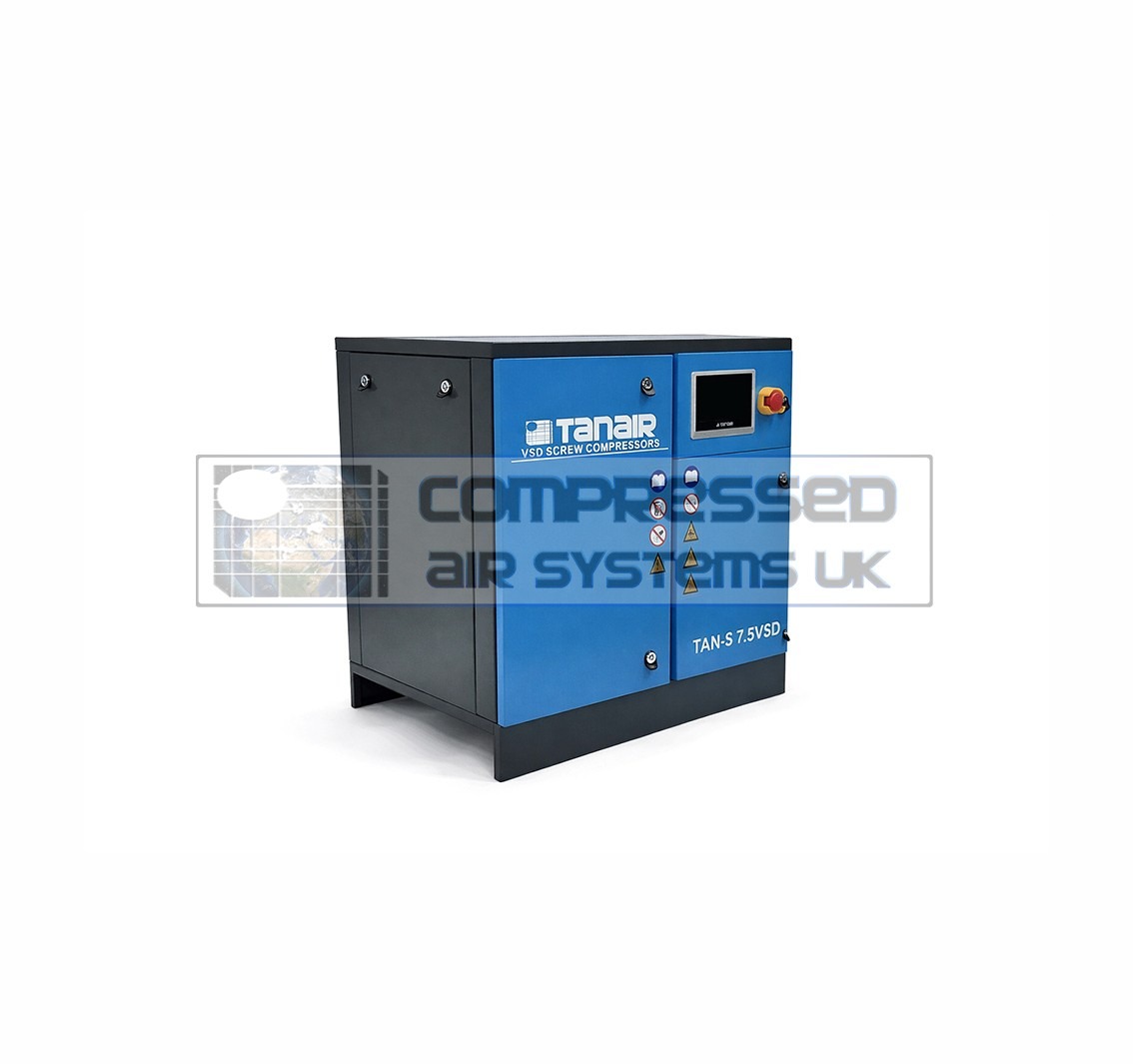
For variable compressed-air demand in workshop and manufacturing applications.
View Compressor →Medium industrial applications where air usage changes during production.
View Compressor →Higher-output option for industrial and manufacturing air systems.
View Compressor →Single-phase variable-speed solutions, including PhaZair, may be suitable for some applications. Ask us to compare the available options against your airflow and electrical requirements.
Our aim is to identify equipment that makes operational and financial sense for your business. That might mean a PM-VSD compressor, a fixed-speed unit, or improvements to the system you already have.
Compressed Air Systems UK — home of the air compressor that pays for itself.
Often, when air demand fluctuates and the compressor is correctly sized. Savings depend on its operating range, actual demand and the system it replaces.
No. Where demand is consistently high, a properly selected fixed-speed compressor may provide better value. The right answer comes from comparing actual operating requirements.
There is no universal payback period. Divide the additional project cost by the estimated annual net saving to calculate a simple payback, then review maintenance, installation and other lifecycle costs.
Industrial VSD machines can be suitable for continuous operation when specified and installed within their design limits. Correct sizing, ventilation and servicing remain important.
Not always. The TAN-S models shown here use a 415 V three-phase supply, but suitable 230 V single-phase VSD alternatives are also available.
Tell us about your current compressor, working pressure, operating hours and how your air demand varies. We can help you assess the likely running costs and select the right equipment.
Request a Compressor Quotation → Call 0121 753 3330