
Existing Article Product
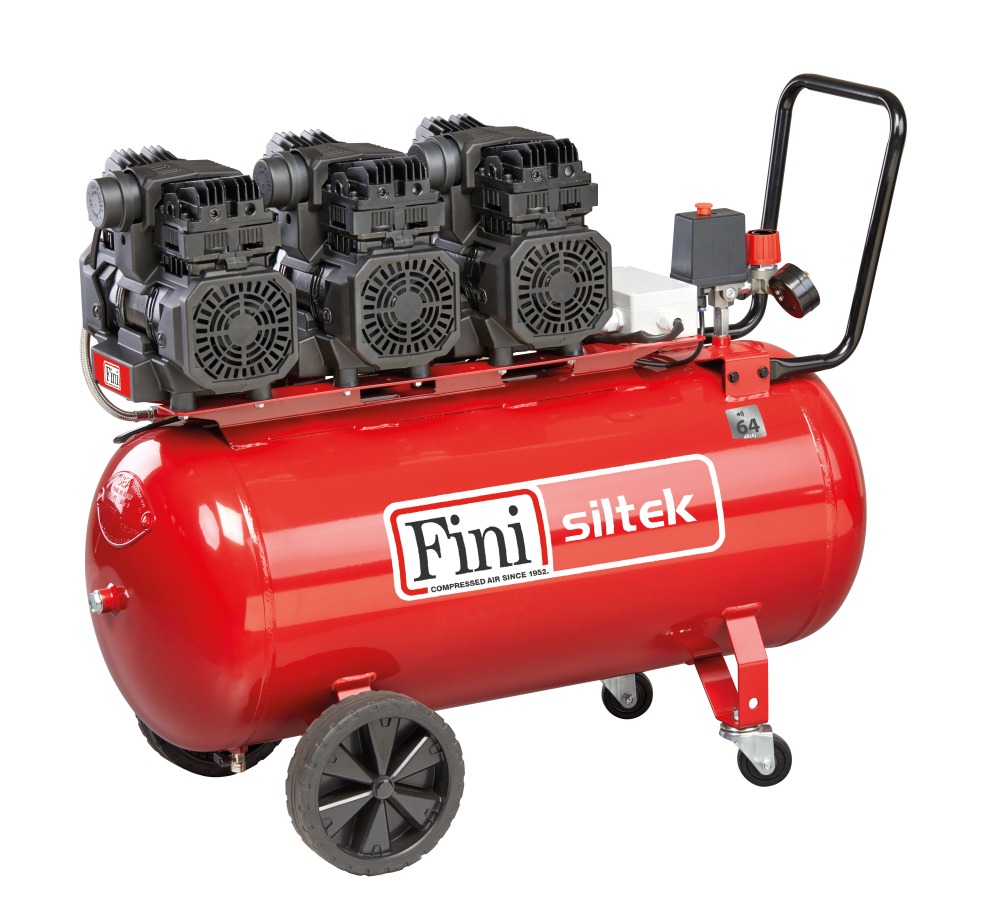
Siltek TB 100T/4 Super Quiet
11.6 CFM • 8 Bar • 230V • Oil-Free • 64 dB(A)
View ProductA compressed-air audit helps identify where electricity is being used, where pressure or airflow is being lost, and which improvements are most likely to reduce operating cost without compromising production.
Compressed air can consume a significant amount of electricity, but energy loss is not always caused by the compressor itself. Leaks, unnecessary pressure, unloaded running, restrictive filtration, poor pipework and badly matched equipment can all increase cost.
An audit brings those factors together so decisions can be based on measured demand rather than assumptions.
A practical first review can identify obvious issues such as leaks, excessive pressure, poor ventilation, ageing equipment or unsuitable distribution.
Where better evidence is needed, logging can record pressure, power and operating behaviour over a representative production period.
ISO 11011 provides a framework for assessing compressed-air systems, covering supply, transmission and demand. It is useful when a structured assessment methodology is required.
However, simply carrying out an audit does not automatically make a site “ISO compliant” or certify it to ISO 50001. Those standards have their own requirements and certification processes.
The original live post contains eight product cards. Every one of those product routes and its existing image has been retained below.
11.6 CFM • 8 Bar • 230V • Oil-Free • 64 dB(A)
View Product
23–58 CFM • 8 Bar • 270L • VSD • Dryer + Dual Filtration
View Product
25 CFM • 10 Bar • 270L • Fixed Speed
View Product
21–46 CFM • 8 Bar • Floor Mounted • VSD
View Product
37 CFM • 10 Bar • Floor Mounted • Dryer + Filters
View Product
21–46 CFM • 8 Bar • 270L • VSD
View Product
44 CFM • 8 Bar • 270L • Dryer + Dual Filtration
View Product
8.8 CFM • 8 Bar • Oil-Free • Silenced Cabinet
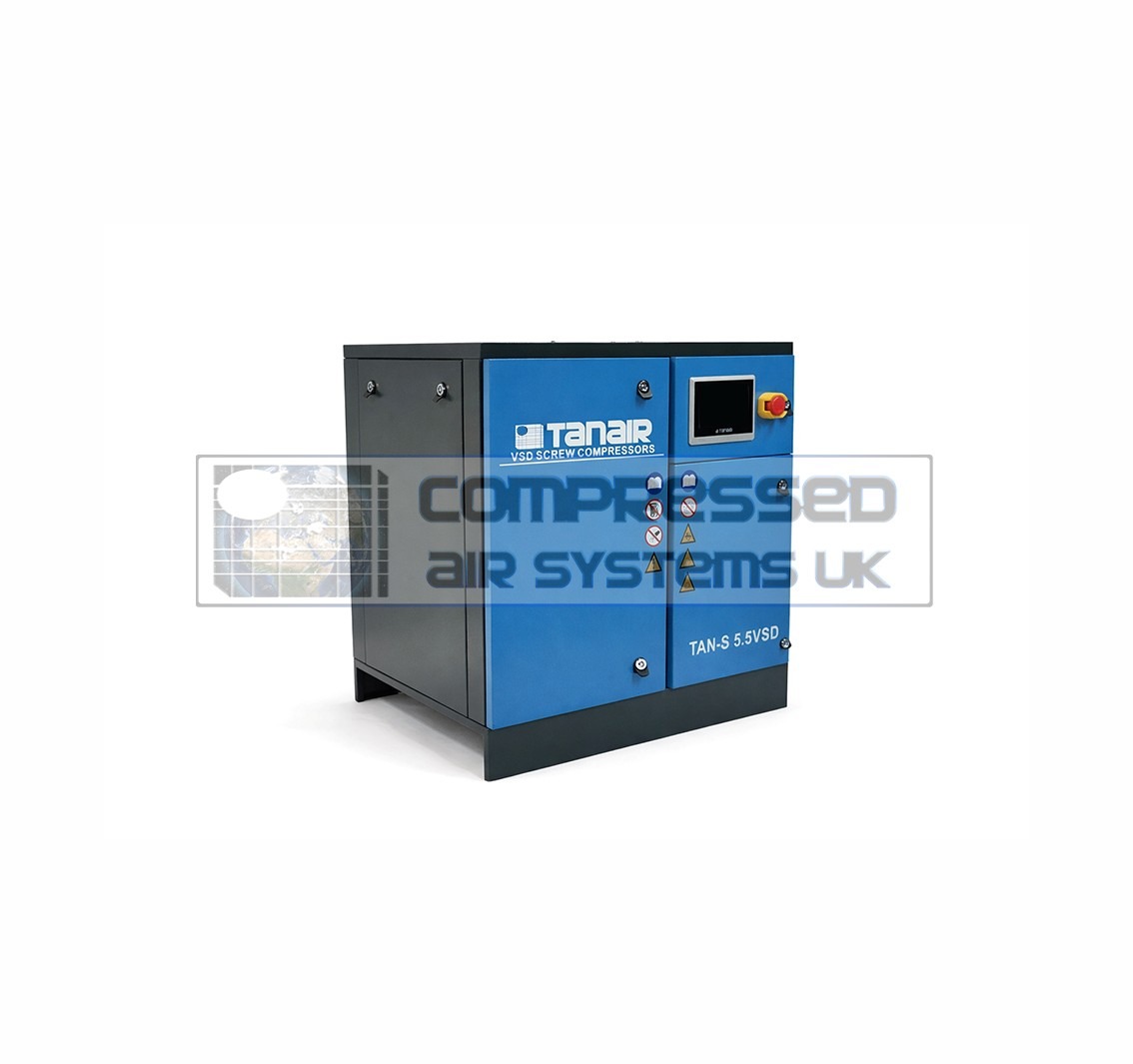
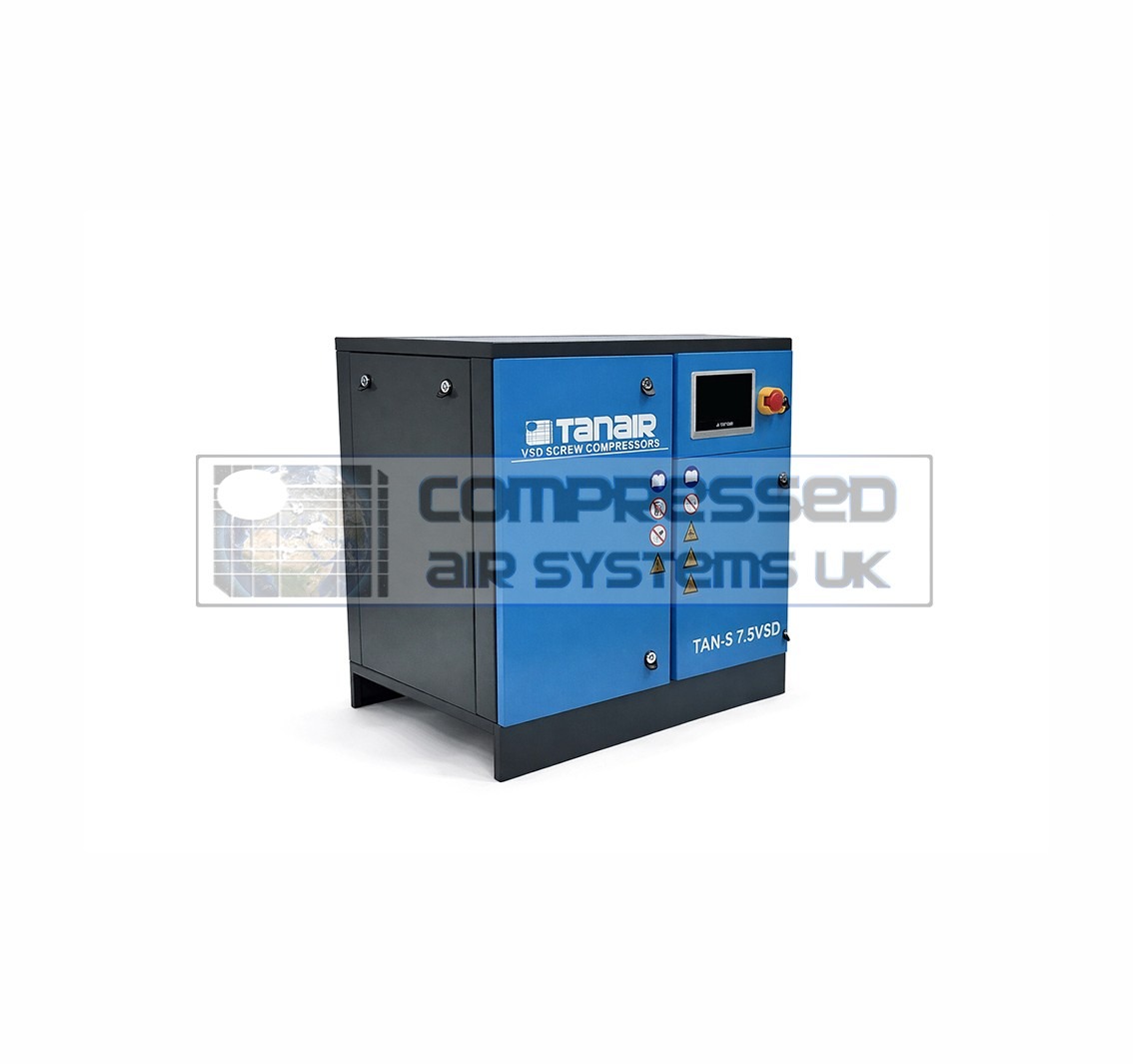
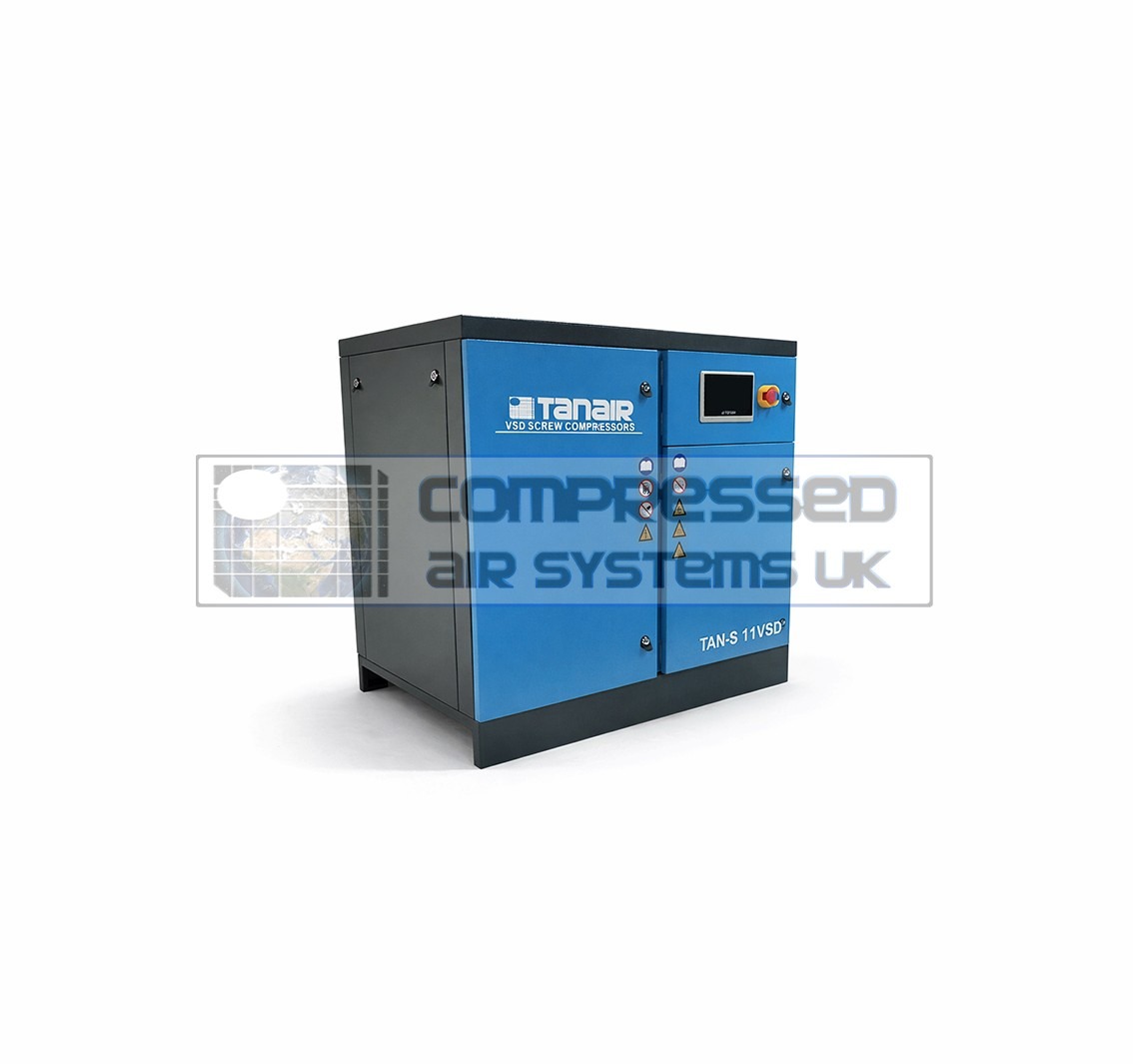
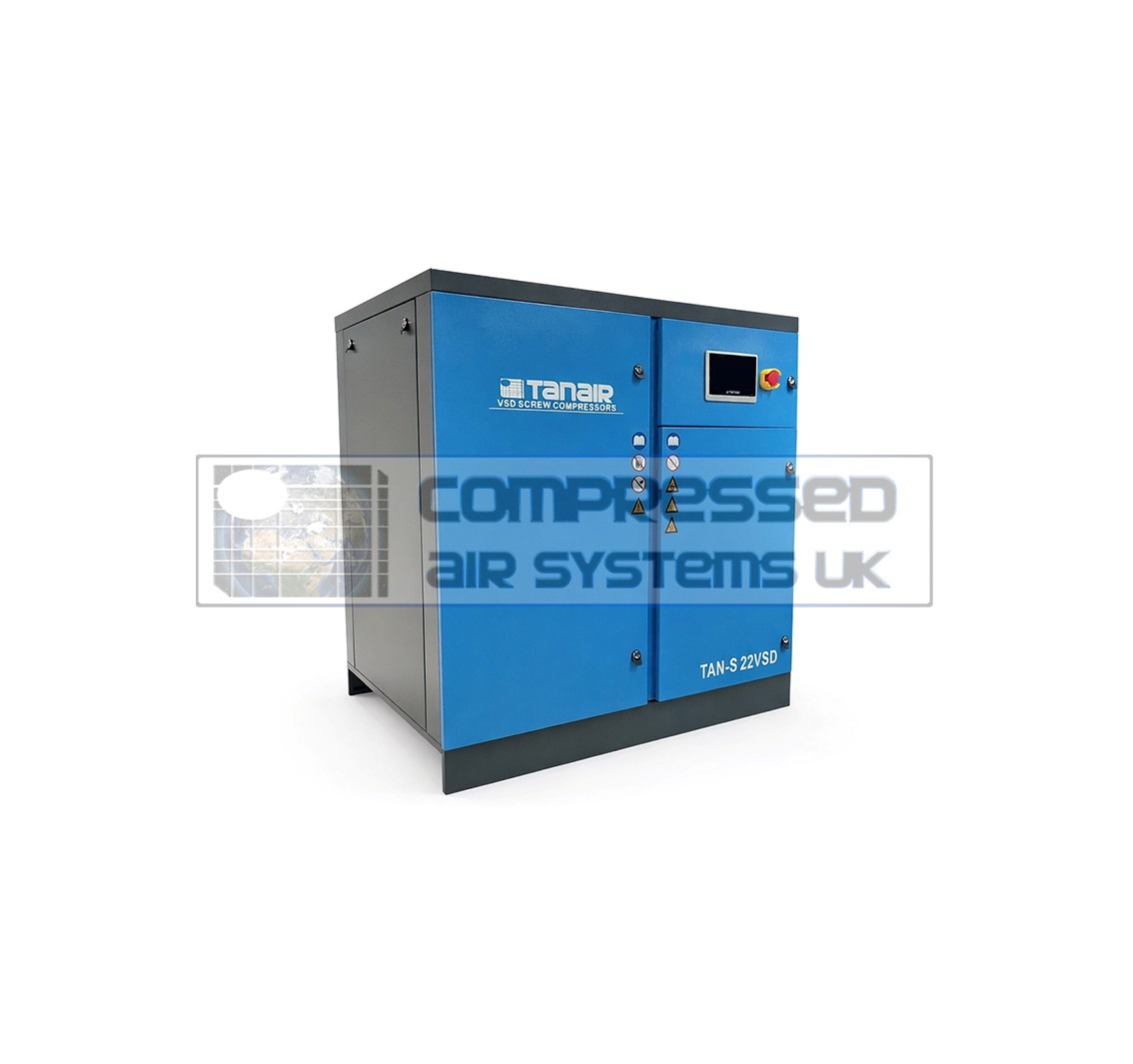
View ProductIf measured demand shows that a variable-speed compressor is appropriate, the Tanair TAN-S permanent-magnet VSD range gives a direct route from 19 CFM through to 113 CFM at 10 bar.
| Finding | Possible Action | Decision Data |
|---|---|---|
| High leakage | Leak repair programme | Estimated lost CFM and annual run hours |
| Excess pressure | Lower setpoint / reduce pressure drop | Point-of-use pressure requirement |
| Long unloaded periods | Review sizing, controls or VSD | Load/unload profile and kW consumption |
| Unstable pressure | Review receiver storage and distribution | Pressure trend and demand peaks |
| Old inefficient compressor | Compare replacement options | Existing power draw vs required airflow |
An assessment may be a shorter visual and operational review. A fuller audit generally adds measured data such as pressure, power and demand over a representative period.
It depends on the site and the production pattern. Data logging should run long enough to capture representative demand, including relevant shifts and shutdown periods.
Yes. Leak detection can be included as part of a wider efficiency review or carried out as a dedicated survey.
No. Repairs, pressure changes, leak reduction, maintenance or control improvements may sometimes be more cost-effective than replacement.
Yes. A measured demand profile is one of the best ways to assess whether variable-speed control is likely to provide a genuine benefit.
The original article's Contact Us and Birmingham routes remain in place. For energy-saving audits, leak detection, system reviews or compressor selection, contact the team.
Offices, Trade Counter & Warehouse
Compressed Air Systems UK
Unit 15, Fortnum Close
Birmingham, B33 0LG
Call 0121 753 3330 or use the Contact Us page.
Start with the system data, then prioritise the improvements that offer the strongest operational and financial case.

Portable Air Compressor Guide Portable Air Compressors for Work, Site & Leisure Portable compressors range from compact electric workshop machines to 110V site compressors and

Air Hose Storage, Inspection & Workshop Safety How to Store and Handle Air Hoses Safely Good hose management helps reduce avoidable wear, damaged couplings and

Compressed Air Hose Selection & Applications How Air Hoses Support Key Industries Every Day Air hoses connect compressed-air systems to tools, equipment and points of

UK Small Air Compressor Buyer’s Guide Best Small Air Compressor UK The best small compressor is the one that can supply your tools at the

UK Business Compressor Guide Air Compressors for UK Business Reliable compressed air starts with the right compressor, correctly sized air treatment and a distribution system

2.2 kW Single-Phase Compressor Troubleshooting 2.2 kW Compressor Won’t Start? The Capacitor May Be One Possible Cause A humming or non-starting 230V single-phase compressor can