The Hose Is Part of the Compressed-Air System
A compressor can produce enough air at the correct pressure, but a hose that is too small, too long, damaged or fitted with restrictive couplings can still leave the tool short of airflow.
Good hose selection considers the complete route from compressor or ring main to the point of use.
Key principle: choose hose internal diameter from required airflow, length and acceptable pressure drop, then confirm working pressure, material, fittings and environmental suitability.
What to Check Before Choosing an Air Hose
Internal BoreA larger internal diameter can reduce pressure drop where airflow demand is high or the hose run is long.
Working PressureThe hose and every fitting must be rated for the system’s actual operating conditions.
LengthLonger runs can create additional pressure loss, especially with smaller-bore hose.
MaterialRubber, polyurethane, nylon and braided hose have different flexibility, abrasion, temperature and chemical characteristics.
Coupling ProfilePCL Standard, Euro/XF and other coupling systems are not automatically interchangeable.
Working EnvironmentConsider oil, chemicals, sparks, heat, outdoor exposure, hygiene requirements and mechanical damage.
Automotive Workshops
Garages and tyre bays commonly use flexible air hose for impact wrenches, air ratchets, tyre inflation, blow guns and some spray equipment. Hose bore matters because high-demand tools can suffer a noticeable pressure drop when supplied through long, narrow hose or restrictive couplings.
- Check the impact wrench or tool manufacturer’s airflow requirement.
- Use a hose bore and coupling profile that can support the required flow.
- Keep hoses away from sharp edges, vehicle movement and hot exhaust components.
- Use reels or planned storage where they help reduce trip hazards and accidental damage.
Manufacturing & Automation
Manufacturing systems may use flexible hose or pneumatic tube for cylinders, actuators, assembly tools, robotic end-of-arm equipment and temporary connections. Stable pressure at the machine is important, but that depends on the entire compressed-air system — not the hose alone.
For permanent automation, fixed pneumatic tubing or properly designed compressed-air pipework may be more appropriate than long lengths of flexible workshop hose.
Food & Beverage Applications
Food and beverage sites require careful separation between compressed-air hose and hose intended to transfer food products or liquids. A hose suitable for compressed air is not automatically approved for product contact.
Where compressed air could contact food, packaging or product-contact surfaces, the required air quality, hose material and hygiene standard should be defined by the process specification and applicable site requirements.
Do not rely on the phrase “food grade” by itself. Confirm what the hose is certified for, what medium it carries, whether product contact occurs, temperature and cleaning-chemical compatibility.
Construction & Site Work
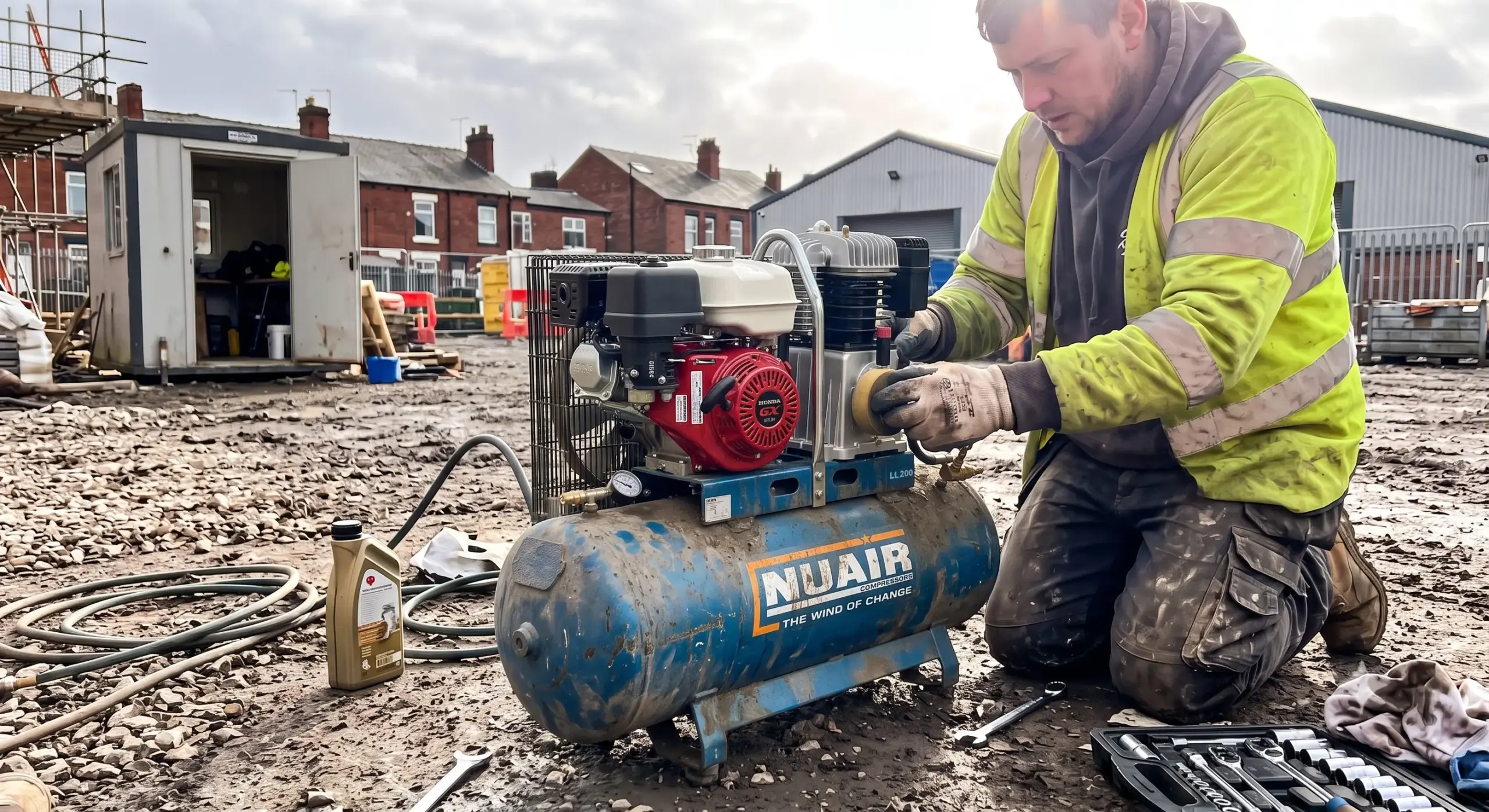
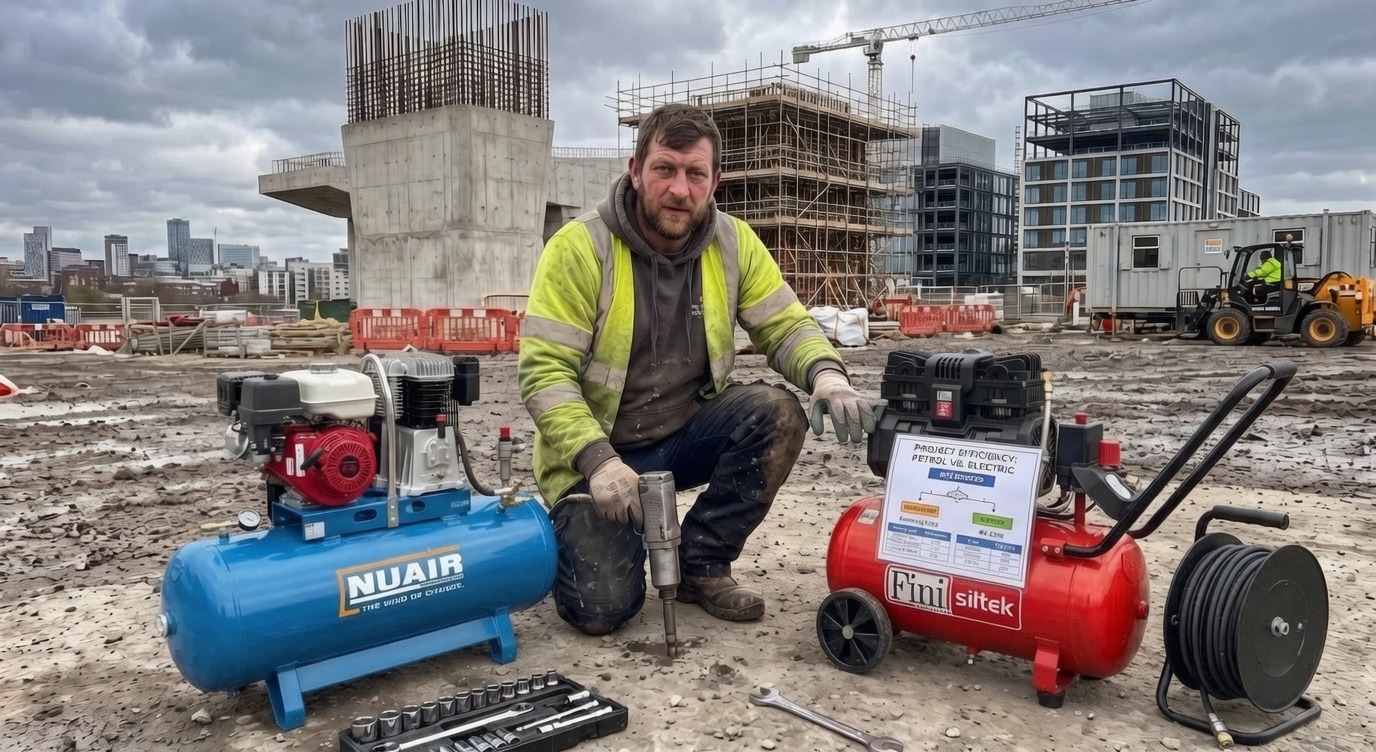
Portable compressed-air equipment can be used with nailers, breakers, blasting equipment and other pneumatic tools on construction sites. Hose needs to be selected for the actual tool demand and the physical environment.
Site Selection
- Adequate bore for the tool airflow
- Correct pressure rating
- Suitable abrasion resistance
- Weather and temperature suitability
Site Protection
- Protect from vehicles and crushing
- Avoid sharp bends and kinks
- Inspect couplings and ferrules regularly
- Keep routes clear of avoidable trip hazards
Metal Fabrication, Grinding & Plasma Cutting
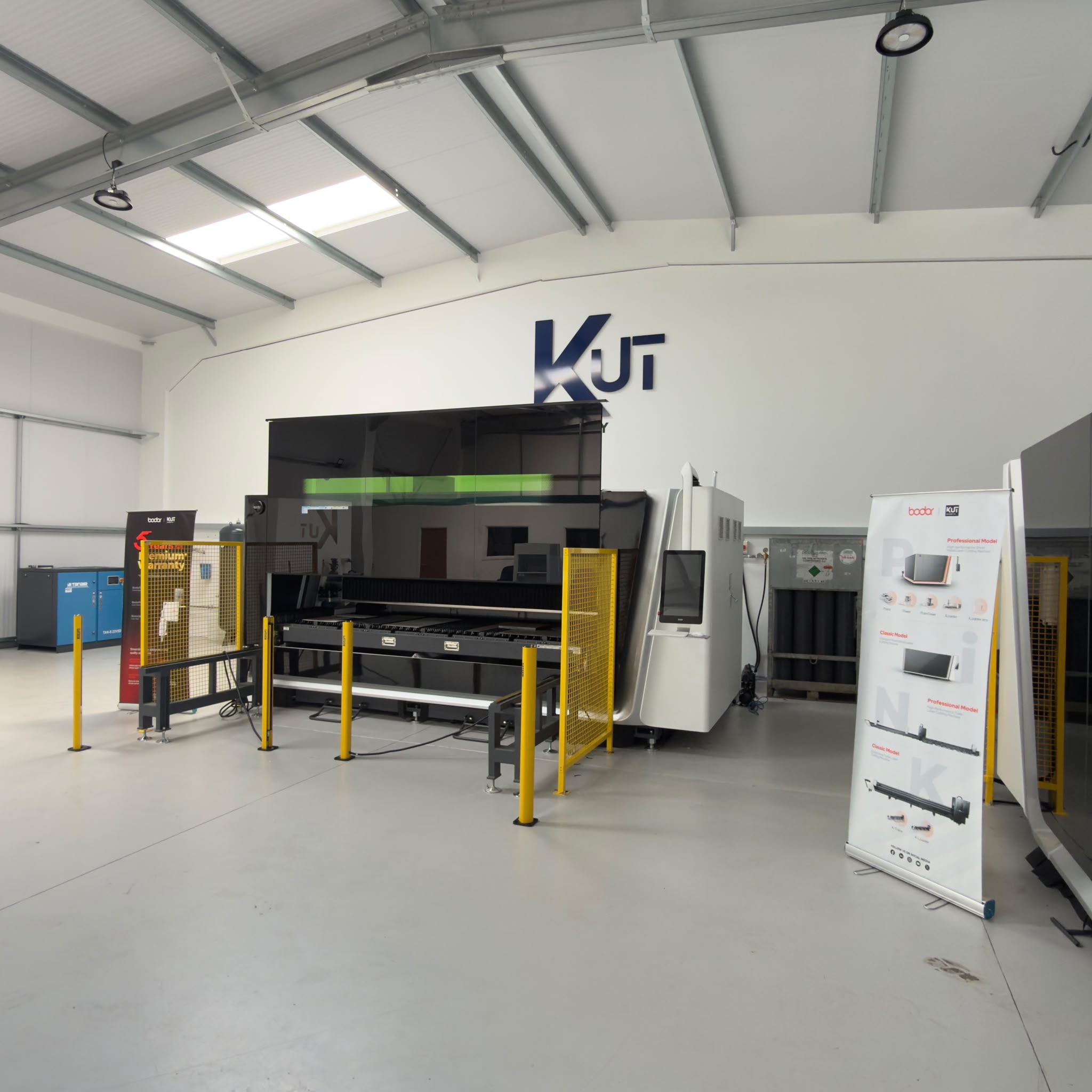
Air grinders and other pneumatic fabrication tools can be demanding users of compressed air. Plasma-cutting systems may also require a specified compressed-air supply for the cutting process, depending on the machine.
Welding torches themselves should not be described generically as compressed-air-powered tools. Where compressed air is used around welding or hot work, hose must be routed and protected so sparks, heat and sharp metal cannot damage it.
Pneumatic Tools Depend on Airflow — Not Just Static Pressure
A pressure gauge may show the correct pressure before a tool is operated, yet the tool can still underperform if the hose or coupling creates excessive restriction when air starts flowing.
| Symptom | Possible Hose / Connection Cause |
|---|
| Impact wrench feels weak | Hose bore too small, long hose run, restrictive coupling, kink or supply-side pressure drop. |
| Sander slows during use | Continuous airflow requirement exceeds what the hose and system can deliver. |
| Spray pattern changes | Pressure falls under flow or air quality is unsuitable for the coating process. |
| Pressure is fine with tool off | Static pressure is not showing the pressure drop that occurs during actual airflow. |
Hose Bore and Pressure Drop
Internal diameter is one of the most important hose-selection factors. Higher flow through a small bore increases velocity and pressure loss. The effect becomes more significant with longer hose runs and restrictive fittings.
There is no single hose size that is best for every workshop. Select the bore around the actual tool or process demand rather than defaulting to the smallest hose that physically connects.
Recommended Air Hose & Reel Options
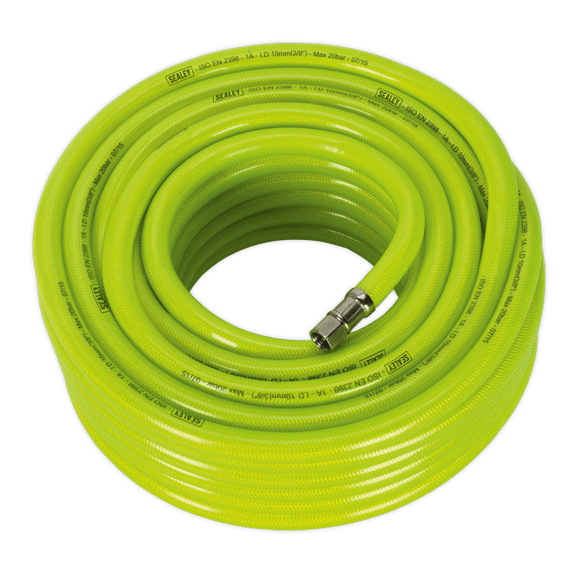
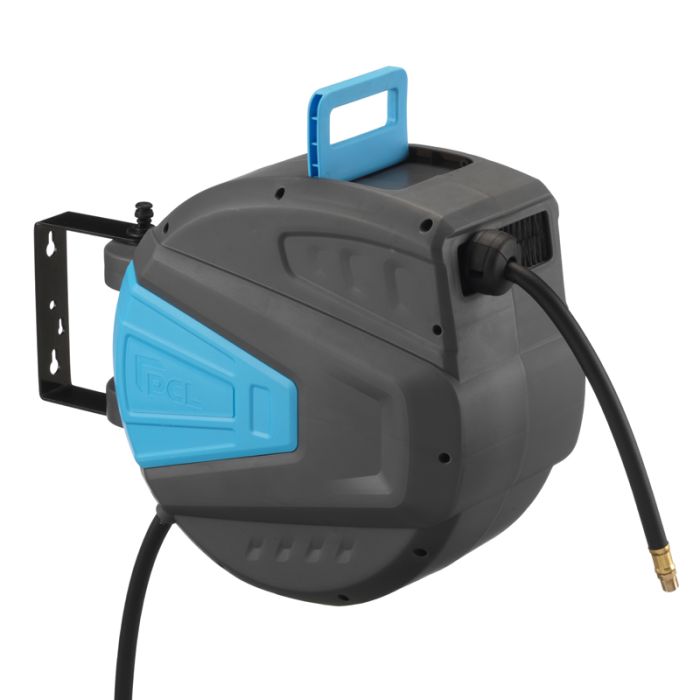
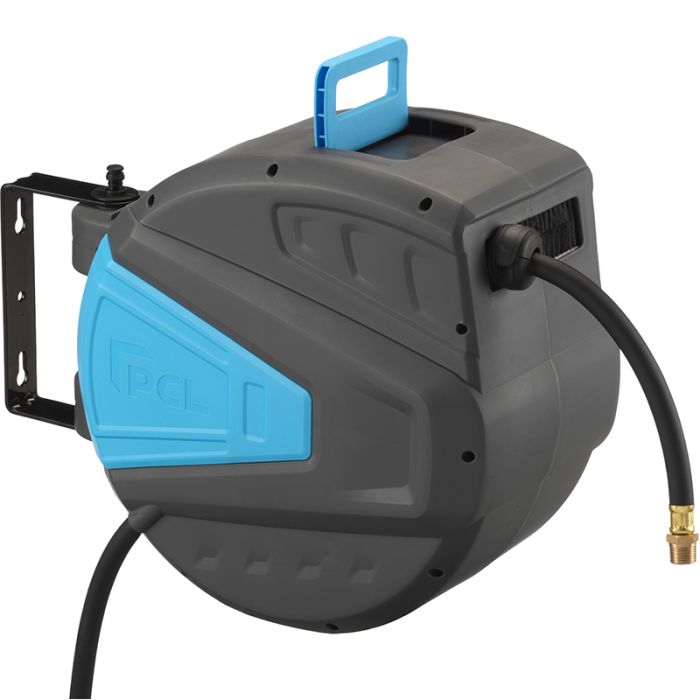
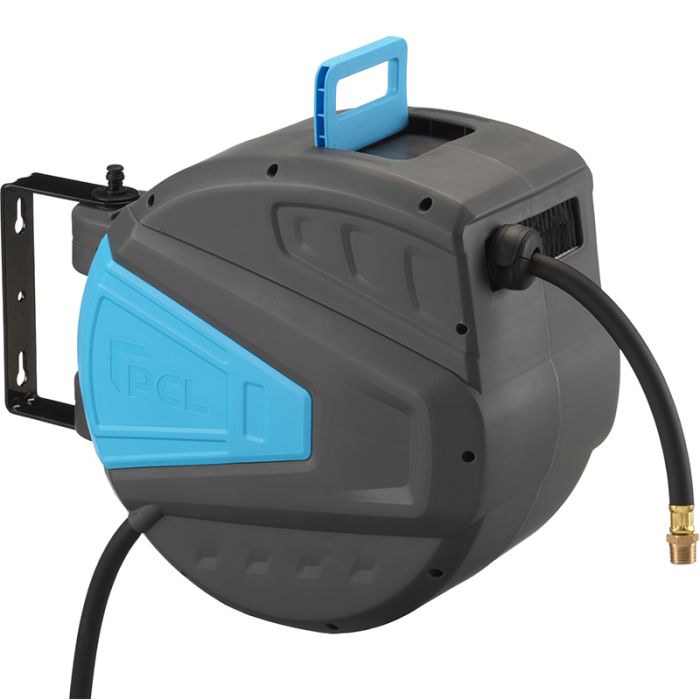
For buyers moving from a basic airline to a more organised workshop setup, these current products provide a useful progression from flexible loose hose through to larger-bore retractable reels. The right choice still depends on tool airflow, required reach, mounting position and connection type.
Choose by airflow, not appearance. The 12 mm reels are not automatically “better” than 8 mm or 10 mm hose; the benefit depends on the tool demand, hose length, coupling restriction and acceptable pressure drop.
Current Hose Options
These current PCL products illustrate how bore and connection format vary. Confirm the exact coupling profile, hose bore and pressure requirements before ordering.
Couplings Can Be the Bottleneck
A large-bore hose does not achieve its potential if it is paired with a restrictive coupling or undersized adaptor. Coupling bore, plug profile and thread size should be considered together with the hose.
PCL Standard and Euro/XF are common UK workshop profiles, but they differ in nominal bore and are not interchangeable. Use one compatible system throughout each connection route unless an intentional adaptor is fitted.
Air Hoses Do Not Automatically Make a Hazardous Area Safe
Pneumatic tools can be useful where an application favours air power, but using compressed air does not by itself make equipment suitable for explosive atmospheres or other hazardous areas.
Tool, hose, fittings and the complete installation must be assessed for the actual environment and relevant site safety requirements.
Inspect Hoses Before Failure
- Look for cuts, blistering, cracking, flattening and severe abrasion.
- Check ferrules, clamps and hose tails for movement or damage.
- Inspect quick couplings for leakage or poor engagement.
- Replace hose that has been damaged by heat, chemicals or crushing.
- Do not attempt unsuitable temporary repairs on pressure hose.
- Isolate and depressurise the system before changing hose or fittings.
Air Hose FAQs
Does a bigger air hose improve tool performance?
It can where the existing hose is creating excessive pressure drop, but larger is not automatically better. Choose the bore around the tool airflow, hose length and acceptable pressure loss.
Can I use any hose rated above my compressor pressure?
No. Pressure rating is only one requirement. Material, temperature, environment, fittings, bend radius and application compatibility also matter.
Is food-grade hose the same as compressed-air hose?
Not necessarily. A hose approved for transferring food or liquid is not automatically the correct hose for compressed air, and vice versa. Check the certification and intended medium.
Do air hoses make tools safer than electrical tools in hazardous areas?
Not automatically. Equipment used in a hazardous area must be suitable for the specific environment and site requirements.
Why does my air tool lose power through a long hose?
Long hose, small internal diameter and restrictive couplings can all increase pressure drop when the tool draws air.
Should I use PCL Standard or Euro/XF couplings?
Use the profile that matches your existing system and airflow requirement. Euro/XF has a larger nominal bore than PCL Standard and can reduce restriction where higher flow is needed.
How often should an air hose be replaced?
There is no universal replacement interval. Inspect it regularly and replace it when damage, deterioration, leakage or manufacturer guidance indicates it is no longer suitable.
Need Help Matching Hose to Your Air Tools?
Send us the tool CFM, required pressure, hose length, coupling profile and working environment. We can help narrow the suitable hose, fittings and connection arrangement.
Compressed Air Systems UK · Unit 15, Fortnum Close, Birmingham, B33 0LG