Clearing the Air: Smoke Ventilation Air Compressors Explained
Smoke ventilation systems rely on correctly specified components that are ready to operate when required. Where compressed air is used to actuate vents or support the control strategy, compressor reliability, pressure, redundancy and system control become critical parts of the design.
Why Smoke Ventilation Matters
During a fire, smoke can quickly reduce visibility, obstruct escape routes and make conditions more difficult for occupants and emergency responders. Smoke ventilation and smoke-control systems are designed to manage smoke and heat in accordance with the building's fire-safety strategy.
Some systems use compressed air to operate pneumatic actuators that open vents, windows or other smoke-control devices. In those installations, the compressed-air package must be treated as part of a safety-critical system rather than as an ordinary workshop air supply.
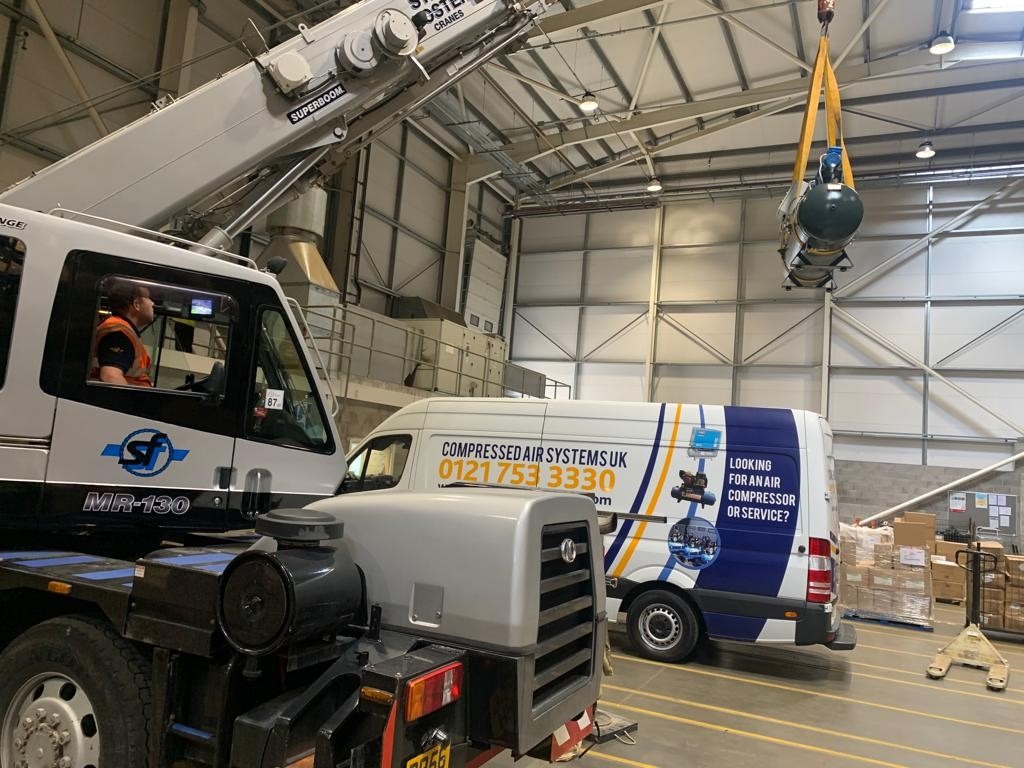 Existing smoke ventilation installation image retained from the original Tanair article.
The Role of the Air Compressor
Where the smoke ventilation design uses pneumatic actuation, the compressor provides the air pressure and stored capacity needed by the system. Correct specification is therefore about more than simply choosing a compressor with enough CFM.
Semi-Duplex vs Tandem Compressor Systems
Semi-Duplex
A semi-duplex package typically uses two independently driven piston pumps mounted on a shared air receiver. A dedicated control panel can alternate or stage the pumps, helping balance run hours while maintaining air availability.
- Two independently driven pumps
- Shared receiver arrangement
- Control-panel-based sequencing
- Balanced operating hours
- Useful resilience in life-safety systems
Tandem
Tandem arrangements generally use two compressor units configured to operate together where greater capacity, duty or resilience is required.
- Higher available total output
- Suitable for larger system demand
- Greater resilience depending on configuration
- Flexible staged operation
- Can support maintenance planning
Dedicated Smoke Ventilation Control Panels
The compressor is only one part of the system. Where two compressors or pumps need to operate in a controlled sequence, a dedicated panel can manage the required operation and provide a central control point.
Current Tanair Smoke Ventilation Compressor Routes
Tanair's current smoke-ventilation range includes dedicated semi-duplex piston packages, tandem solutions and control equipment. The correct package depends on the engineered requirement rather than a generic compressor size.
Can an Existing Industrial Compressor Be Used?
The original article correctly raised the possibility of using an existing industrial air supply, but this should never be assumed suitable simply because compressed air is already available on site.
A shared plant-air system may be affected by production demand, maintenance, shutdowns, pressure changes or unrelated faults. For a life-safety application, the complete arrangement needs to satisfy the engineered smoke-control design, including resilience, capacity, stored air, controls and failure modes.
What Should Be Checked When Specifying the Compressor Package?
- Required operating pressure
- Total pneumatic air volume
- Receiver capacity
- Actuator and valve requirements
- 230V or 415V site supply
- Required redundancy
- Control-panel logic
- Alarm and monitoring requirements
- Maintenance and test access
- Relevant fire-safety design documentation
Inspection, Testing & Maintenance
Because the compressor package forms part of a safety-critical system, planned maintenance and functional testing should be considered as part of the building's wider smoke-control maintenance regime.
- Check compressor condition and operating pressure
- Inspect receiver condition and applicable inspection requirements
- Verify automatic drains and air-treatment components
- Test duty/standby or alternating operation where applicable
- Check control-panel indications, alarms and sequencing
- Record maintenance and test results in line with the site procedure
Smoke Ventilation Air Compressor FAQs
What does a smoke ventilation air compressor do?
In pneumatically operated smoke-control systems, the compressor provides the air pressure and stored compressed air needed to operate actuators, vents or related equipment.
Why use a semi-duplex compressor?
A semi-duplex arrangement can use two independently driven pumps with controlled alternation or staging, providing greater resilience and helping balance operating hours.
Do smoke ventilation compressors need a control panel?
Where the system uses multiple pumps or compressors and requires controlled sequencing, a dedicated panel may be part of the engineered solution.
Can a factory's normal compressor supply the smoke ventilation system?
Only where the complete arrangement has been assessed and approved as suitable for the life-safety design. General plant air should not be assumed suitable automatically.
Can Tanair supply 230V and 415V options?
Yes. The current Tanair smoke-ventilation range includes both 230V and 415V compressor and control-panel options.
Talk to Compressed Air Systems UK
For help with smoke ventilation compressor packages, control panels, specification, servicing or replacement equipment, contact the team before selecting equipment.
Offices, Trade Counter & Warehouse:
Compressed Air Systems UK
Unit 15, Fortnum Close
Birmingham, B33 0LG
Need a Smoke Ventilation Compressor or Control Package?
Send us the pressure, receiver requirement, voltage, control strategy and available project documentation and we can help narrow down the appropriate Tanair solution.