
Choosing the Best Compressor: Rotary Screw & Vane Air
Rotary screw and rotary vane compressors are both strong choices for regular industrial compressed-air demand. The right option depends on airflow, pressure, running hours, demand profile, maintenance priorities and the air quality required by the process.
Start With the Application, Not the Compressor Type
Choosing an industrial compressor is not simply a case of deciding whether screw or vane technology is “better”. Both can provide smooth, continuous compressed air when correctly selected.
The starting point should be the site's actual air demand: how much airflow is required, at what pressure, for how many hours per day, and whether demand stays steady or changes significantly throughout the shift.
Understanding Rotary Screw Compressors
Rotary screw compressors use two intermeshing helical rotors to compress air. They are widely used across manufacturing, engineering, automotive, packaging and other industrial environments because they provide a smooth, non-pulsating air supply and are well suited to long daily operating periods.
 Existing Tanair-hosted article image retained from the original post.
Understanding Rotary Vane Compressors
A rotary vane compressor uses a rotor positioned eccentrically inside a cylindrical housing. Sliding vanes move in and out of slots in the rotor, creating chambers that reduce in volume and compress the air.
Vane compressors are known for smooth delivery and a compact compression principle. Depending on the manufacturer and machine design, vane compressors may be oil-lubricated or oil-free, so the required air quality should always be checked against the specific model rather than assumed from the technology alone.
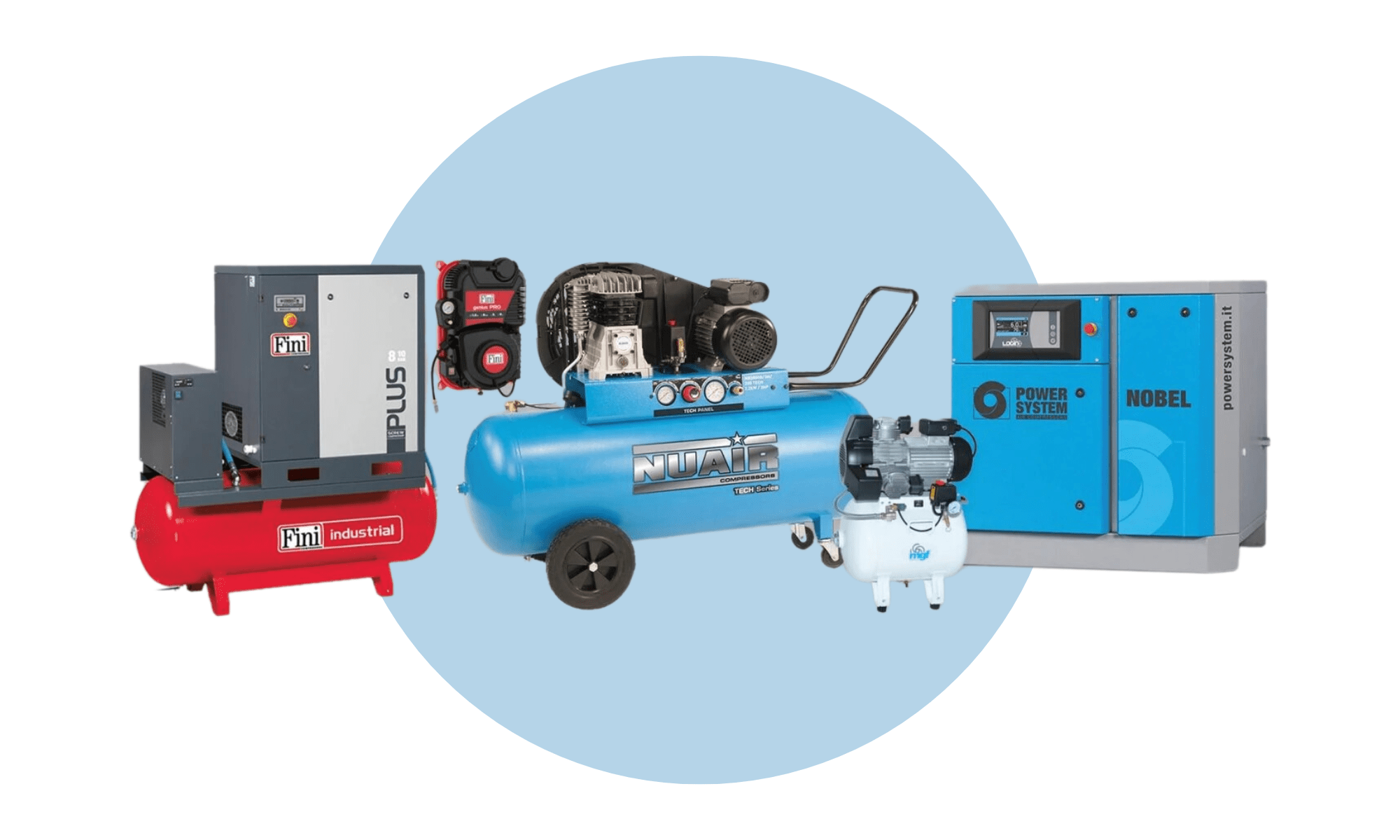 Existing article image retained.
Rotary Screw vs Rotary Vane: Quick Comparison
| Consideration | Rotary Screw | Rotary Vane |
|---|---|---|
| Air delivery | Smooth, continuous and non-pulsating | Smooth, continuous output |
| Typical duty | Regular to continuous industrial demand | Regular to continuous demand |
| Range availability | Very broad selection across power, pressure and package formats | More manufacturer-specific |
| Variable speed | Widely available | Available on selected ranges |
| Air quality | Oil-injected and oil-free designs exist | Oil-lubricated and oil-free designs exist |
| Best selection method | CFM, pressure, duty, demand profile and lifecycle cost | CFM, pressure, duty, manufacturer support and lifecycle cost |
Fixed Speed or Variable Speed?
Fixed-Speed Compressor
A fixed-speed compressor normally runs the motor at a constant speed while loaded. It can be a strong and efficient choice where compressed-air demand is relatively stable and the machine is correctly sized.
- Predictable air demand
- Long loaded running periods
- Straightforward control arrangement
- Lower complexity than VSD
Variable-Speed Compressor
A VSD compressor adjusts motor speed to follow changing compressed-air demand. This can reduce unloaded running and unnecessary energy consumption where usage varies significantly during the working day.
- Changing production demand
- Frequent peaks and troughs
- Potential energy-saving opportunity
- Stable system pressure
Other Compressor Types Still Have Their Place
The original article also covered piston and centrifugal compressors, and those comparisons are worth keeping because screw and vane technology are not right for every application.
9 Factors to Consider Before Choosing
- Air demand: total CFM required by simultaneous tools and processes.
- Duty: how many hours per day the compressor must run.
- Pressure: genuine point-of-use requirement plus system losses.
- Noise: consider the compressor location and working environment.
- Energy use: assess loaded, unloaded and variable demand.
- Space: base-mounted, receiver-mounted and dryer-package formats need different footprints.
- Air quality: confirm filtration, dryer and oil-free requirements.
- Maintenance: consider servicing access, parts availability and lifecycle support.
- Budget: compare purchase price with energy, service and lifetime operating cost.
Explore the Current Tanair Compressor Routes
Compressed Air Systems UK
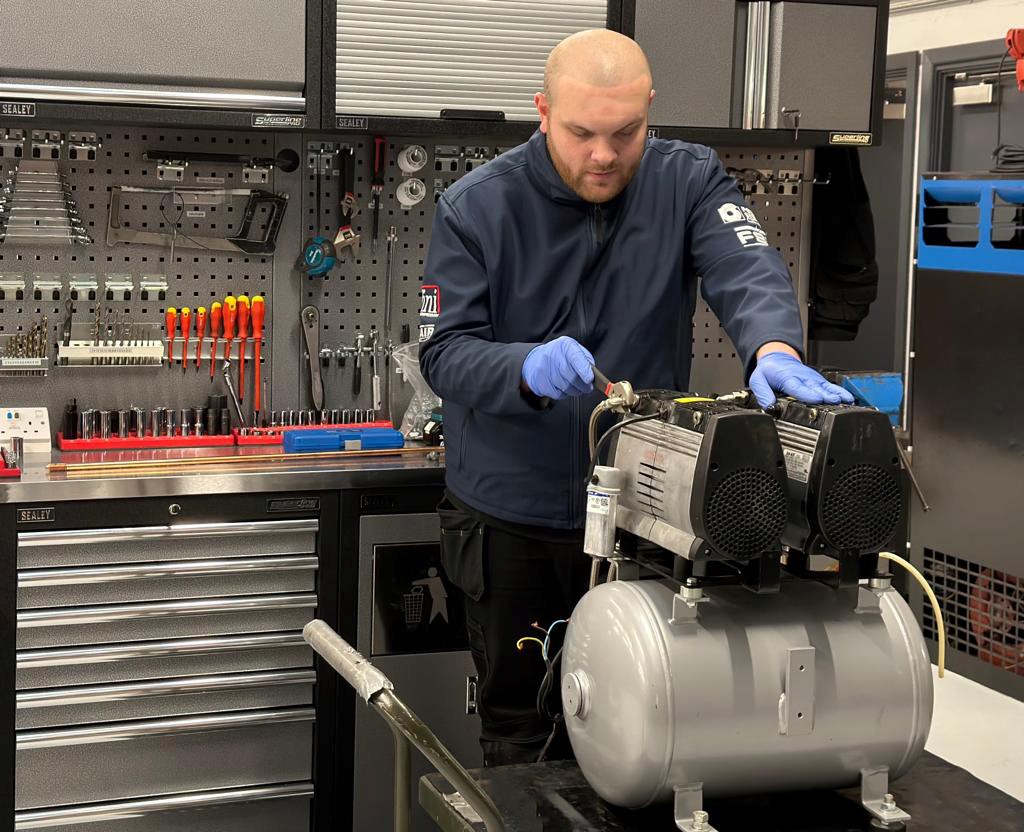 Existing Compressed Air Systems UK article image retained.
For help comparing rotary screw, vane, piston or variable-speed compressors, speak to the compressed-air team with your airflow, pressure, electrical supply, running hours and application details.
Offices, Trade Counter & Warehouse
Compressed Air Systems UK
Unit 15, Fortnum Close
Birmingham, B33 0LG
Call 0121 753 3330 or use the existing Contact Us page.
Rotary Screw & Vane Compressor FAQs
Which is better: rotary screw or rotary vane?
Neither is automatically better. The stronger choice depends on airflow, pressure, duty, demand profile, air quality, available ranges and lifecycle support.
Are rotary screw compressors suitable for continuous use?
Yes. Rotary screw compressors are generally well suited to regular and continuous industrial demand when correctly sized and maintained.
Are vane compressors always oil-free?
No. Rotary vane compressors can be oil-lubricated or oil-free depending on the machine design. Check the specification of the individual compressor.
When should I choose a VSD compressor?
VSD is often attractive where compressed-air demand changes significantly throughout the day and a fixed-speed compressor would otherwise spend long periods unloaded.
How do I size an industrial compressor?
Start with required delivered airflow, operating pressure, running hours, demand profile, leakage, future growth and any pressure loss through dryers, filters and pipework.
Do screw and vane compressors need dryers?
The need for drying and filtration depends on the required air quality and pressure dew point, not simply the compression technology.
Need Help Choosing the Right Compressor?
Tell us the CFM, pressure, daily running hours, power supply and how your air demand behaves and we can help narrow down the right route.