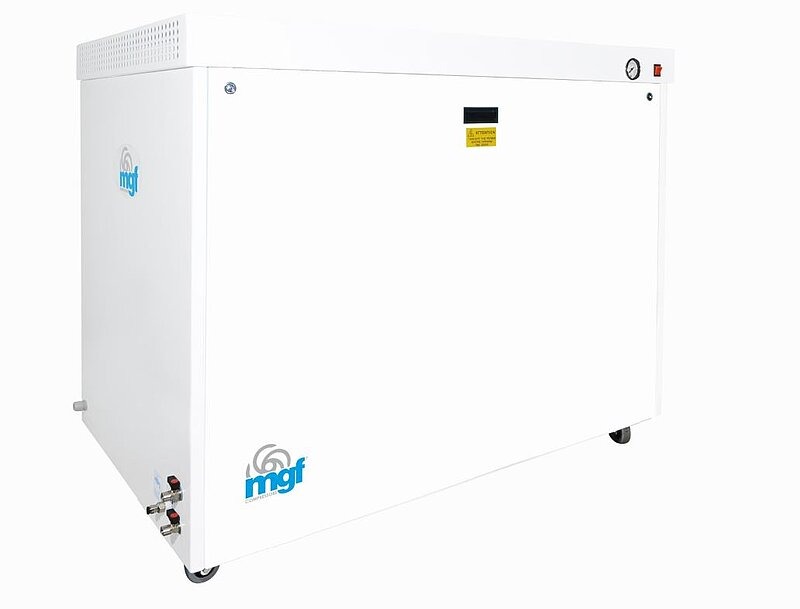
Existing Article Product
MGF CS 100/50 Tandem Prime S (230V)
18 CFM FAD • 10 Bar • 90L • Oil-Free • Silenced
View ProductCar bodyshops using isocyanate paints need effective exposure controls, correctly managed spray booths and suitable air-fed breathing apparatus. Where breathing air is supplied from a compressor, its quality must be controlled and periodically verified — alongside booth clearance times, LEV examination and wider COSHH duties.
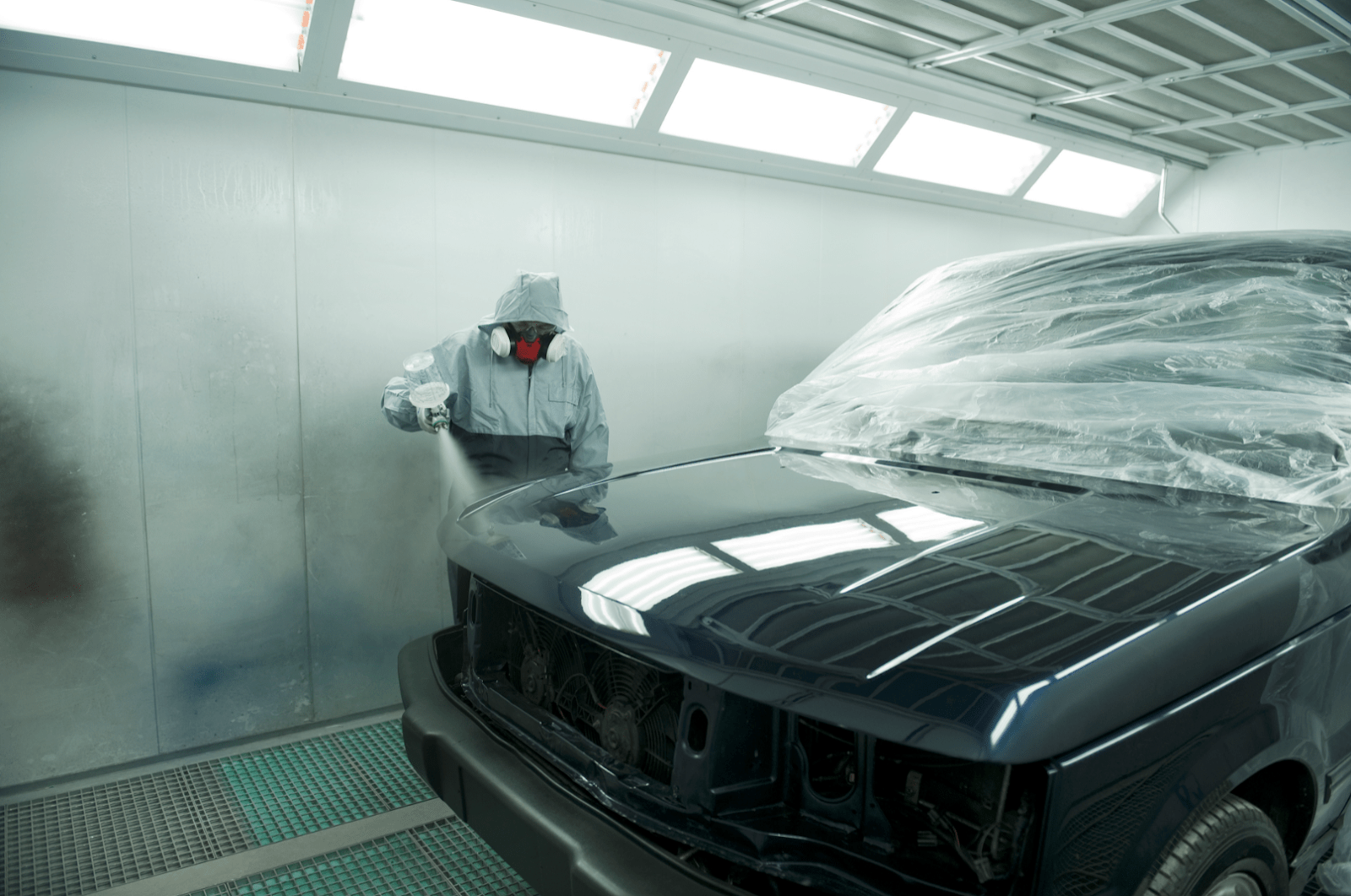
Vehicle refinishing can expose workers to hazardous substances including isocyanate-containing paint mist, solvents and dust from sanding or grinding. Isocyanates are particularly important because inhalation can cause occupational asthma and sensitisation.
Good control therefore needs more than a clean-looking spray booth. The booth extraction, clearance time, breathing-air supply, respiratory protective equipment and worker procedures all have to work together.
| Requirement | What It Means for a Bodyshop |
|---|---|
| COSHH | Exposure to hazardous substances must be prevented or, where that is not reasonably practicable, adequately controlled. |
| Spray Booth LEV | LEV used to control hazardous substances should undergo thorough examination and testing at least every 14 months. |
| Booth Clearance Time | The actual clearance time should be established and workers must know when the booth is safe to enter without air-fed breathing apparatus. |
| Breathing-Air Quality | Air supplied to breathing apparatus should meet the quality requirements of BS EN 12021. |
| Periodic Air Testing | HSE guidance says testing frequency should be risk-assessed, but checks should take place at least every three months and more often where quality cannot be assured. |
Isocyanate paint mist is a respiratory sensitiser. Spray booths and rooms are used to contain and extract contamination, but extraction does not make the atmosphere immediately safe when spraying stops.
Clearance time is the period required for airborne paint mist to be diluted and removed by the booth or room extraction after spraying stops. HSE guidance notes that a booth will often clear in under five minutes, while a spray room can take considerably longer — but the important value is the measured clearance time for your own installation.
Where local exhaust ventilation is provided to control hazardous substances, COSHH requires it to be maintained in efficient working order. For many bodyshop spray-booth LEV systems, thorough examination and testing is required at least every 14 months.
Air-fed breathing apparatus depends on the compressed-air supply being fit to breathe. BS EN 12021 provides quality requirements for breathing gases, including limits relating to contaminants such as carbon monoxide, carbon dioxide, oil and water.
The compressor installation also needs to be considered as a complete breathing-air system: intake location, filtration, maintenance, temperature, contamination sources and downstream pipework can all affect the quality delivered to the wearer.
HSE's respiratory-protection guidance says the frequency should be based on risk assessment, but air quality should be tested at least every three months and more often where the required quality cannot be assured.
A breathing-air compressor can only produce safe air if it takes in suitable ambient air and its treatment system remains effective. Position the intake away from sources such as vehicle exhaust, boiler flues, solvent vapours, generator exhaust and other contamination.
Air-fed breathing apparatus is commonly used during isocyanate spraying because filtering facepieces are not the normal control for that high-risk spray mist. The correct RPE must be selected from the COSHH assessment and used for the complete period of exposure.
Where RPE relies on a tight-fitting face seal, face-fit testing is required. Loose-fitting hoods and visors operate differently, but still need correct airflow, maintenance and user checks.
The live article contains eight compressor recommendations. All eight existing product routes and the exact live article image URLs are retained below.
18 CFM FAD • 10 Bar • 90L • Oil-Free • Silenced
View Product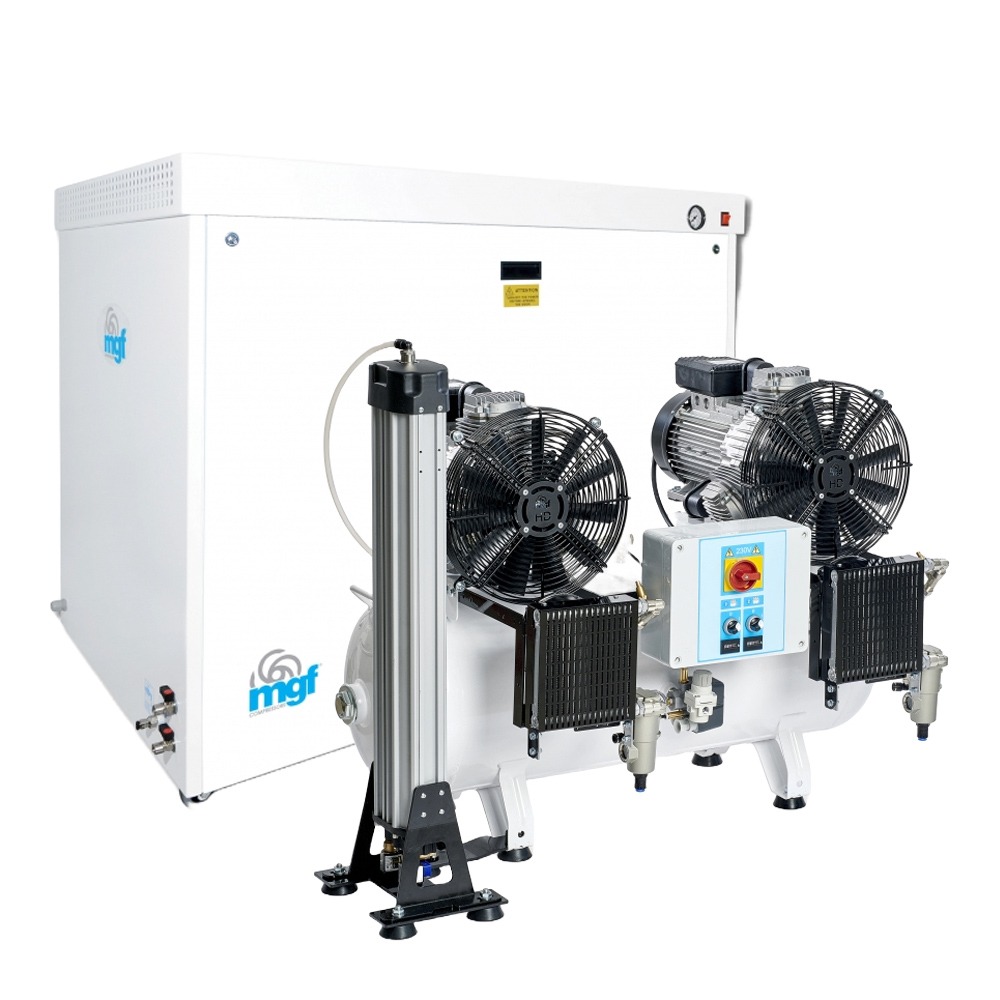
15.8 CFM • 90L • Desiccant Dryer • Oil-Free
View Product
17.6 CFM • 90L • Oil-Free • Silenced
View Product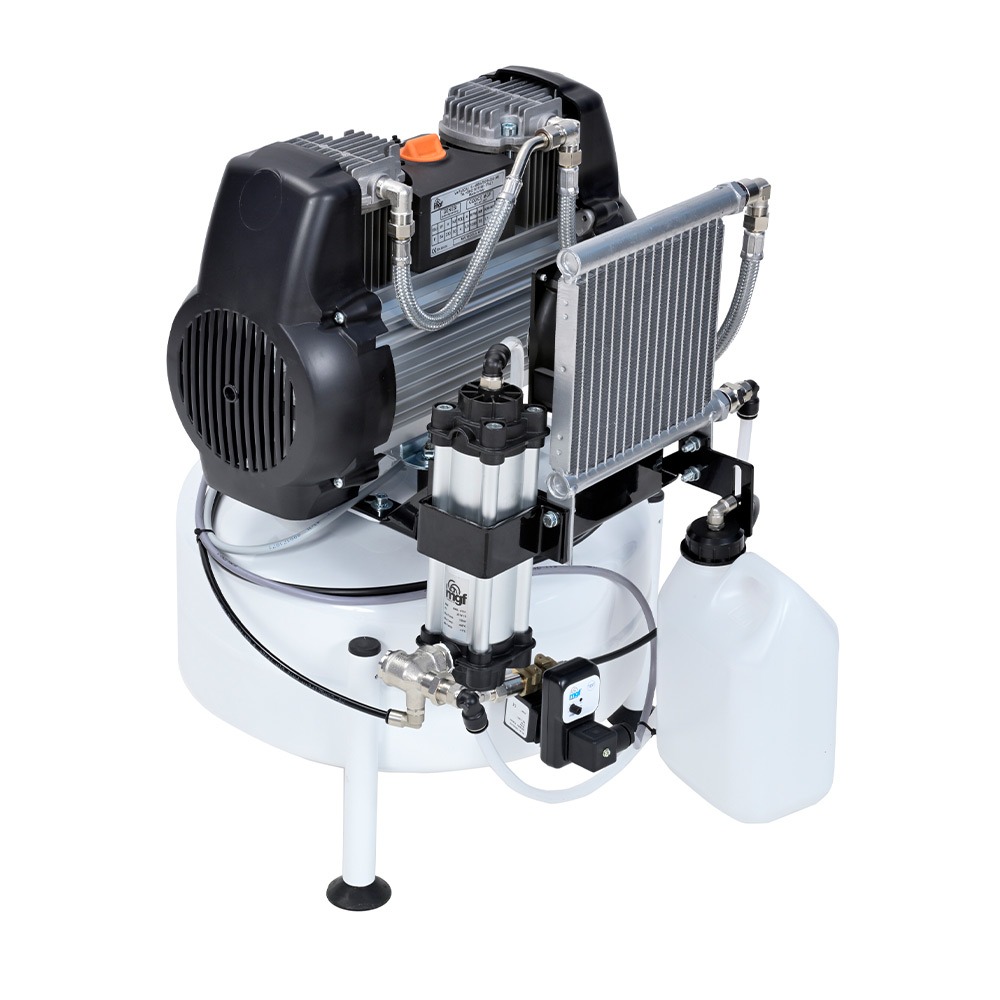
4.2 CFM @ 5 Bar • 24L • Oil-Free • Purification
View Product
41 CFM • 10 Bar • Variable Speed
View Product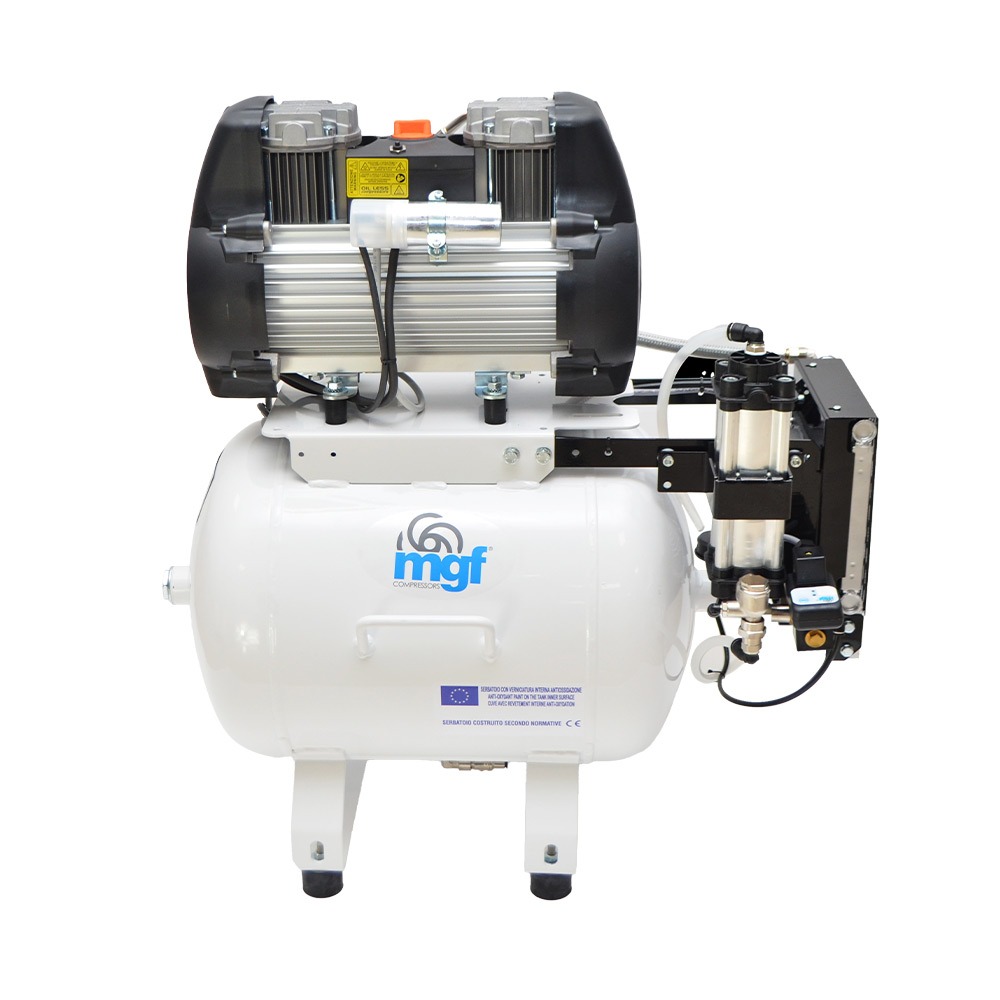
4.2 CFM @ 5 Bar • 40L • Oil-Free • Purification
View Product
74 CFM • Receiver Mounted • Dryer & Filtration
View Product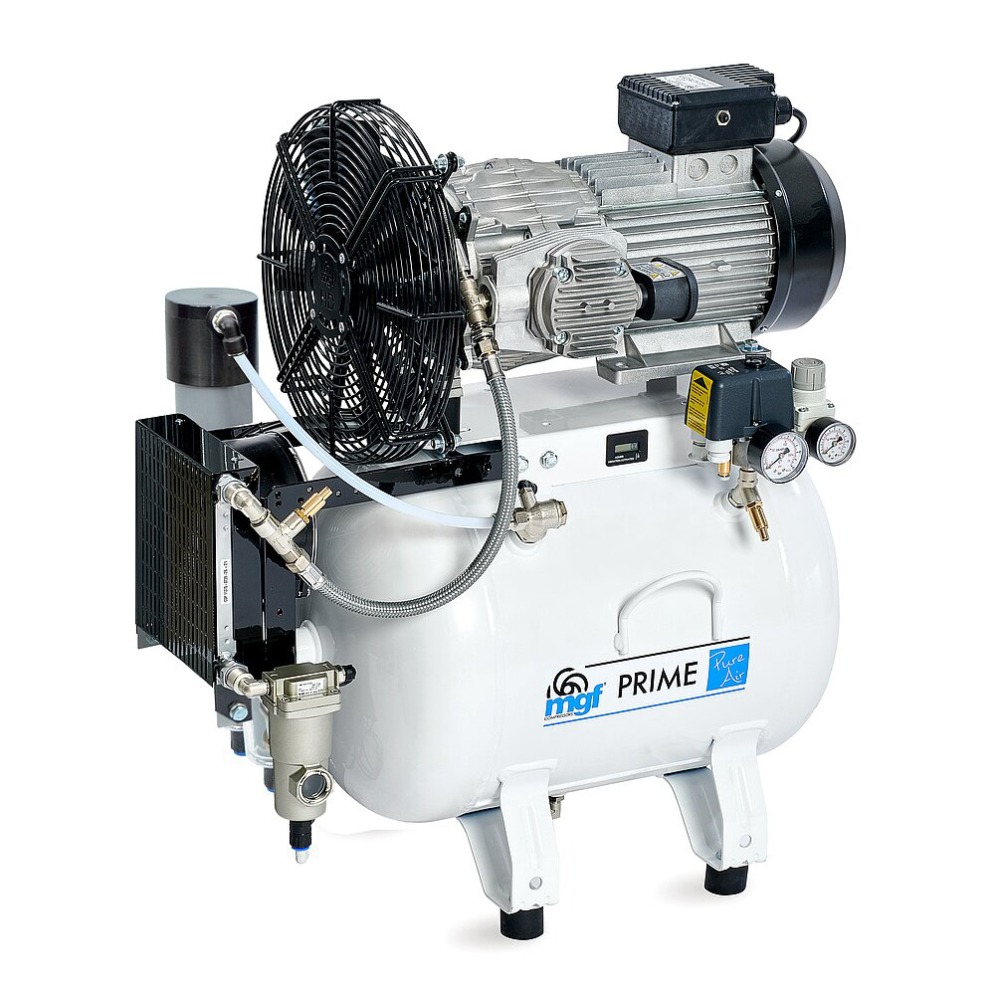
Oil-free compressors remove one potential source of lubricant contamination from the compression process, which can simplify some clean-air applications.
Oil-lubricated systems can still be used for many industrial duties, but breathing-air use requires appropriate risk assessment, treatment and verification rather than an assumption that standard filtration is sufficient.
The purpose of periodic testing is to verify that the controls are continuing to deliver breathing air of the required quality. Depending on the system and test method, this can include checks for:
HSE guidance says the frequency should be based on risk assessment, with testing at least every three months and more often where the required quality cannot be assured.
BS EN 12021 sets breathing-air quality requirements. The at-least-three-month testing guidance comes from HSE respiratory-protection guidance.
For LEV used to control hazardous substances in bodyshop spraying, HSE enforcement and COSHH guidance commonly require thorough examination and testing at least every 14 months.
It is the time needed after spraying stops for airborne paint mist to be removed by the booth or room ventilation. The actual time should be measured for the installation and communicated to workers.
Do not assume so. The complete breathing-air system needs to be assessed, treated and periodically verified for breathing-air duty.
No. Oil-free compression removes one source of contamination, but other contaminants, moisture, intake-air quality and downstream system cleanliness still need to be controlled.
For breathing-air quality testing, compressed-air system support or help reviewing a bodyshop compressor installation, use the Contact Us page or call 0121 753 3330.
Offices, Trade Counter & Warehouse
Compressed Air Systems UK
Unit 15, Fortnum Close
Birmingham, B33 0LG
Tell us how your air-fed RPE is supplied and when the breathing-air system was last tested.