
Help & Advice • History of Compressed Air
How Air Compressors Shaped Industries: A Historical Look
From bellows used to intensify fire to modern variable-speed screw compressors, the history of compressed air is closely tied to metalworking, mining, transport, manufacturing and automation. Each major advance made air easier to generate, distribute and control at industrial scale.
Bellows & Metallurgy
Pneumatic Drilling
Industrial Distribution
Piston Compressors
Rotary Screw
VSD & Smart Control
Compressed Air Began with a Simple Need: More Airflow
Long before powered compressors existed, craftspeople needed a way to increase airflow into fires. Blowpipes and bellows supplied additional oxygen for heating and metalworking, creating one of the earliest practical examples of controlled air delivery.
These devices were not compressors in the modern industrial sense, but they established the basic principle that controlled airflow could dramatically increase what a process was capable of achieving.
A Clearer Timeline of Compressed-Air Development
Ancient WorldBlowpipes & Bellows
Controlled airflow supported higher-temperature fires and early metalworking.
17th CenturyPressure & Vacuum Experiments
Otto von Guericke's 1650 vacuum pump helped demonstrate the practical effects of atmospheric pressure and evacuated air.
19th CenturyPneumatic Construction & Mining
Compressed-air drilling became increasingly important in tunnelling, quarrying and mining, where air-powered tools could operate in demanding environments.
Late 19th CenturyCentral Compressed-Air Networks
Large compressor stations demonstrated that compressed air could be generated centrally and distributed as an industrial utility.
20th CenturyFactory Pneumatics
Pneumatic tools, spray equipment, actuators and production machinery became standard across automotive and general manufacturing.
Modern EraEfficient Electronic Control
Variable-speed drives, permanent-magnet motors, sensors and digital controllers allow output to be matched more closely to demand.
The 19th Century: Compressed Air Moves into Heavy Industry
The growth of mining, tunnelling and major civil-engineering projects created demand for powered drilling that could work reliably over long shifts. Pneumatic drills and centrally generated compressed air became important technologies for underground construction and rock excavation.
Large distribution systems also demonstrated an idea that remains familiar in modern factories: one compressor plant can supply many separate points of use through a network of pipework.
The 20th Century: From Workshop Tool to Factory Utility
As manufacturing scaled, compressed air became valuable because it could power compact tools, cylinders and production equipment from a shared source. Automotive factories, engineering plants and workshops adopted pneumatic drills, impact tools, spray equipment and actuators.
- Assembly and fastening
- Vehicle and machinery production
- Paint spraying and finishing
- Pneumatic controls and actuators
- Workshop and maintenance tools
- Packaging and materials handling
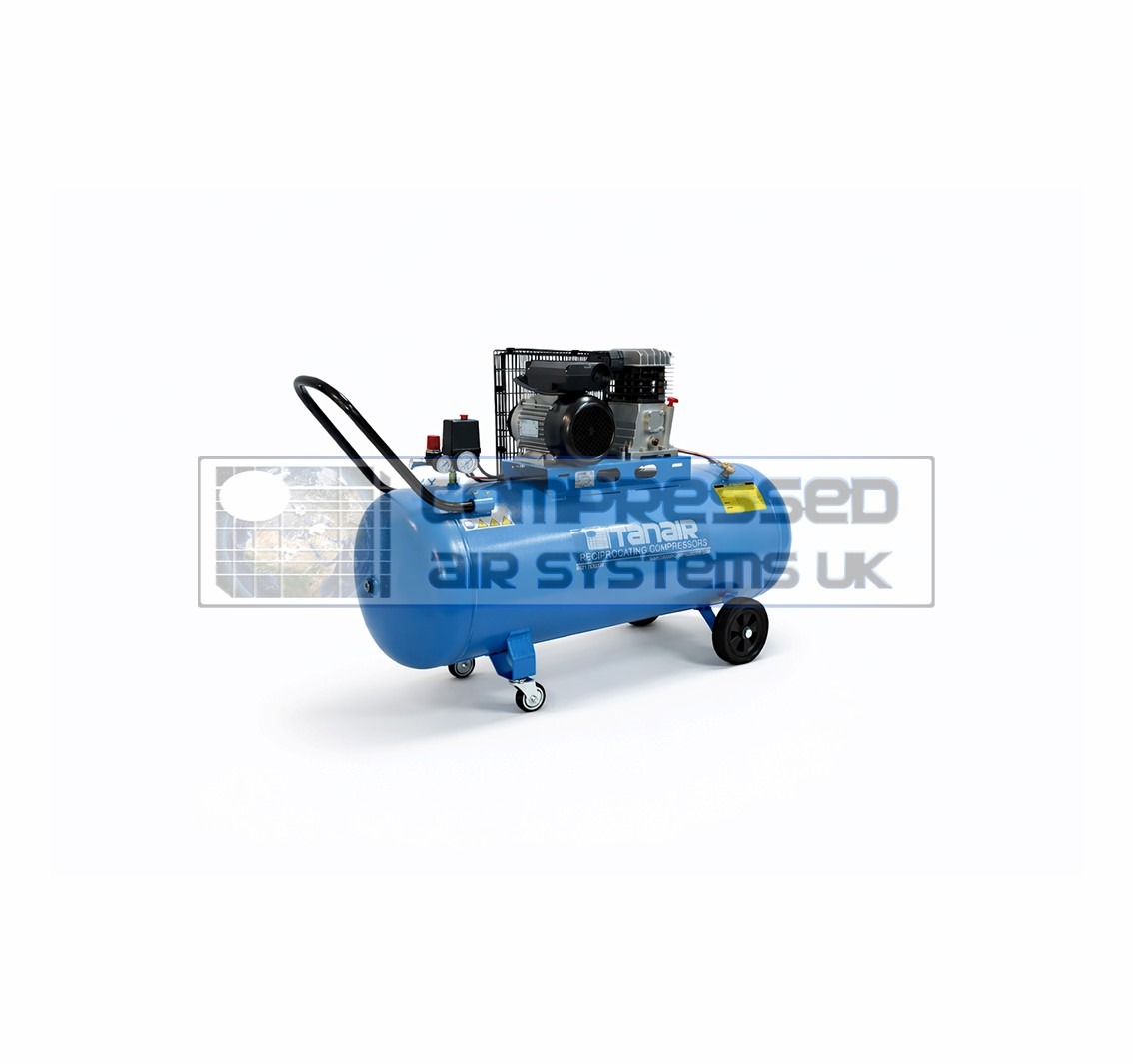
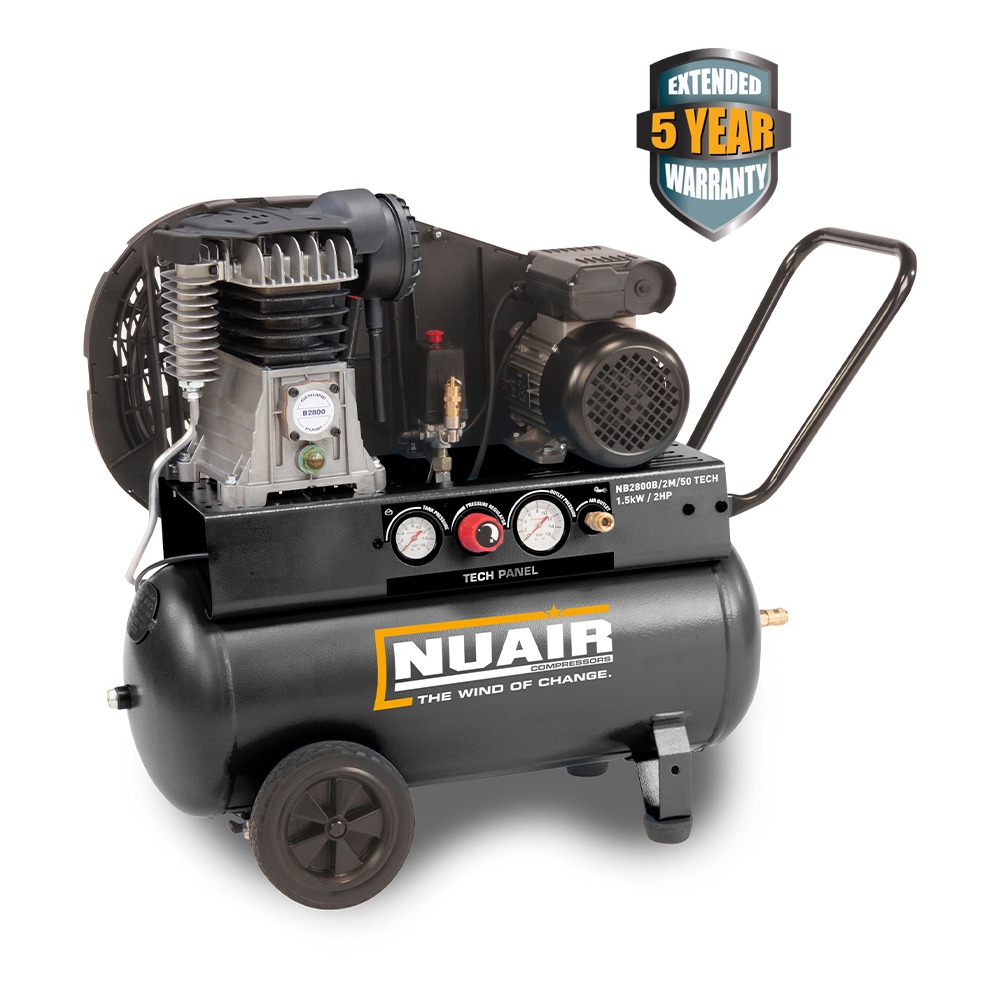
Existing Piston Compressor Recommendations — All 8 Preserved
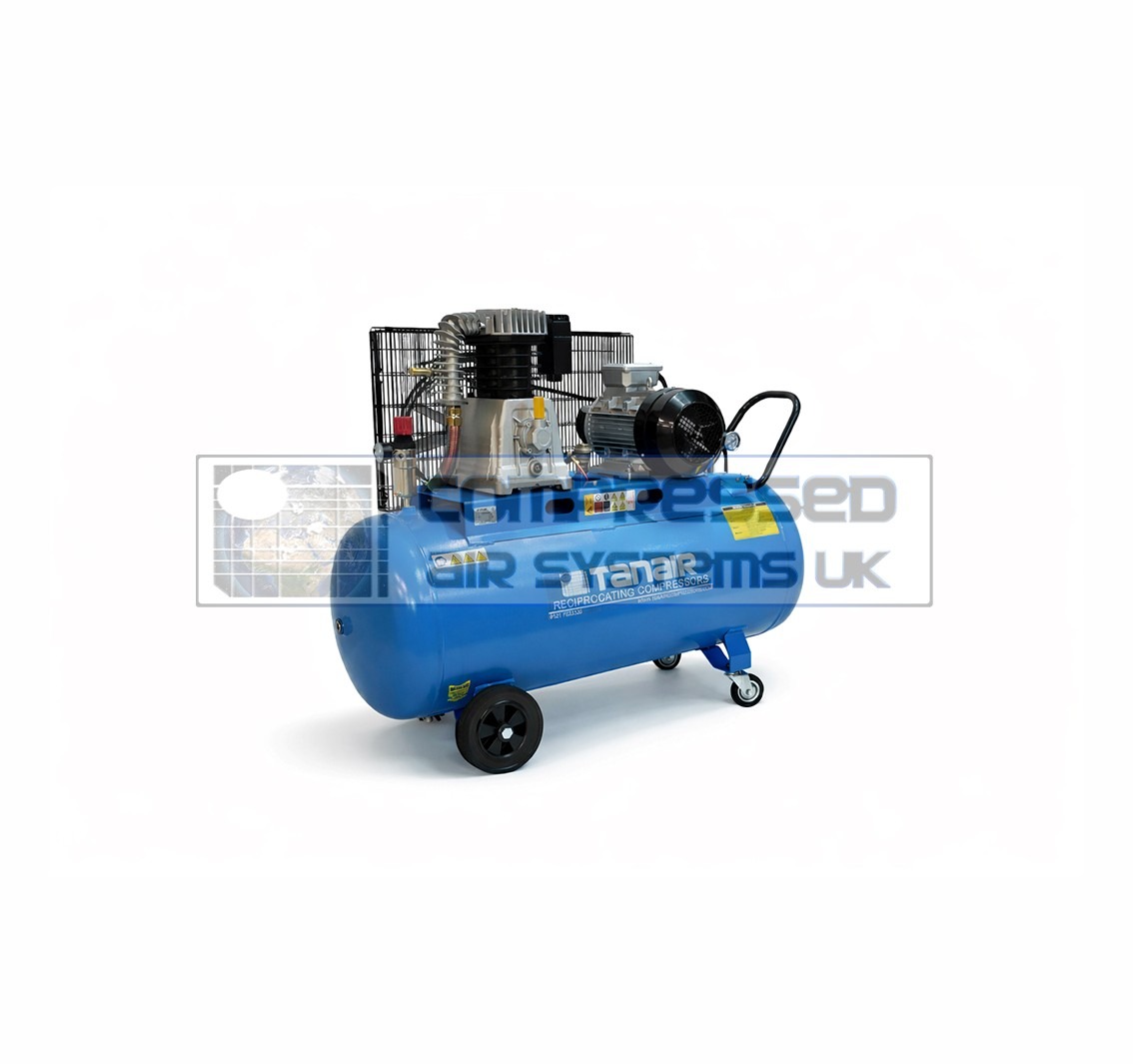
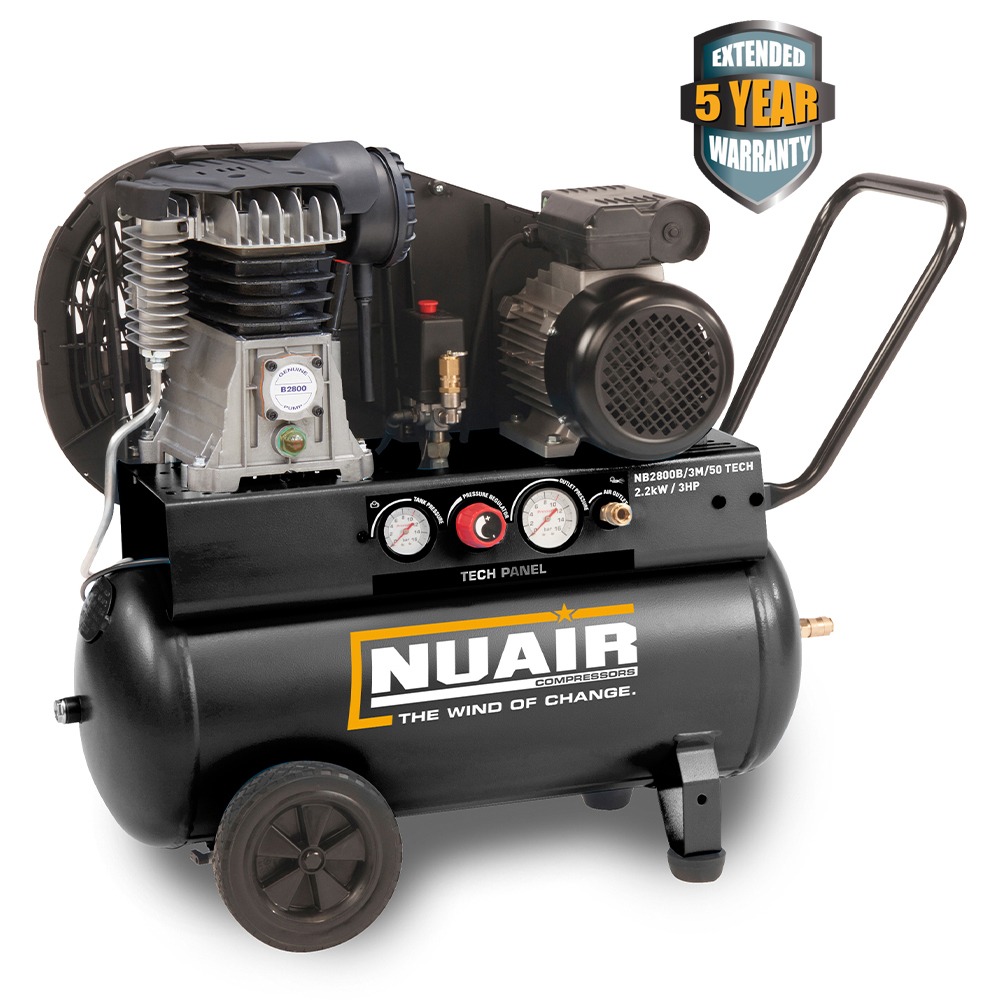
The live article contains eight piston compressor recommendations between its historical and modern sections. All eight product links and product images are retained below.



Rotary Screw Compressors Changed Continuous-Duty Air
Piston compressors remain extremely useful, but high-hour industrial applications benefit from compressor technologies designed for sustained operation. Rotary screw compressors became a major industrial solution because they can provide smooth continuous airflow in a compact package.
Modern screw compressors can be fixed-speed or variable-speed. Where demand changes significantly through the working day, VSD control can reduce unnecessary power consumption by matching compressor output more closely to actual air demand.
What Modern Compressor Technology Actually Added
ControlVariable-Speed Drives
Motor speed can vary with demand rather than relying only on fixed-speed load/unload operation.
Motor TechnologyPermanent-Magnet Motors
High-efficiency motor designs are increasingly used in modern variable-speed compressor packages.
MonitoringElectronic Controllers
Controllers can track pressure, temperature, running hours, service intervals and alarm conditions.
System EfficiencyLeak & Demand Measurement
Modern auditing tools allow compressed-air systems to be measured rather than sized or operated purely by assumption.
Smart monitoring does not make a compressor self-maintaining. Sensors and connected controls can highlight trends and alarms, but planned servicing and competent diagnosis remain essential.
Existing Large Industrial Compressor Recommendations — All 8 Preserved
The second product section on the live article contains eight Power Systems NOBEL permanent-magnet / variable-speed compressors. All eight original product routes and images are retained.

Existing Article Product
Power Systems NOBEL 9010 DV PM
88–473 CFM • 10 Bar • Variable Speed PM
View Product
Existing Article Product
Power Systems NOBEL 9008 DV PM
98–562 CFM • 8 Bar • Variable Speed PM
View Product


How Compressed Air Shaped Different Industries
ManufacturingAutomation & Assembly
Compressed air powers tools, cylinders, actuators and production machinery from a common utility supply.
AutomotiveProduction & Maintenance
Pneumatic fastening, spraying, workshop tools and tyre equipment became standard parts of vehicle manufacture and servicing.
Mining & ConstructionPneumatic Drilling
Compressed air made remote and heavy-duty drilling practical in locations where electric tooling was historically difficult to use.
Food & BeveragePackaging & Process Air
Compressed air now supports automation, packaging and selected product-contact duties where air quality is correctly specified.
Medical & DentalSpecialist Clean-Air Applications
Purpose-designed systems supply compressed air for dental equipment and other specialist applications with defined air-quality requirements.
Modern EngineeringEnergy-Aware Utilities
Industry now focuses not only on producing air, but on reducing leaks, pressure drop and unnecessary electrical consumption.
What Has Not Changed
Despite the technology, the fundamental engineering questions are still familiar: how much airflow is needed, at what pressure, for how long, and with what air quality?
- Size the compressor to actual CFM demand
- Choose the right duty for the application
- Control pressure drop through pipework, fittings and treatment
- Maintain filters, lubrication and cooling correctly
- Manage moisture and condensate
- Investigate leaks and changing demand
The Next Stage: Efficiency Rather Than Simply More Air
The modern compressed-air industry is increasingly focused on the total cost of producing air. Compressor efficiency, VSD control, heat management, leak reduction, lower pressure drop and better system measurement can all be more valuable than simply installing a larger machine.
Tanair VSD CompressorsModern variable-speed compressor technology for changing industrial air demand.View VSD Range →
Energy Saving AuditsMeasure demand, pressure and operating behaviour before changing the compressor system.View Audits →
Leak DetectionFind compressed-air losses that increase compressor running hours and energy use.Leak Detection →
Air Compressor History FAQs
Were bellows the first air compressors?
They are better described as early air-moving devices rather than modern compressors. Their importance is that they demonstrated how controlled airflow could transform combustion and metalworking.
When did compressed air become an industrial power source?
Its industrial importance grew rapidly during the 19th century, particularly in mining, tunnelling and other heavy engineering applications.
Why did factories adopt compressed air?
One central compressor system could supply many relatively compact pneumatic tools, cylinders and machines through a distribution network.
What was the major modern efficiency development?
Variable-speed control is one of the most important recent developments for sites with varying demand because it allows compressor output to follow air usage more closely.
Have piston compressors become obsolete?
No. Piston compressors remain highly useful for intermittent workshop, portable and lower-air-demand applications. Rotary screw systems are generally better suited to sustained industrial duty.
Compressed Air Systems UK
Compressed Air Systems UK has been supplying and supporting compressed-air systems since 1992, covering compressor selection, installation, servicing, breakdown support and system efficiency.
Offices, Trade Counter & Warehouse
Compressed Air Systems UK
Unit 15, Fortnum Close
Birmingham, B33 0LG
Call 0121 753 3330 or use the Contact Us page for compressor advice and support.
From Bellows to Variable Speed: Compressed Air Keeps Evolving
Today the challenge is no longer simply generating compressed air — it is generating the right amount, at the right pressure and quality, with the lowest practical lifetime cost.