Adsorption Dryers
Compare Omega OM-A-DRY heatless regenerated adsorption dryers from 4 to 120 CFM for industrial, process and specialist applications requiring a low pressure dew point.
Find the Right Adsorption Dryer for Your Compressed Air System
Adsorption dryers, also known as desiccant air dryers, are used where compressed air needs to be significantly drier than the level normally achieved by a refrigerated dryer. Typical applications include moisture-sensitive processes, instrumentation, specialist production equipment and pipework exposed to low temperatures.
The Omega OM-A-DRY range covers nominal airflow capacities from 4 to 120 CFM. Correct selection should consider actual delivered airflow, operating pressure, inlet conditions, required pressure dew point and the purge air required for regeneration.
Compact & Specialist Systems
4–20 CFMOM-A-DRY06, OM-A-DRY12, OM-A-DRY24 and OM-A-DRY36 cover lower-flow applications requiring very dry compressed air.
Workshop & Process Air
36–65 CFMOM-A-DRY60, OM-A-DRY75 and OM-A-DRY105 suit workshop, process, instrumentation and industrial compressed-air systems with greater airflow requirements.
Higher-Demand Systems
90–120 CFMOM-A-DRY150 and OM-A-DRY200 provide higher nominal capacities for larger systems and applications where consistently low moisture levels are required.
Omega OM-A-DRY Adsorption Dryers
Compare the nine OM-A-DRY models below in ascending airflow order. Final dryer selection should also allow for operating conditions, required pressure dew point and purge-air consumption.
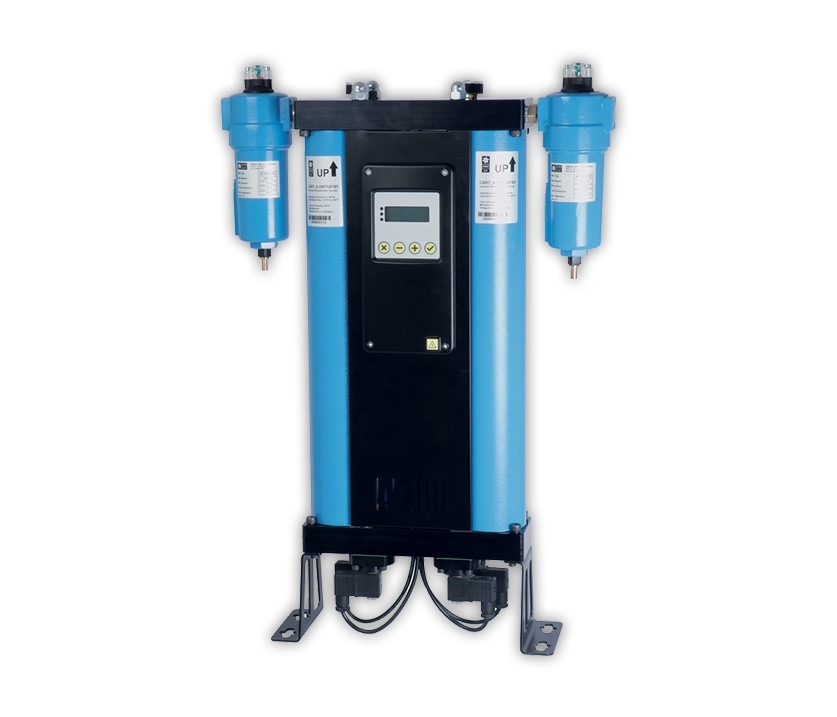
Omega OM-A-DRY06 | 4 CFM Adsorption Dryer
View Product →
Omega OM-A-DRY12 | 7 CFM Adsorption Dryer
View Product →
Omega OM-A-DRY24 | 14 CFM Adsorption Dryer
View Product →
Omega OM-A-DRY36 | 20 CFM Adsorption Dryer
View Product →
Omega OM-A-DRY60 | 36 CFM Adsorption Dryer
View Product →
Omega OM-A-DRY75 | 43 CFM Adsorption Dryer
View Product →
Omega OM-A-DRY105 | 65 CFM Adsorption Dryer
View Product →
Omega OM-A-DRY150 | 90 CFM Adsorption Dryer
View Product →
Omega OM-A-DRY200 | 120 CFM Adsorption Dryer
View Product →Adsorption Dryer Buying Guide
Selecting a compressed-air adsorption dryer requires more than matching the dryer's nominal CFM figure to the compressor. Delivered airflow, operating pressure, inlet temperature, required pressure dew point, filtration and purge-air consumption all affect correct model selection.
| Application Group | Models | Nominal Capacity | Typical Use |
|---|---|---|---|
| Compact & Specialist | OM-A-DRY06, 12, 24, 36 | 4–20 CFM | Smaller specialist equipment, low-flow processes, instrumentation and applications requiring very dry compressed air. |
| Workshop & Process | OM-A-DRY60, 75, 105 | 36–65 CFM | Workshops, production systems, process equipment and industrial applications requiring a controlled low pressure dew point. |
| Higher Demand | OM-A-DRY150, 200 | 90–120 CFM | Larger compressed-air systems and moisture-sensitive applications with higher airflow requirements. |
When should I choose an adsorption dryer instead of a refrigerated dryer?
Adsorption drying is used where compressed air needs to be substantially drier than would normally be achieved with a refrigerated dryer. Typical reasons include moisture-sensitive processes, instrumentation, critical production equipment and pipework exposed to temperatures where residual moisture could freeze.
What pressure dew point can an adsorption dryer achieve?
Omega OM-A-DRY product information lists a standard pressure dew point of -40°C, with -25°C and -70°C options depending on the model and selected specification. Establish the required pressure dew point before final dryer selection.
What is purge-air consumption?
A heatless adsorption dryer uses a proportion of already dried compressed air to regenerate the desiccant. This purge air is not available to the production system, so the compressor must have enough available capacity for both production demand and dryer regeneration.
How do I correctly size a compressed air adsorption dryer?
Start with the actual airflow required downstream of the dryer rather than compressor motor size alone. Then consider operating pressure, required pressure dew point, inlet temperature, ambient conditions, purge-air demand and the manufacturer's applicable correction factors. Suitable spare capacity may also be required where operating conditions or demand vary.
Does an adsorption dryer need pre-filtration?
Suitable filtration is important because the desiccant needs protection from liquid water, oil and particulate contamination. The pre-filtration and after-filtration arrangement should follow the dryer specification and the final compressed-air quality required by the application.
What information should I have before asking for dryer sizing advice?
Provide the compressor make and model, actual delivered airflow or required CFM, normal operating pressure, required pressure dew point, operating hours and details of the application. This helps identify an appropriate dryer and filtration arrangement.
What should be checked before installation?
Confirm required airflow, operating pressure, pressure dew point, electrical supply, filtration, condensate management, pipe connections, purge-air allowance, ventilation and adequate service clearance.
Adsorption Dryer FAQs
How many Omega adsorption dryers are in this range?
This page contains nine Omega OM-A-DRY heatless regenerated adsorption dryers, from OM-A-DRY06 through to OM-A-DRY200.
What airflow range do the OM-A-DRY adsorption dryers cover?
The models shown cover nominal airflow capacities from 4 to 120 CFM.
What working pressure range is supported?
Omega OM-A-DRY product information lists an operating pressure range of 4 to 16 bar. Confirm the specification of the individual model and the required operating conditions before selection.
Are adsorption dryers suitable for workshops?
They can be, particularly where a workshop process requires a much lower pressure dew point than a refrigerated dryer normally provides. For general workshop compressed air where very dry air is not required, a refrigerated dryer may be the more appropriate treatment route.
Can Compressed Air Systems UK help with installation and servicing?
Yes. Installation, filtration, commissioning, planned servicing, desiccant replacement and technical support are available subject to the selected equipment and site requirements.