Choose the Compressor Around the Application
A dependable compressor is important wherever pneumatic tools, machinery or production processes rely on compressed air. The correct choice depends on airflow, pressure, operating hours, power supply, air quality and how much demand varies throughout the day.
Do not choose by receiver size or motor power alone. Start with the CFM and pressure required at the point of use, then check duty cycle and electrical supply.
Which Compressor Type Suits Which Duty?
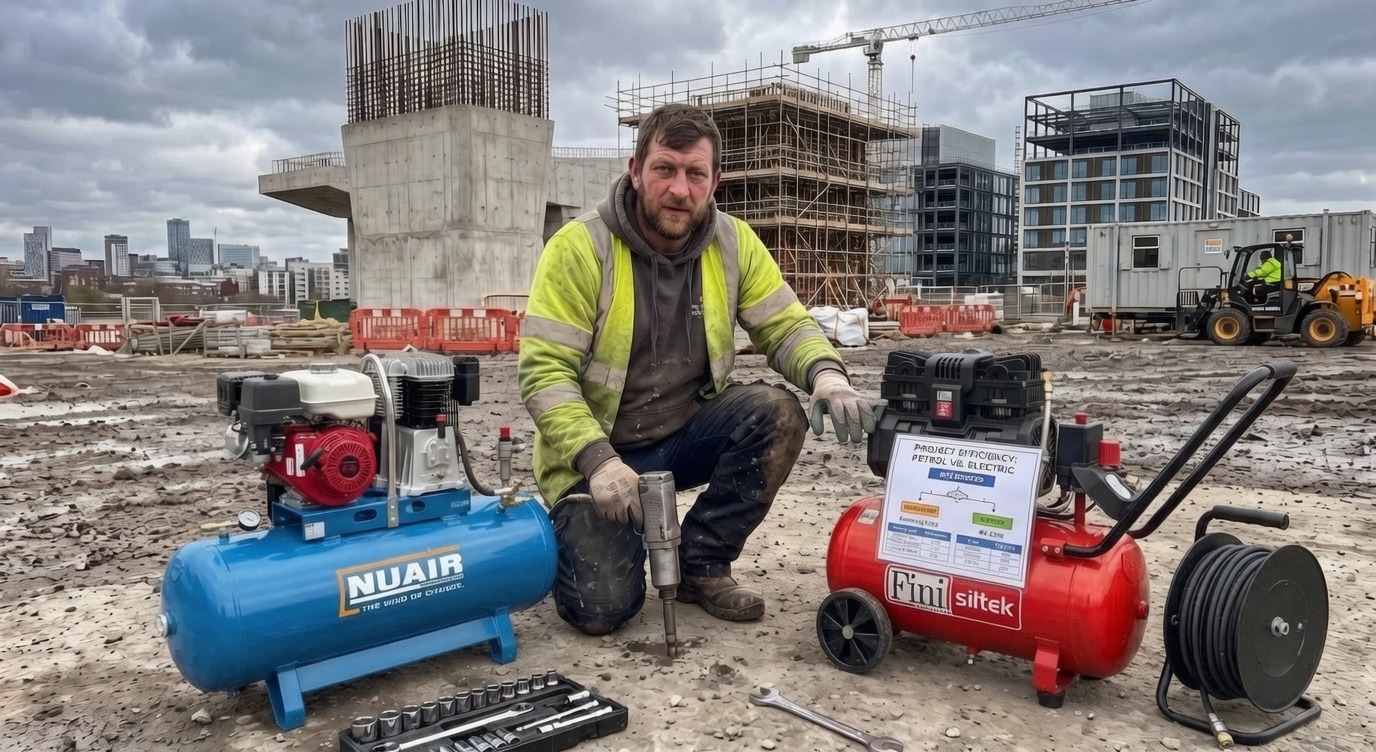
Portable PistonUseful for lighter, intermittent tools, maintenance work and mobile workshop tasks.
Belt-Driven PistonSuited to general workshop duties where demand is intermittent rather than continuous.
Fixed-Speed ScrewCan suit stable industrial base loads and longer operating hours.
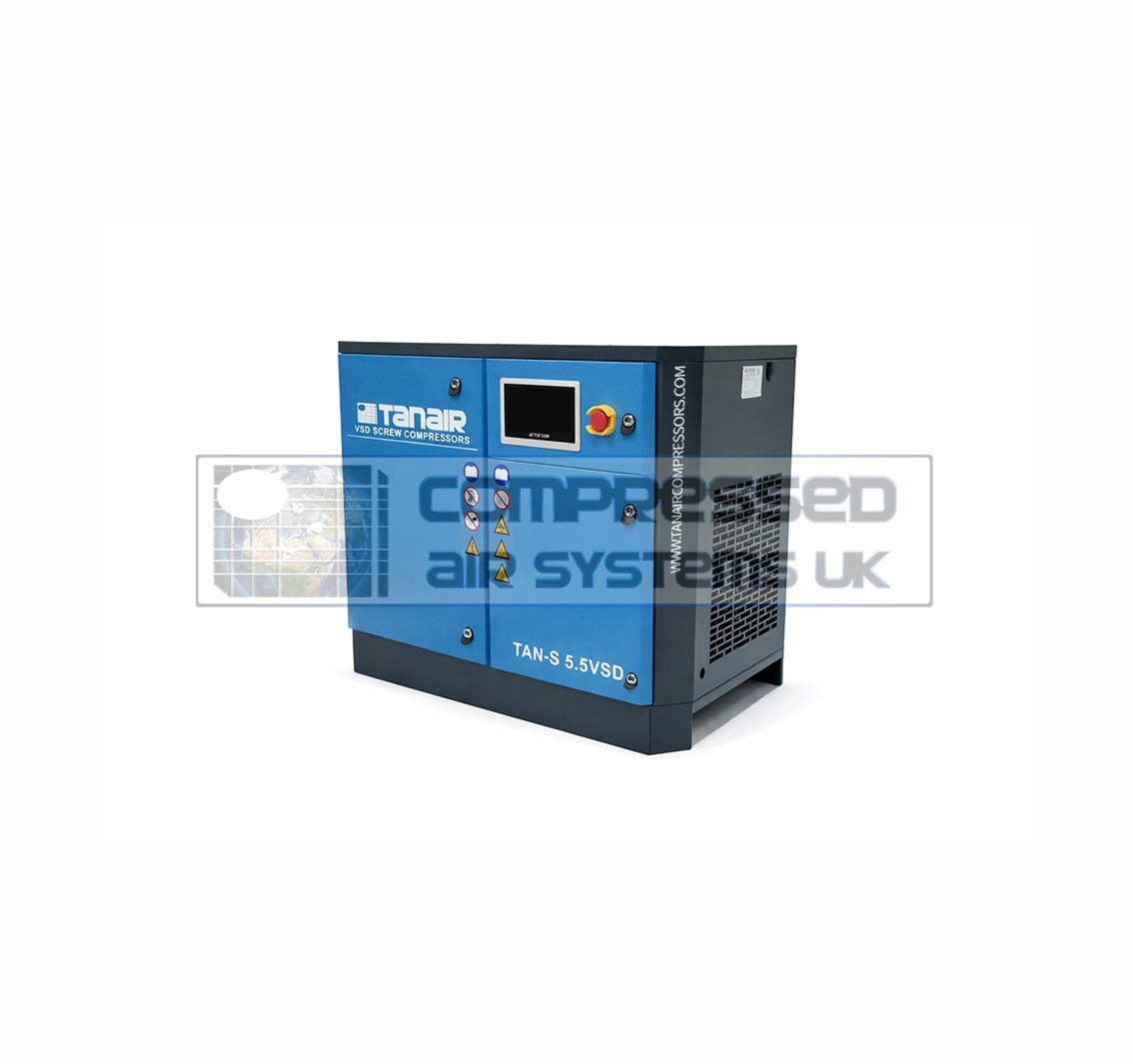
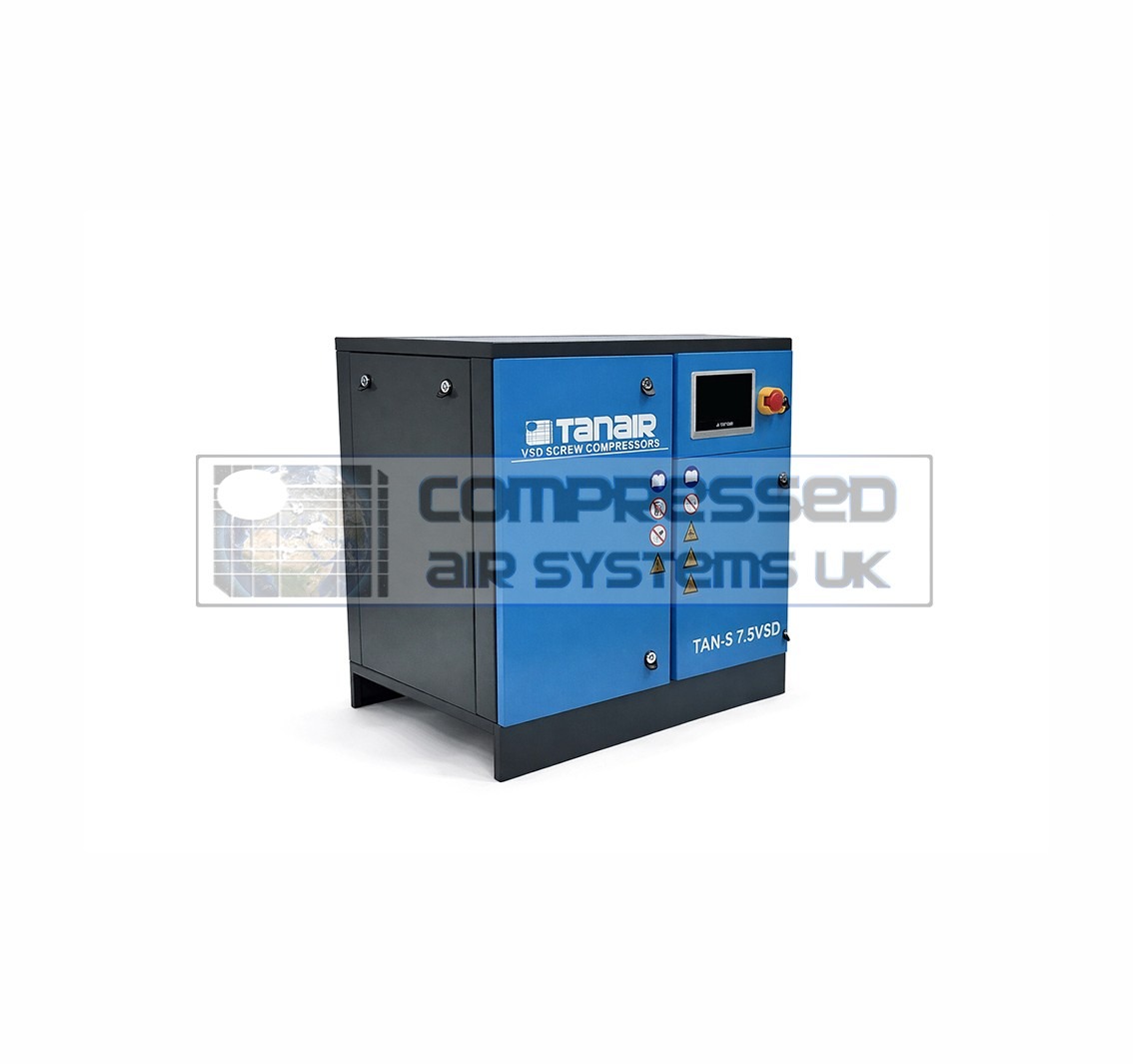
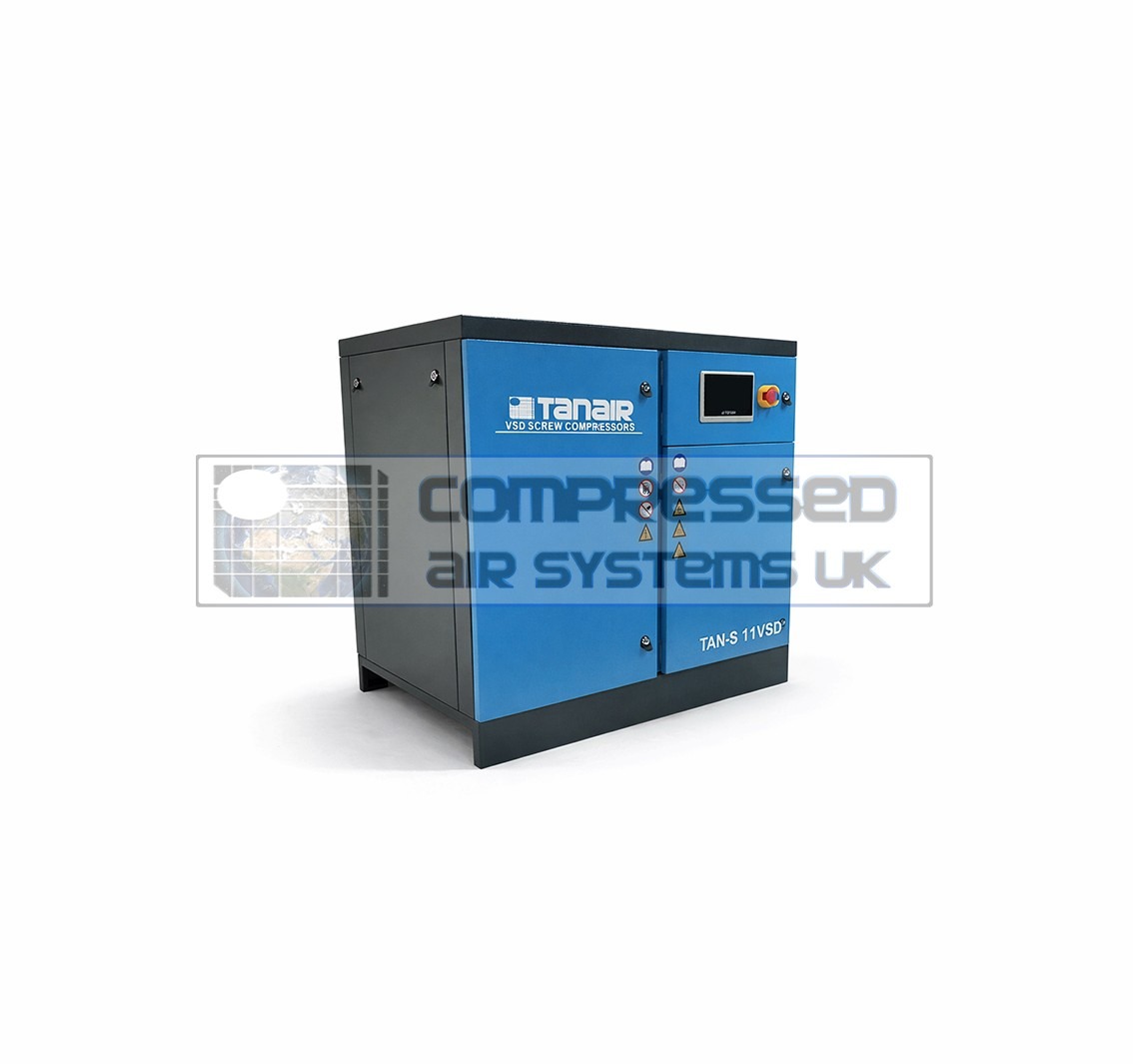
Variable-Speed ScrewCan suit applications where compressed-air demand varies materially.
Oil-FreeRemoves compressor lubricant from the compression chamber, but air treatment may still be required.
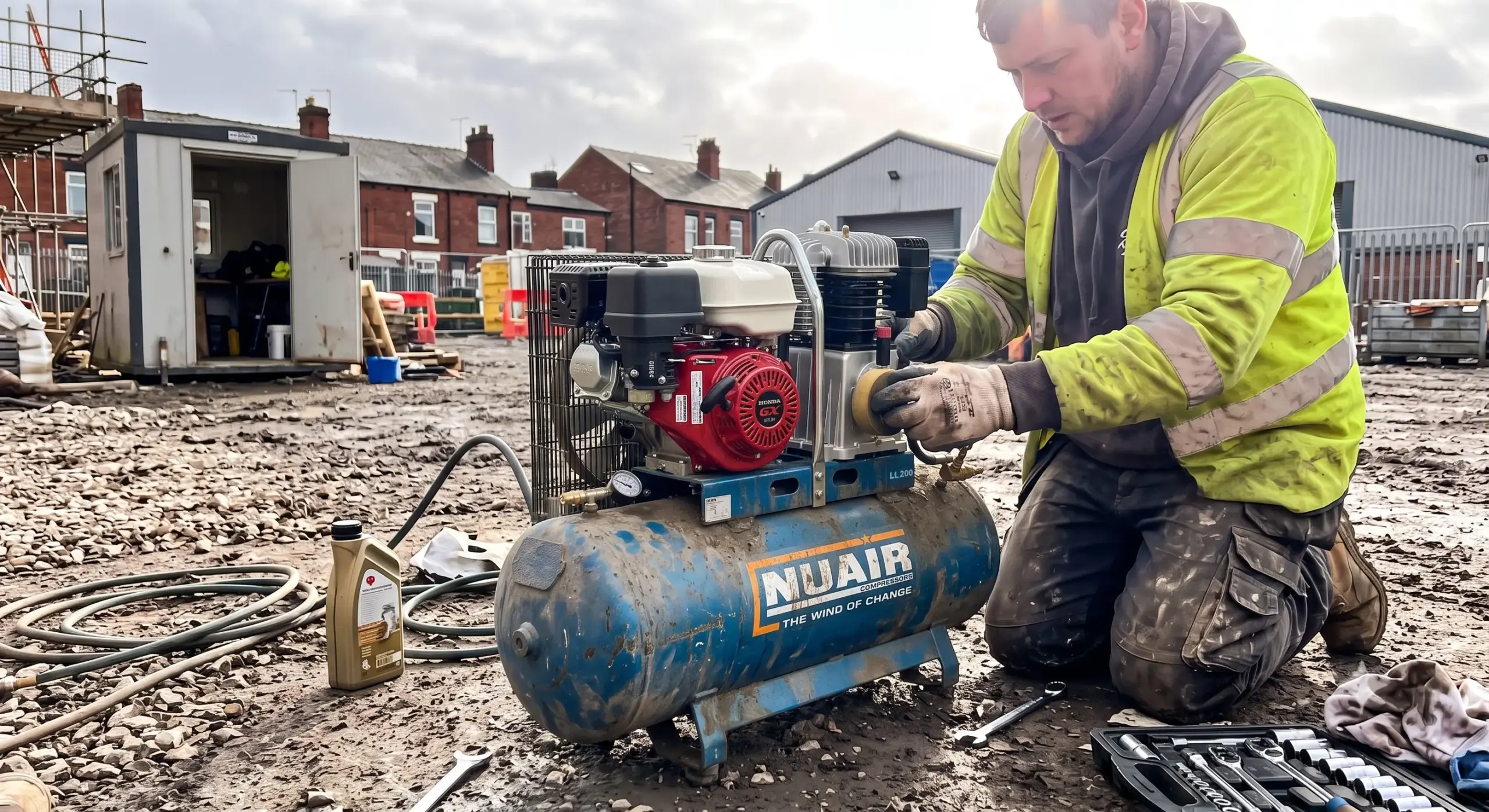
Engine-DrivenUseful where mains electricity is unavailable or mobility is essential.
Compact 230V Compressor Options
These current models provide examples of compact single-phase compressors for lighter workshop and maintenance duties. Check each tool’s airflow requirement before ordering.
Workshop Piston Compressors
For garages, maintenance departments and smaller production areas, belt-driven piston compressors can provide a practical solution where demand is intermittent.
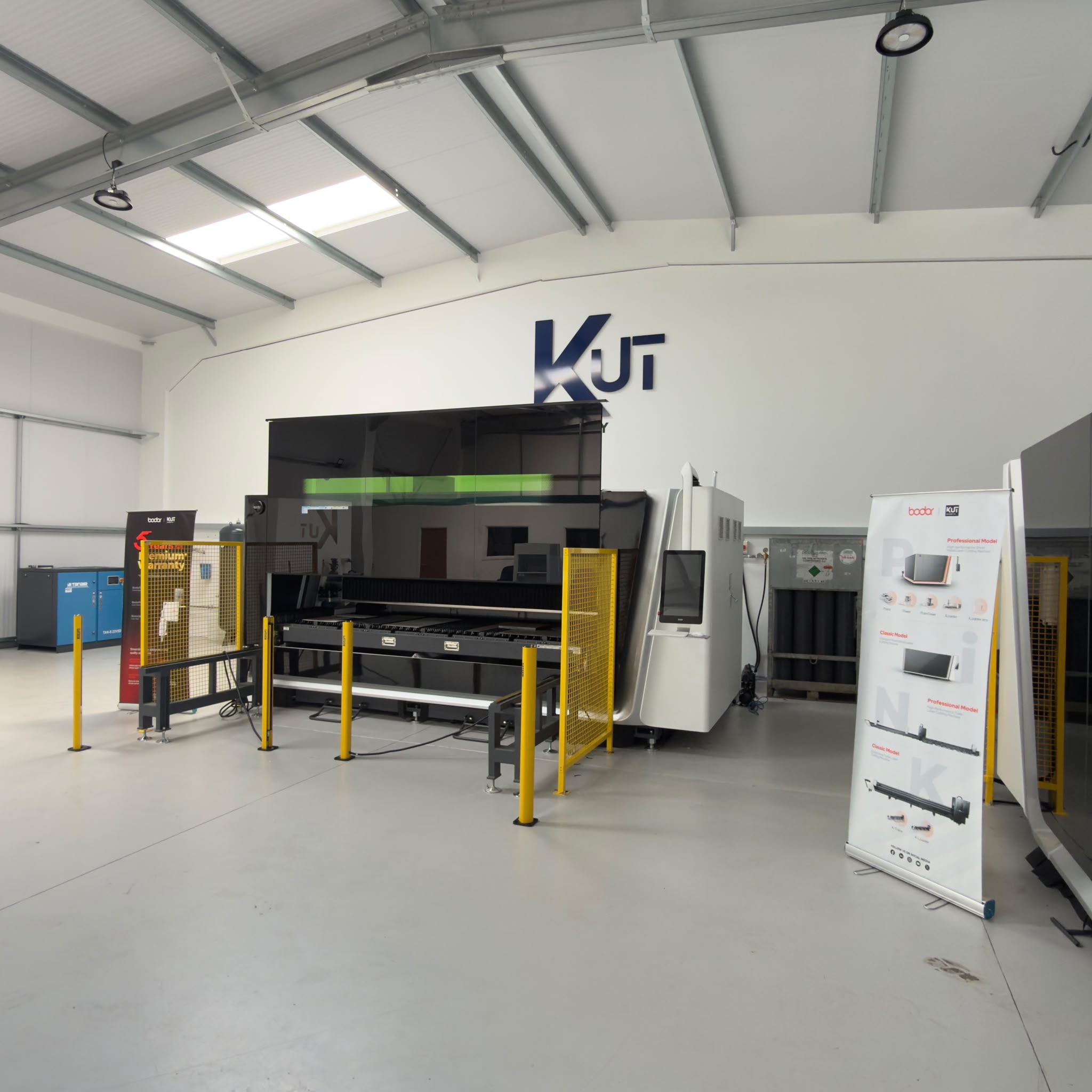
For Longer Industrial Operating Hours
Screw compressors are commonly used where compressed air is required for longer periods or as part of production. Fixed speed and VSD should be chosen from the site load profile rather than assuming one control type is always more efficient.
Oil-Free Does Not Mean Fully Treated Air
Oil-free compression removes one potential source of lubricant contamination, but atmospheric moisture, particles and downstream contamination still need to be considered.
Food, medical, laboratory, painting and other sensitive applications should specify the required air quality and select drying and filtration accordingly.
Air Treatment Is Part of the System
Dryers & Filters
- Refrigeration or other dryers selected to the required pressure dew point
- Particulate and coalescing filtration where required
- Activated carbon where vapour control is specified
Condensate Management
- Correctly functioning drains
- Oil-water separation where oily condensate is produced
- Disposal routes that meet site and environmental requirements
Hoses, Fittings and Pipework Matter
Undersized hoses, restrictive couplings, dirty filters or badly designed pipework can create pressure drop. That can encourage users to raise compressor pressure unnecessarily.
Installation and Commissioning
A correctly installed compressor needs suitable electrical supply, ventilation, isolation, pipework, drainage and service access. Commissioning should confirm operating pressure, rotation where applicable, controls, leaks and downstream equipment.
Professional installation cannot guarantee that equipment will never fail, but good installation and commissioning reduce avoidable setup problems and help the system operate as intended.
Servicing and Reliability
Planned maintenance should follow the compressor manufacturer’s schedule and operating-hour requirements. Maintenance helps keep service items in condition and can identify developing problems, but it cannot eliminate every breakdown.
- Maintain oil, filters and separators where applicable.
- Keep coolers and ventilation paths clean.
- Check belts, couplings and mounts where fitted.
- Maintain dryers, filters and condensate drains.
- Review alarms, pressures and operating temperatures.
24/7 Emergency Breakdown Assistance
Compressed Air Systems UK provides 24/7 assistance for urgent compressor breakdowns. Attendance and repair timing depend on engineer availability, location, access, machine type, fault diagnosis and parts requirements.
Urgent compressor breakdown? Call 0121 753 3330 and have the make, model, serial number and alarm or fault symptoms available if possible.
Why Businesses Use Compressed Air Systems UK
Compressed Air Systems UK has supplied and supported compressed-air equipment since 1992, with compressor sales, parts, servicing, installations, audits, hire and emergency breakdown support available for UK businesses.
Business Air Compressor FAQs
What type of compressor is best for a workshop?
It depends on airflow, pressure, duty cycle and operating hours. Piston compressors often suit intermittent demand, while screw compressors can suit longer industrial duty.
Does a modern compressor always save energy?
No. Savings depend on correct sizing, pressure, controls, operating hours and the efficiency of the system it replaces.
Is oil-free compressed air automatically suitable for food or medical use?
No. The required air quality should be specified for the process, including moisture, particles and other contaminants.
Do filters and dryers extend compressor life?
They primarily treat the compressed air downstream. Correct air treatment can protect processes and equipment, while compressor reliability depends on correct installation, operating conditions and maintenance.
Are all accessories always in stock?
Stock varies by item. Check the live product page or contact us for current availability and lead time.
Does servicing prevent breakdowns?
Servicing can reduce avoidable reliability problems and identify developing faults, but it cannot guarantee that a breakdown will never occur.
Is support available 24/7?
24/7 availability applies to urgent compressor breakdown assistance. Normal sales, customer service and trade-counter hours are separate.
Need the Right Compressor for Your Business?
Send us your tool or process requirements, CFM, pressure, operating hours and available electrical supply. We can help narrow the compressor, dryer, filtration and installation options.
Compressed Air Systems UK · Unit 15, Fortnum Close, Birmingham, B33 0LG