
Air Compressor Safety
How to set up, use, shut down and maintain an air compressor safely — with a quick checklist and step-by-step guidance.
Air compressors power everything from tyre inflation and blow guns to impact wrenches, nailers and spray equipment. Because they combine high-pressure air and electric motors, correct setup matters — for safety, performance and the life of your tools.
Quick safety checklist
Do these checks before you switch on:
- PPE: safety glasses, hearing protection and safety boots (especially for heavy equipment and nailers/staplers).
- Stable position: compressor on a flat, solid surface with good airflow around it.
- Inspect: check hoses, fittings and the tank area for damage, loose parts or visible leaks.
- Correct pressure: never exceed the tool’s rated PSI/bar.
- Drain awareness: know where the drain valve is and plan to drain moisture regularly.
What you’ll need
- Air hose suitable for your working pressure and airflow (use the correct internal diameter for your tool demand).
- Quick-release fittings (Euro-type quick-release is common).
- Air filter / water separation (especially important for spray work and clean-air applications).
- Compressor oil (if your model is oil-lubricated) and/or an in-line oiler if required.
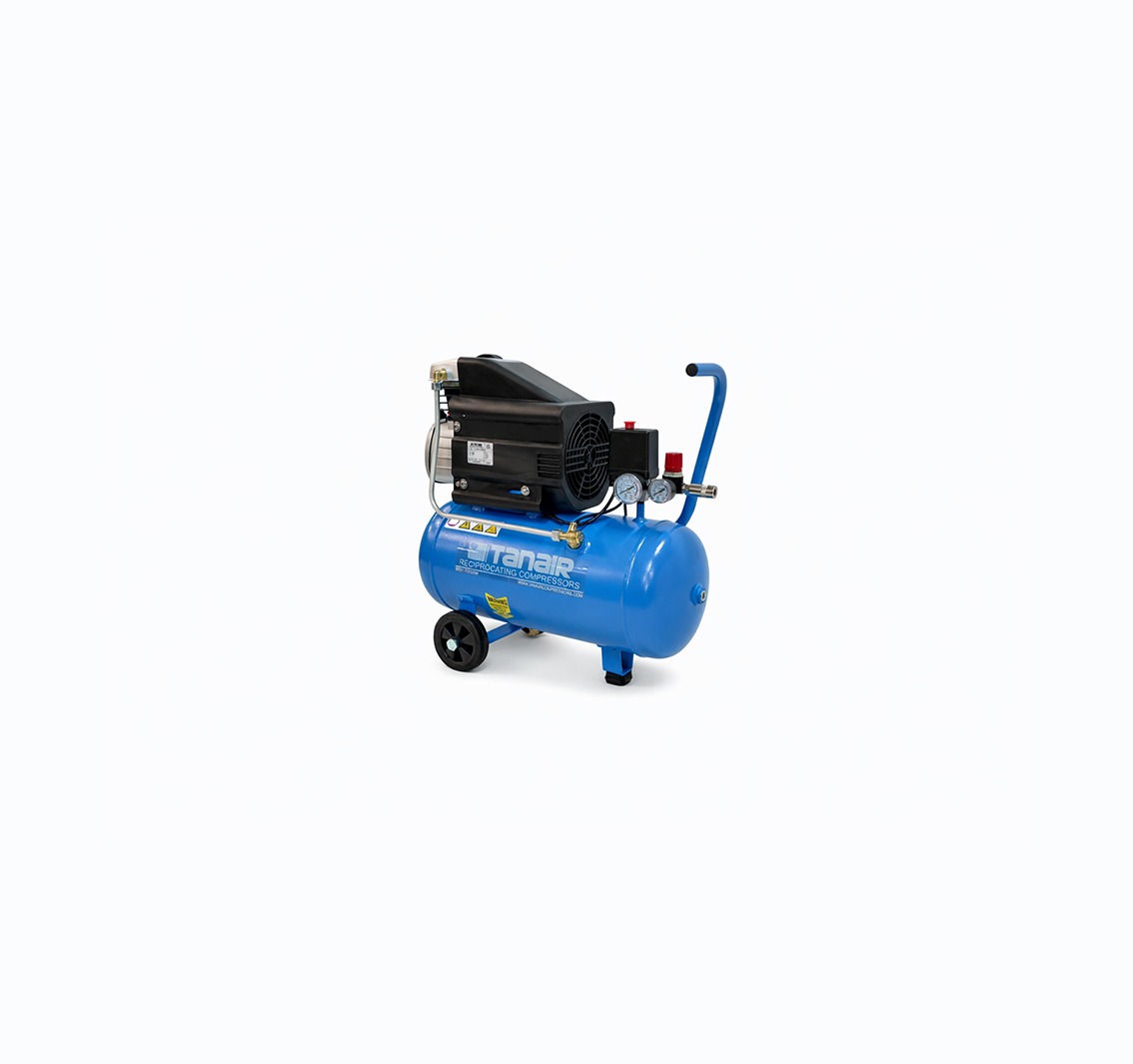
Identify the Main Parts
If you’re new to compressors, identifying the main components makes setup, maintenance and troubleshooting much easier. The model shown is a Tanair TAN PCB2 2.2 / 230V 150L piston compressor.
Step-by-step: set up your air compressor
1) Put safety first (PPE + safe area)
Wear eye protection and hearing protection. Keep the work area tidy and well lit, and make sure the compressor is placed where it won’t be knocked or become a trip hazard.
2) Avoid extension leads (use hose extension instead)
Avoid using a mains extension lead where possible. Long electrical leads can cause voltage drop and reduce performance. If you need extra reach, extend the air hose instead (e.g., with a hose reel).
3) Check the oil level (oil-lubricated compressors)
Check the oil sight glass and keep the level within the recommended range. Top up slowly using the correct oil. Also keep pneumatic tools lubricated to reduce wear.
4) Fit the intake filter / air filtration
Fit the correct air filter to protect the compressor from debris and reduce internal wear. Filtration is essential where air quality matters (e.g., paint spraying).
5) Fit the oil bung / breather (if supplied)
Some compressors require an oil bung/breather to be installed before use, allowing the crankcase to breathe correctly.
6) Power on
Switch the compressor on using the main power switch. If you need to stop it, switch it off and isolate from the power supply.
7) Let the tank fill to cut-out pressure
Allow the tank to fill until it reaches its maximum set pressure (commonly around 8 bar on many workshop models). It should then stop automatically and restart when pressure drops during use.
8) Connect the air hose
Connect your hose using the correct quick-release fittings. Ensure connections are fully seated and secure.
9) Connect your air tool (and lubricate if needed)
Connect your tool to the hose. If you’re not using an in-line oiler, add a few drops of pneumatic tool oil into the coupler before use and reapply during longer sessions.
10) Set the regulator to the tool’s required pressure
Turn the regulator to reach the correct pressure for your tool. Always check the tool manual/spec plate — “more pressure” isn’t better if it exceeds the rating.
Operating safely (best practice)
- Keep ventilation clear: don’t block cooling air around the motor/pump.
- Listen for leaks: hissing indicates wasted air and extra strain on the compressor.
- Use clean, dry air when needed: filtration/water separation matters for spray work and sensitive tools.
- Don’t exceed duty cycle: if the unit is running constantly, you may be under-sized for the application.
After use: shutdown & storage
1) Close down the regulator
Turn the regulator down (counterclockwise) to reduce/stop airflow.
2) Power off and isolate
Switch off and unplug from the power outlet. Let the unit cool before moving or storing.
3) Drain moisture from the tank
Drain condensate using the drain/ball valve under the tank. This helps prevent corrosion and reduces moisture reaching tools. If manual draining is difficult to do consistently, consider fitting an automated drain.
Maintenance tips for longevity
Like all machinery, compressors need routine care to stay reliable. Use this as a simple maintenance baseline and refer to your manual for exact intervals.
Read and follow your compressor manual
The manual covers correct oil type, service intervals and safe operating limits.
Clean/replace the intake filter
A clogged intake filter makes the compressor work harder and can reduce output — check it more often in dusty environments.
Drain condensate regularly
Water build-up increases corrosion risk and can affect air quality.
Inspect hoses, fittings and valves
Replace cracked hoses or corroded fittings. Vibration can loosen hardware over time, so check fasteners periodically.
Check/change compressor oil (where applicable)
Follow manufacturer intervals for oil changes. Heavy-use machines need more frequent servicing than occasional-use units.
Thermal cut-out / overheating
Many compressors have a thermal cut-out reset located near the motor/pump area. If the compressor shuts off:
- Switch off and unplug.
- Let it cool fully.
- Check ventilation, ambient temperature, and whether the compressor is being overworked.
- Reset only after it has cooled and you’ve addressed the cause.
Essential Safety Reminders
Repairs & Faults
If you notice unusual noise, pressure issues, leaks or overheating, stop using the compressor immediately.
Do not attempt internal repairs unless qualified — incorrect repairs can create serious safety risks and further damage.
For urgent support, call 0121 753 3330.
Power Off Properly
Always switch off the compressor and fully isolate it from the power supply before maintenance, transport or inspection. Never rely solely on the pressure switch — unplug the unit to eliminate electrical risk.
Release Air Pressure
Before disconnecting fittings or servicing, release stored air pressure from the tank and lines. Residual pressure can cause fittings to eject or tools to activate unexpectedly.
Avoid Poor Conditions
Do not operate compressors in wet environments, extreme heat, confined spaces or unstable positions. Poor conditions increase overheating risk, wear and potential electrical hazards.
Helpful related guides
Air Compressor Maintenance Checklist
A practical checklist for inspections, filters, moisture control and service planning.
Read the checklist →Compressed Air Fittings Guide
Choose the right fitting type to reduce leaks, improve flow and efficiency.
Learn about fittings →Storing & Handling Air Hoses Safely
Reduce trip hazards, prevent kinks, and extend hose life.
Hose safety tips →Need More Help?
Not sure which compressor is right for your tools? Experiencing pressure issues, leaks, or looking to upgrade your setup? Our team can help you choose the right equipment, fittings and maintenance plan for your application.
FAQs
How often should I drain the compressor tank?
Ideally after each use for portable/workshop compressors, or on a routine schedule that prevents water build-up.
Can I use any air hose with my compressor?
Use a hose rated for your pressure and suitable for the required airflow. Undersized hoses/restrictive fittings can reduce tool performance.
What pressure should I set on the regulator?
Set it to the tool’s required operating pressure (check the tool manual/spec plate). Don’t exceed the tool’s rated PSI/bar.
My compressor keeps running — is that normal?
Constant running can indicate a leak, incorrect settings, high-demand tools, or an undersized compressor. Check for leaks and confirm output matches demand.
Why do I need filtration for paint spraying?
Moisture and contamination can ruin finishes. Appropriate filtration/water separation helps deliver cleaner, drier air.