
Quick Release FittingsFast tool and hose changes using a matched plug and coupling profile.View Quick Release Fittings →
Compressed-air fittings may be small, but their bore, thread, material and coupling profile can affect airflow, pressure drop, leakage and safety. This guide explains the main fitting types used in UK workshops and industrial air systems — and how to choose compatible components.
Every fitting creates a transition in the compressed-air path. If the internal bore is too small, the coupling profile is mismatched or the connection leaks, pressure at the tool can fall even when the compressor itself is correctly sized.
Good fitting selection therefore starts with the complete system: compressor capacity, hose bore, pipe size, working pressure, air-tool demand and the connection standard already in use.


Quick-release fittings are useful where hoses or tools are changed frequently. The critical point is that the male plug and female coupling must use the same profile.
Pushfit connectors allow compatible pneumatic tube to be inserted directly into a collet fitting. They are popular for compact pneumatic systems because assembly is quick and layouts can be kept neat.
Hose tails connect flexible air hose to threaded equipment or other fittings. Match the barb diameter to the hose internal diameter and use an appropriate clip or clamp for the hose construction.
Long hose runs and small bores can create pressure drop, so hose size should be selected around airflow as well as physical convenience.
Galvanised malleable-iron fittings are commonly used for permanent compressed-air distribution where strength and a robust threaded system are required. The zinc finish improves corrosion resistance, but the installation environment, condensate management and material compatibility still matter.
The range includes elbows, sockets, nipples, tees, bushes, unions, brackets and reducing fittings for building or modifying pipework.
BSP and NPT threads can appear similar, but their thread form and sealing geometry differ. Forcing mismatched standards together can damage threads or create an unreliable connection.
| Check | Why It Matters |
|---|---|
| Thread standard | Confirm BSP, NPT or another specified thread before ordering. |
| Nominal thread size | The named BSP size is not the same as simply measuring the outside diameter. |
| Male / female | Make sure the connection gender matches the equipment or adaptor. |
| Parallel / taper | Use the sealing method specified for the actual thread combination. |
| Pressure rating | The fitting must be suitable for the system's maximum operating pressure and conditions. |
The old guide grouped 1/4", 3/8" and 1/2" fittings by general tool type. That is useful as a rough starting point, but the better method is to size the complete flow path around the actual CFM requirement and acceptable pressure drop.
Smaller hoses and fittings may be adequate for inflation, nailers and low-consumption tools where run length is short.
Impact tools, grinders, sanders, spray equipment and industrial machinery may benefit from larger-bore hose, couplings and pipework.
The live article contains eight fitting products in its embedded product section. All eight product routes and the original product images are retained here.
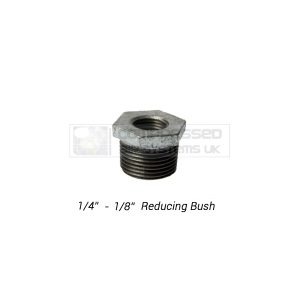
Existing product from the live fittings guide.
View Product
Existing product from the live fittings guide.
View Product
Existing product from the live fittings guide.
View Product
Existing product from the live fittings guide.
View Product
Existing product from the live fittings guide.
View Product
Existing product from the live fittings guide.
View Product
Existing product from the live fittings guide.
View Product
Existing product from the live fittings guide.
View ProductCompressed-air leaks waste energy and can reduce pressure at the tool. Fittings should therefore be included in routine leak inspections.
No. They use different coupling profiles. Standardise on a compatible profile rather than forcing unlike plugs and couplings together.
BSP refers to British Standard Pipe thread forms commonly used on compressed-air fittings in the UK. Always confirm the exact BSP size, thread gender and sealing arrangement.
Possible causes include undersized hose, restrictive couplings, leaks, long hose runs, dirty filters or inadequate compressor airflow.
They should not be treated as interchangeable. Use the correct adaptor or component for the thread standard specified by the equipment.
Match the hose-barb diameter to the internal diameter of the hose, then separately confirm the BSP thread size and gender on the threaded side.
No single sealing method suits every connection. Use the seal or thread sealant specified for the fitting type, and keep sealing material out of the airflow path.
For fittings, hose, pipework or help identifying an existing connection, call 0121 753 3330 or use the Contact Us page.
Offices, Trade Counter & Warehouse
Compressed Air Systems UK
Unit 15, Fortnum Close
Birmingham, B33 0LG
Send us a clear photo, thread size, hose diameter and the fitting or coupling profile you are trying to match.