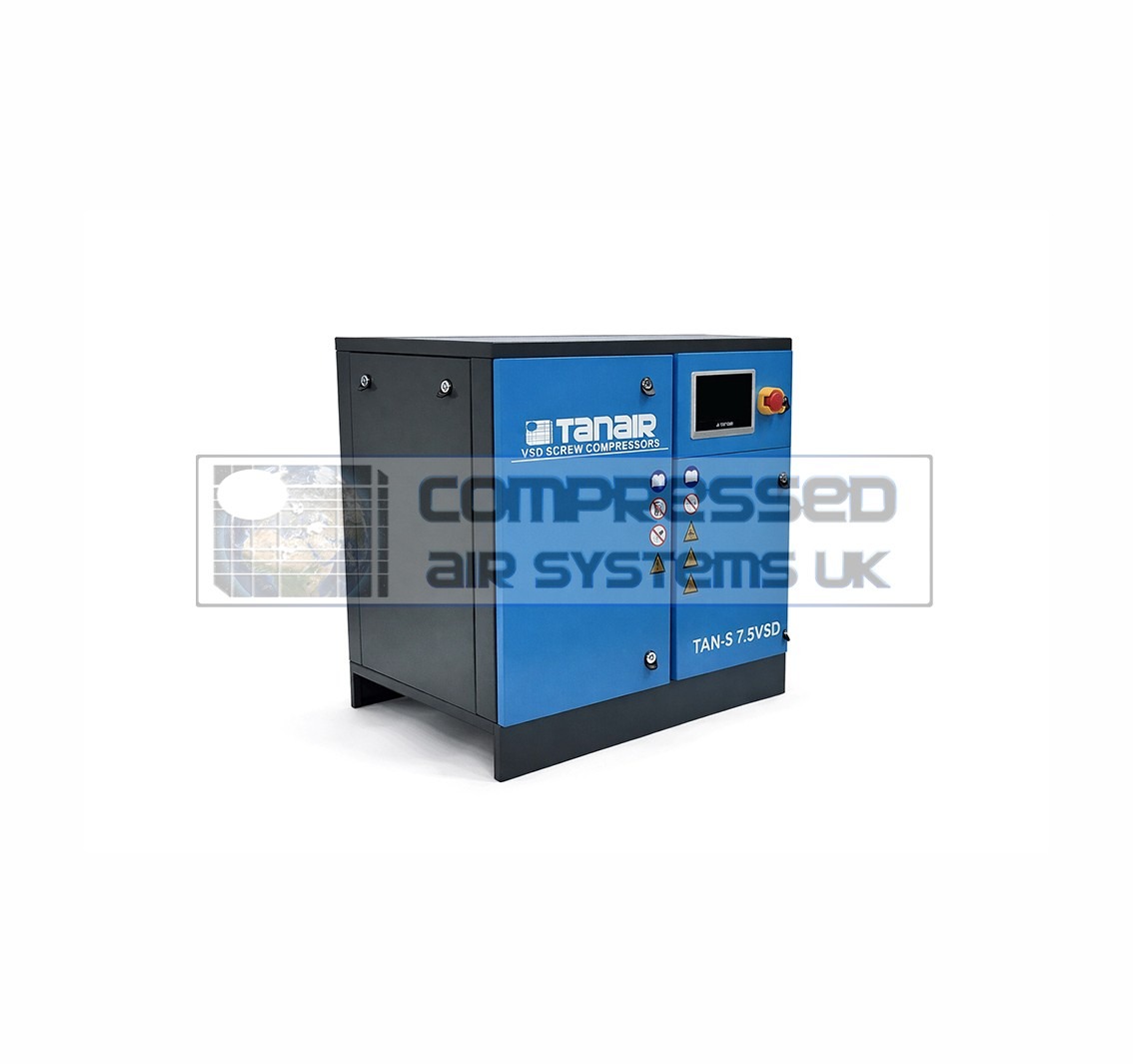
Rotary Screw Air Compressors
Compare fixed-speed and variable-speed systems, explore trusted compressor ranges and find the right route for your site
Choose a Rotary Screw Compressor by Application
Start with the option that best reflects how your site uses compressed air. These routes reduce the technical decisions required at the beginning and direct customers towards the most relevant compressor range.
Steady Industrial Demand
Fixed-speed rotary screw compressors for production sites with relatively stable air demand and long daily operating periods.
Best for predictable demand →Variable Demand & Energy Saving
Variable-speed compressors for sites where demand rises and falls throughout the working day.
Best for changing demand →Compact Workshop Screw Compressors
Smaller rotary screw options for workshops and light industrial users that need quieter, continuous-duty compressed air.
Best for compact installations →Browse Rotary Screw Compressor Ranges
Fixed Speed or Variable Speed?
Use this quick selector for an initial direction. The final compressor should still be selected from required airflow, pressure, running hours and site conditions.
Fixed-Speed Rotary Screw Compressors
Often suited to applications with relatively predictable compressed air demand.
- Strong option for steady production demand
- Reliable for long daily operating periods
- Straightforward control arrangement
- Can operate efficiently when correctly sized
Variable-Speed Rotary Screw Compressors
Often suited to sites where demand changes and unloaded running would otherwise waste energy.
- Adjusts output to match air demand
- Can reduce unloaded running
- Helps maintain stable pressure
- Strong potential for energy savings
Rotary Screw Compressor Buying Guide
Open the sections below for the technical guidance most relevant to your installation.
Calculate the required airflow
Add the air consumption of tools and processes that may operate at the same time. Compare compressors using free air delivery rather than motor power or receiver capacity alone.
- Use actual CFM or litres-per-minute requirements.
- Allow for simultaneous production demand.
- Include leakage and sensible future growth.
- Avoid excessive oversizing.
Confirm the required operating pressure
Allow for pressure loss through dryers, filters, pipework, regulators and hoses. Running at a higher pressure than necessary increases energy use.
Assess loaded and unloaded running
A fixed-speed compressor continues to consume power while unloaded. Sites with long unloaded periods may benefit from variable-speed control or a different compressor arrangement.
Check the electrical supply
Confirm the available three-phase supply, cable capacity, local isolator and protective device. Starting method and full-load current must suit the site.
Plan ventilation and heat removal
Rotary screw compressors generate significant heat. The installation space must provide adequate cooling airflow and access for servicing.
Include the air receiver, dryer and filtration
The complete system may require a receiver, refrigerated or desiccant dryer, line filtration, condensate drains and oil-water separation.
Consider noise and installation location
Enclosed rotary screw compressors are generally quieter than piston machines, but the published sound level, room construction and proximity to occupied areas should still be reviewed.
Review service access and maintenance support
Allow space for filter, separator, belt and oil changes. Confirm the service interval, lubricant type, replacement parts and local engineering support before selecting the machine.
Why Choose a Rotary Screw Air Compressor?
Rotary screw compressors are designed for applications requiring a reliable, consistent compressed air supply over longer daily operating periods. They are widely used in manufacturing, engineering, automotive, processing and other industrial environments.
Continuous-Duty Performance
Unlike conventional piston compressors, rotary screw machines are generally better suited to regular and continuous demand. Correct sizing, ventilation and maintenance remain essential for long-term reliability.
Air End and Compression Process
A rotary screw compressor uses two intermeshing rotors to compress air. In an oil-injected machine, lubricant supports sealing, cooling and bearing protection. The compressed air then passes through separation and cooling stages before leaving the compressor.
Receiver-Mounted and Base-Mounted Packages
Receiver-mounted compressors combine the compressor and receiver in one package, sometimes with an integrated dryer. Base-mounted machines are installed with a separate receiver and air-treatment equipment where required.
Integrated Dryer Packages
Some rotary screw compressors are available as complete packages with a receiver and refrigerated dryer. This can simplify installation, but dryer capacity and pressure drop must still suit the required airflow and ambient conditions.
Energy Efficiency
Energy is normally the largest lifetime cost of an industrial compressor. Efficiency depends on correct sizing, operating pressure, demand profile, maintenance condition, system leakage and control strategy.
Improving efficiency may include:
Correct Sizing
Avoid excessive capacity and unnecessary unloaded running.
Lower Pressure
Operate at the lowest pressure that reliably supports production.
Leak Reduction
Repair leaks that cause the compressor to run unnecessarily.
Planned Maintenance
Maintain filters, coolers and separators to reduce restriction.
Brand & Range Guidance
FINI offers a broad industrial compressor range suitable for workshop, manufacturing and continuous-duty applications.
Power Systems provides industrial rotary screw compressor solutions across a wide capacity range, including fixed-speed and energy-focused configurations.
Nuair provides compact rotary screw compressor options for workshops and smaller industrial users.
FINI
Broad industrial range for smaller workshops through to larger sites.
Power Systems
Industrial compressors across a wide airflow and power range.
Nuair
Compact screw compressor options for workshop and light industrial use.
Typical Applications
Manufacturing
Production machinery, automation and general plant air.
Automotive
Bodyshops, garages, tyre equipment and air tools.
Engineering
Machining, fabrication and routine industrial operations.
Processing
Steady compressed air for commercial and industrial processes.
Variable Speed Can Reduce Wasted Energy
Where air demand changes significantly, a correctly sized variable-speed compressor can reduce unload running and match output more closely to demand.
Actual savings depend on the existing compressor, operating hours, load profile, pressure and site conditions. A demand assessment provides a stronger basis for selection than a generic percentage alone.
Estimate Potential SavingsInstallation, Service & Aftercare
Compressor Installation
Installation and compressed air pipework support for suitable systems.
View Installations →Planned Servicing
Routine maintenance based on running hours and site conditions.
View Servicing →24/7 Breakdown Support
Emergency engineering assistance for compressor failures.
View Breakdown Support →Technical Advice
Help selecting, replacing or reviewing an industrial compressor system.
Contact Our Team →Rotary Screw Compressor FAQs
What are rotary screw compressors best suited to?
Rotary screw compressors are generally suited to regular and continuous industrial demand where a dependable compressed air supply is required for long daily operating periods.
What is the difference between fixed speed and VSD?
Fixed-speed compressors are commonly suited to stable demand. Variable-speed compressors adjust motor speed to match changing demand and can reduce unloaded running and wasted energy.
How do I size a rotary screw compressor?
Size the compressor from required free air delivery, operating pressure, running hours, demand profile, leakage, future growth and the capacity of existing dryers and filtration.
Do I need a separate air receiver?
Some compressors are receiver-mounted, while base-mounted machines use a separate receiver where required. The correct arrangement depends on demand, control method and installation layout.
Do rotary screw compressors require a dryer?
Many applications benefit from a refrigerated or desiccant dryer. The correct air treatment depends on the required pressure dew point and air quality.
Can Compressed Air Systems UK install and service the compressor?
Yes. Compressed Air Systems UK provides compressor installation, pipework, planned servicing, repairs, spare parts and emergency breakdown support, subject to the equipment and site.
Industries We Support
Support & Aftercare
Our Expert Services
24/7 EMERGENCY BREAKDOWN
Rapid response for all air compressor malfunctions, anytime you need us.
View ServiceINSTALLATIONS
Expert design and bespoke pipework installations tailored to your site.
View ServiceSERVICING
Comprehensive maintenance to keep your air systems running at peak performance.
View ServiceVISIT OUR TRADE COUNTER
Come meet our experts in person at our dedicated Birmingham trade hub.
Get DirectionsSHOP NOW
Browse our full range of air compressors, parts, and industrial tools online.
Go To ShopCONTACT US
Have a question? Reach out to our team today for expert advice and support.
Send Message