When a Diesel Compressor Makes Sense
Diesel air compressors are most useful where compressed air is required but a suitable electrical supply is unavailable or impractical. Typical examples include remote maintenance, agriculture, mobile service work and some construction or infrastructure applications.
The benefit is independence from mains electricity. The trade-offs are fuel storage, exhaust emissions, noise, heat, engine servicing and site-specific emissions rules.
Choose from the job, not the fuel: establish required airflow, working pressure, duty cycle, mobility and operating environment before deciding whether diesel is the right power source.
Current Tanair Diesel Range
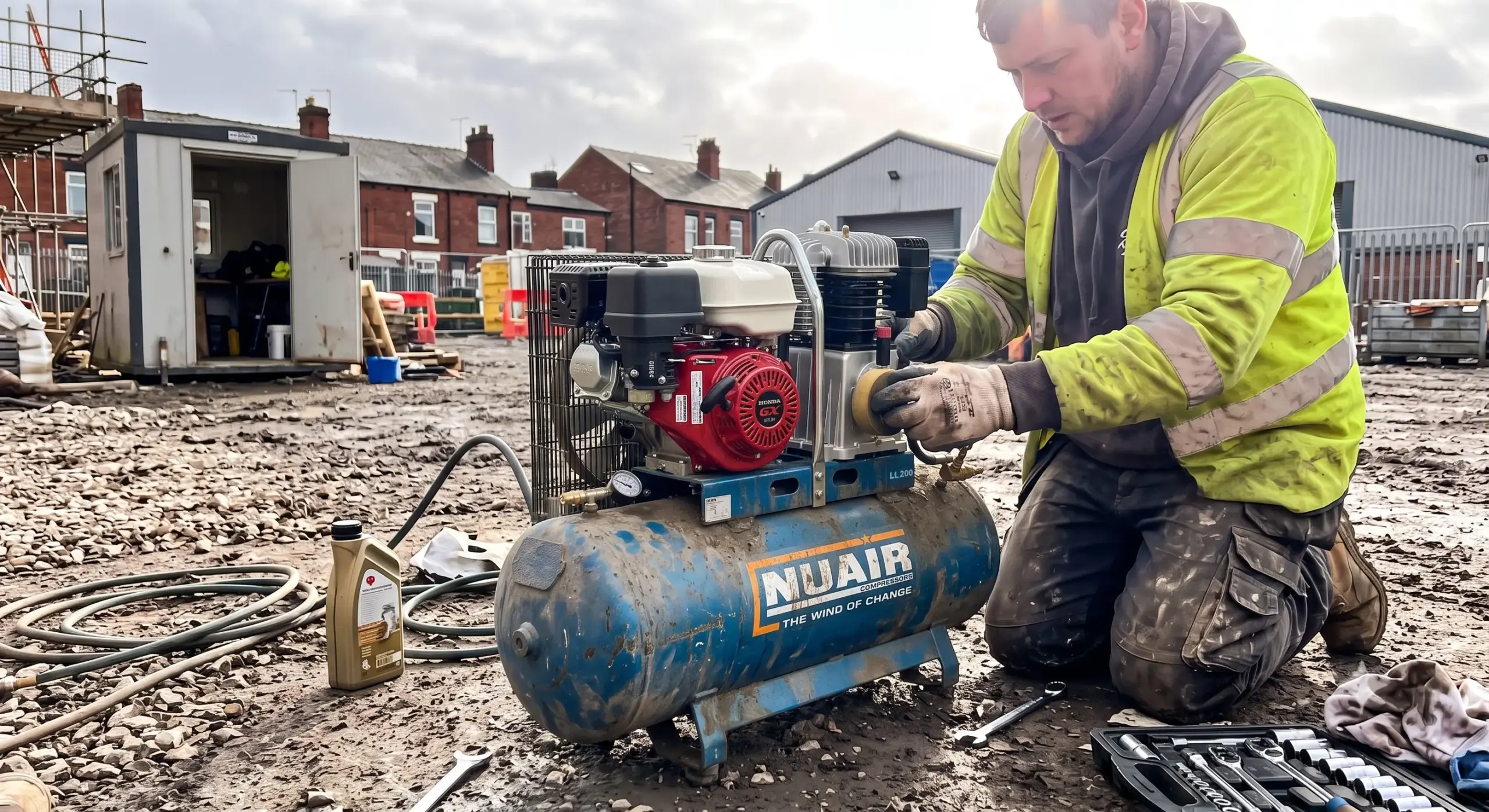
The current Tanair diesel category is centred on industrial belt-driven compressors powered by Yanmar diesel engines, with basemount and receiver-mounted configurations depending on the model.
Diesel Compressor Types
Diesel Piston CompressorCommon for intermittent or cyclic site and workshop applications where the selected pump and receiver match the duty.
Basemount DieselEngine and compressor package intended for an engineered installation using a suitable separate receiver, controls and safety equipment.
Receiver-Mounted DieselCombines engine, compressor and receiver for a more self-contained compressed-air package.
Portable / MobileMobility depends on the actual compressor design. Vehicle, trailer and site installations need suitable securing, ventilation and exhaust routing.
Rotary Screw DieselCommon in larger mobile compressed-air equipment, but do not assume the current Tanair piston range includes every rotary-screw output referenced in older generic guidance.
Specialist SystemsCritical, smoke-control or redundant systems require project-specific design rather than simply choosing a diesel power source.
How to Size a Diesel Compressor
Airflow
Use the tool or equipment manufacturer's CFM or m³/min requirement and identify what can operate simultaneously. Do not rely on generic tool-CFM tables.
Pressure
Select sufficient pressure at the point of use after realistic losses through hoses, pipework, filters and treatment equipment.
Duty
A breaker or sander used continuously creates a different load from occasional inflation or impact-wrench use. Match the compressor to the real operating cycle.
Spare Capacity
Allow sensible capacity for leakage, uncertainty and future growth rather than automatically applying a universal 20% buffer.
Fuel Consumption and Runtime Must Be Model-Specific
Fuel consumption and run time vary substantially with engine size, compressor load, pressure and operating conditions, so one general litres-per-hour or tank-runtime figure should not be applied across diesel compressors.
- Use the engine or compressor manufacturer's published fuel-consumption data.
- Check fuel-tank capacity for the exact model.
- Remember that fuel use changes with load and operating conditions.
- Calculate runtime from the actual tank and consumption data rather than a generic headline figure.
UK Emissions: Check the Exact Engine Approval
For new non-road mobile machinery placed on the UK market, the combustion engine must have the appropriate type approval and markings. Stage V is the relevant emissions framework for NRMM engines in the UK, subject to the applicable approval route and any transitional provisions.
That does not mean every existing machine on every UK site has the same simple “Stage V required” rule. Local site schemes can impose additional or different minimum standards, and older equipment can sit under different legal or transitional arrangements.
Before buying for a regulated site: confirm the exact engine type-approval number and markings, then check the site's own NRMM or environmental requirements. London, for example, operates additional NRMM rules for in-scope machinery.
Diesel vs Petrol vs Electric
DieselUseful for off-grid work where the required airflow, engine configuration and site emissions rules make diesel appropriate.
PetrolOften suited to smaller mobile applications where its airflow, fuel handling and operating environment fit the job.
ElectricUsually the cleaner choice inside workshops where a suitable mains supply is available, with no combustion exhaust at the compressor.
Exhaust and Carbon Monoxide Safety
Diesel engines generate exhaust gases, including carbon monoxide. Combustion-engine compressors should not be treated like normal indoor electric workshop equipment.
- Keep exhaust away from doors, windows, air intakes and occupied spaces.
- Use the equipment in the environment permitted by the manufacturer and site risk assessment.
- Consider fuel storage, fire risk and spill control.
- Check noise exposure and local site restrictions.
- Never compromise engine or compressor cooling by enclosing the machine without engineered ventilation.
Air Treatment Still Matters
Diesel power does not remove moisture or contamination from compressed air. Spray work, CNC, instrumentation and other sensitive processes may require appropriately sized drying and filtration.
Maintenance: Follow the Exact Engine and Pump Schedule
Service requirements vary by Yanmar engine, compressor pump, environment and duty, so the manufacturer's schedule should take priority over blanket hour-based intervals.
- Check engine and compressor oil as specified.
- Maintain fuel and air filters at the stated intervals.
- Inspect belts, guards, hoses and fasteners where fitted.
- Drain receiver condensate safely and regularly.
- Keep cooling surfaces and ventilation paths clean.
- Check starting battery and charging system on electric-start models.
- Do not alter governed engine speed unless authorised by the manufacturer.
Do Not Assume Telematics Saves a Fixed Percentage of Fuel
Remote monitoring and predictive-maintenance systems can improve visibility of operating hours, faults and service requirements, but they do not provide a universal 15–20% diesel-fuel saving.
The actual benefit depends on what the monitoring system measures, how the compressor is controlled and what operational changes are made from the data.
Specialist & Redundant Systems
The original guide linked diesel applications to tandem and smoke-ventilation products. Those routes remain useful, but they should not be presented as generic diesel-compressor configurations.
Diesel Air Compressor FAQs
When should I choose a diesel air compressor?
Choose diesel where compressed air is needed away from a suitable mains electrical supply and the airflow, duty, emissions, mobility and site-safety requirements support a combustion-engine machine.
How do I calculate the correct CFM?
Use manufacturer airflow data for the exact tools or processes that can operate simultaneously, then allow sensible spare capacity for leakage, uncertainty and future growth.
How much diesel does an air compressor use?
There is no universal litres-per-hour figure. Fuel use depends on engine size, compressor output, load and operating conditions. Use the exact model's published consumption data.
Do all diesel compressors need to be Stage V?
New NRMM engines placed on the UK market need the appropriate type approval and markings, with Stage V forming the current emissions framework. Existing machines and individual sites can be subject to different transitional or local requirements, so check the exact equipment and location.
Can I use a diesel compressor indoors?
Combustion engines produce exhaust gases including carbon monoxide. They should not be treated like ordinary indoor electric compressors; use must follow the manufacturer instructions and a suitable site-specific risk assessment.
How often should a diesel compressor be serviced?
Follow the service schedule for the exact diesel engine and compressor pump. Oil, filters, belts, battery and other service intervals vary by model and duty.
Do I need a dryer and filters?
That depends on the process. Where moisture, particles or oil aerosols could affect equipment or product quality, suitable air treatment should be selected for the actual airflow and required air quality.
Is diesel always cheaper to run than petrol?
No. Running cost depends on fuel consumption, fuel price, engine load, service costs and the actual application. Compare the exact machines rather than assuming one fuel is always cheaper.
Need Help Choosing a Diesel Compressor?
Tell us the tools or process, required CFM and pressure, expected running hours, mobility needs and site emissions requirements. We can help narrow down the suitable options.
Compressed Air Systems UK · Unit 15, Fortnum Close, Birmingham, B33 0LG