Lubricated Belt-Driven Air Compressors
Shop Nuair lubricated belt-driven piston compressors from 9 to 38.1 CFM, with 50 to 270-litre receivers and single- or three-phase electrical options.
Workshop Belt-Driven Compressor Range
The range includes compact 13-amp workshop compressors, larger 16- and 20-amp single-phase machines and higher-output 400-volt three-phase models. Product prices, stock status and sale pricing are loaded directly from WooCommerce.
Choose the Right Workshop Compressor
Match the Tool Demand
Compare the tool’s required CFM with the compressor’s available output and duty cycle.
Check the Electrical Supply
Choose between 13-amp, 16-amp, 20-amp or 400-volt three-phase models.
Select the Receiver Size
Larger receivers provide greater stored-air capacity and reduce rapid cycling.
Confirm the Required Bar
Most models operate to 10 bar, while selected larger models provide up to 11 bar.
Shop Lubricated Belt-Driven Air Compressors
Use the filters to narrow the current live range by product name, voltage, airflow or receiver size.

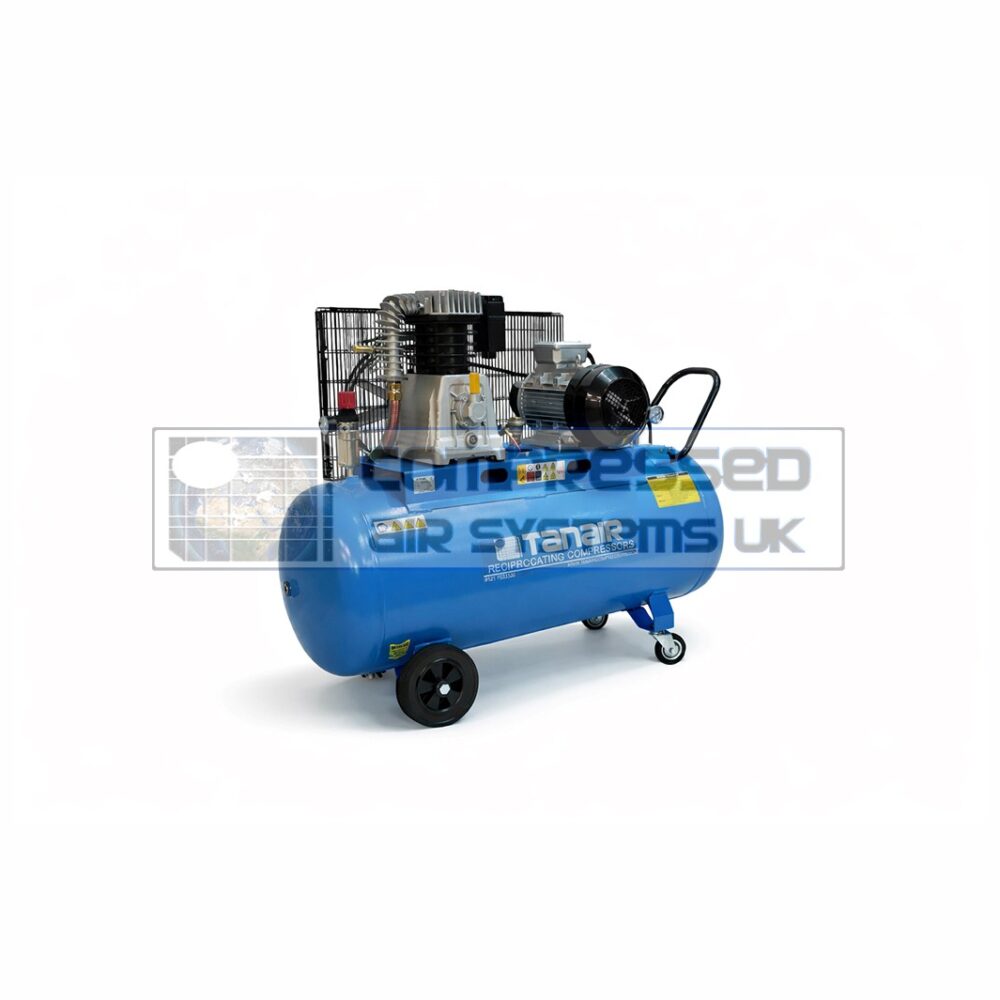
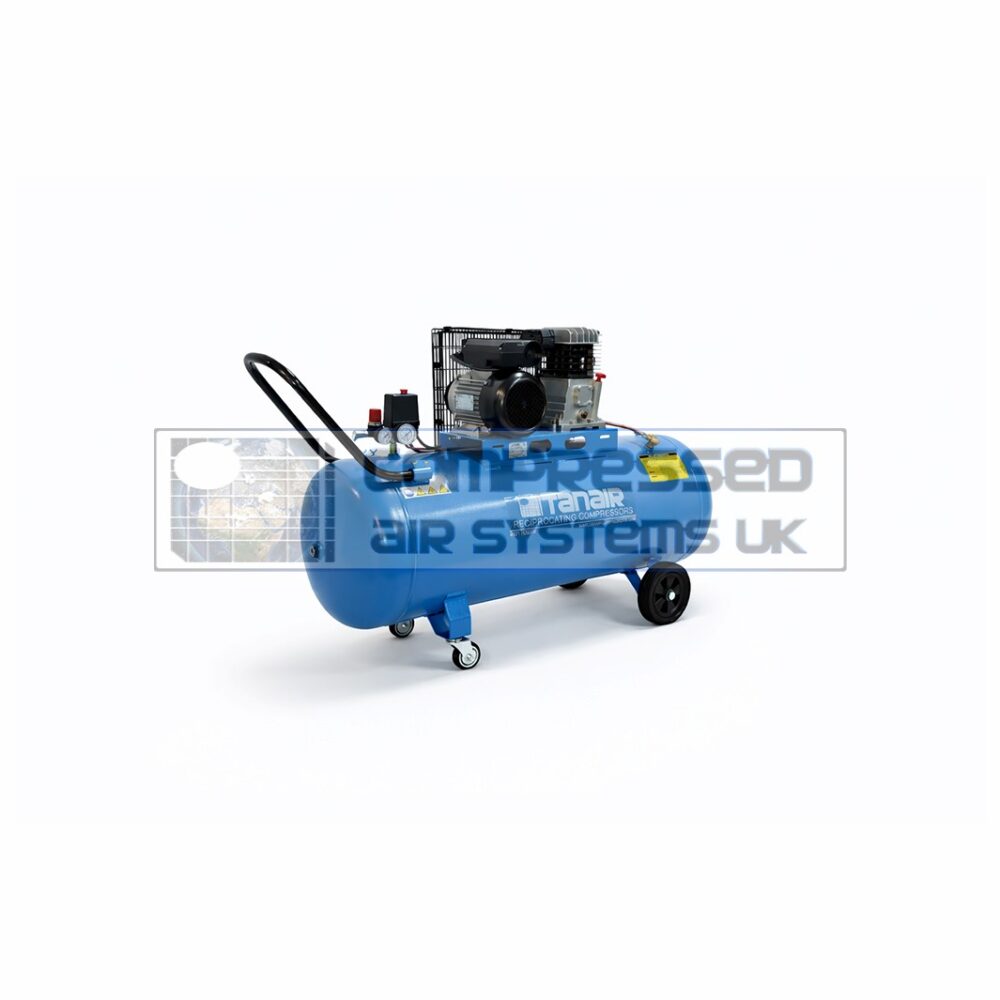
Tanair TAN-PCB 2.2/230/150L Piston Compressor

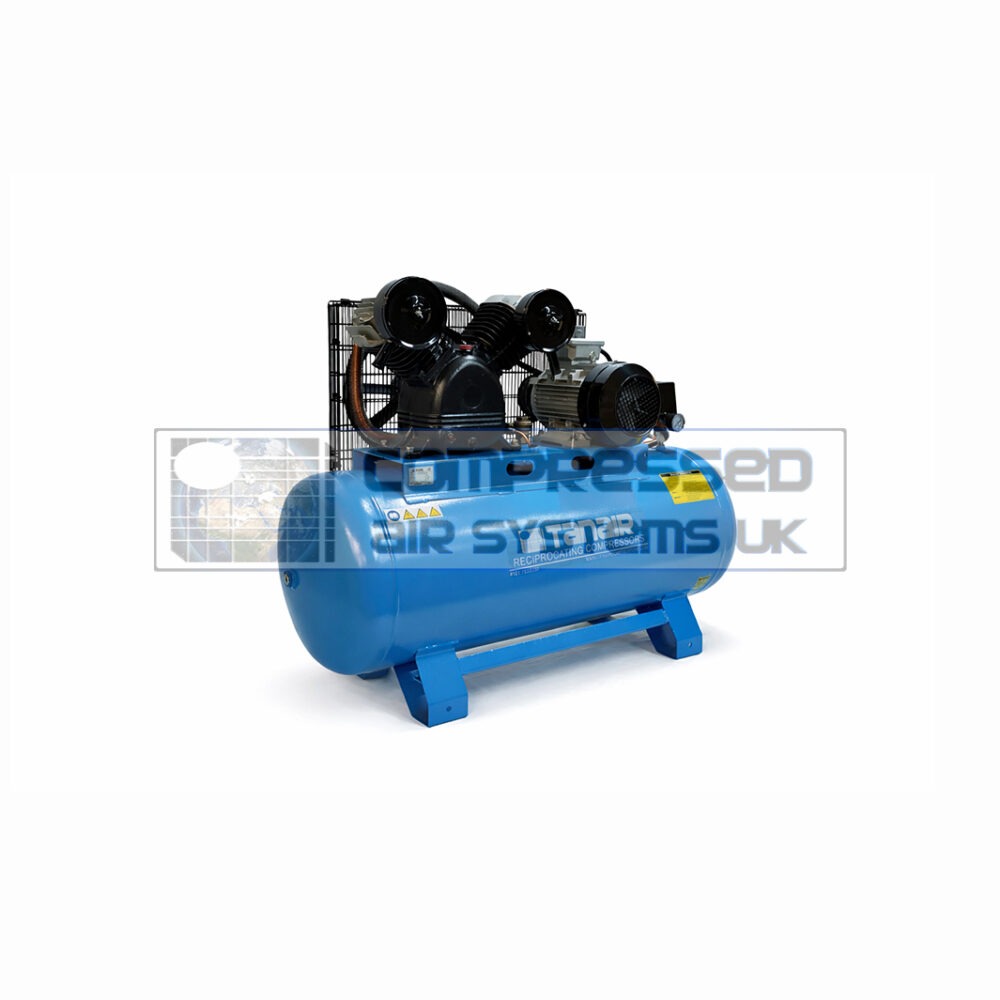
Tanair TAN-PCB 4/415/200L Heavy-Duty Compressor

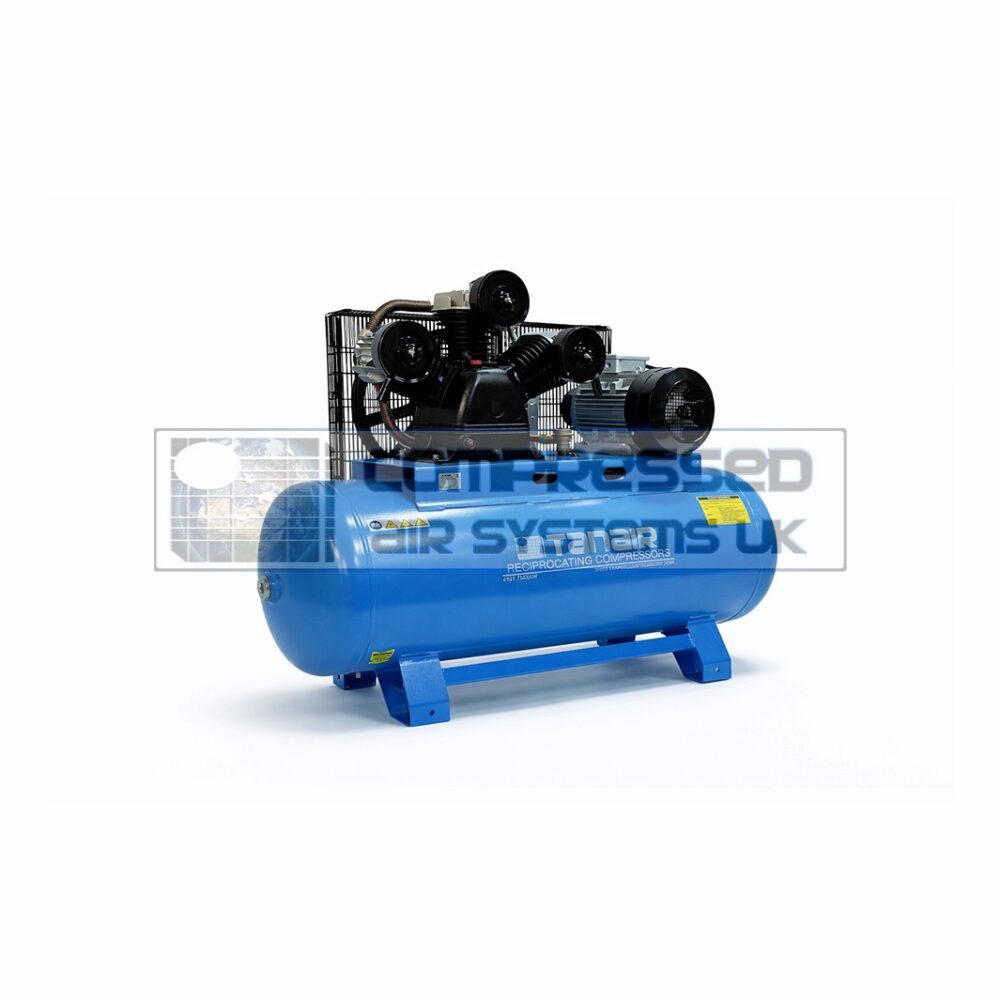
Tanair TAN-PCB 5.5/415/200L Heavy-Duty Compressor

Tanair TAN-PCB 7.5/415/270L Heavy-Duty Compressor

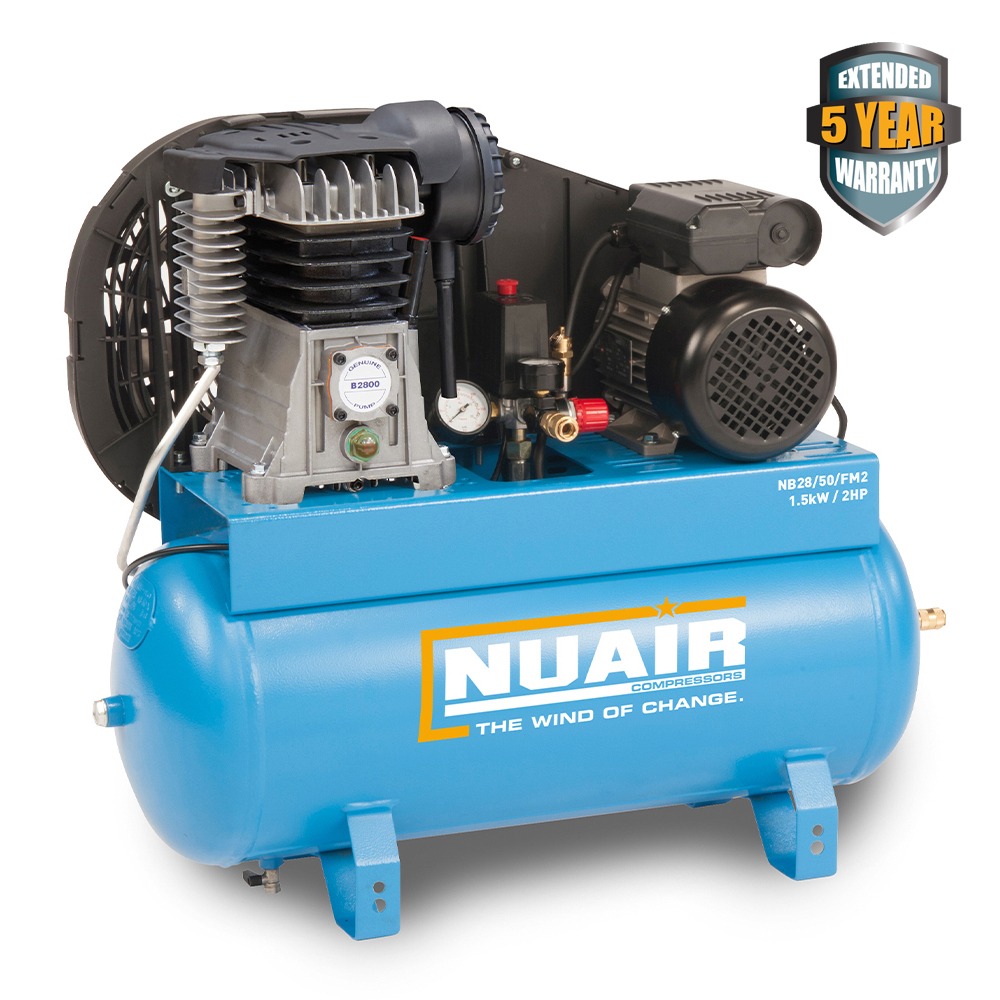
Nuair B2800B-PRO/50 FM2 Stationary Compressor

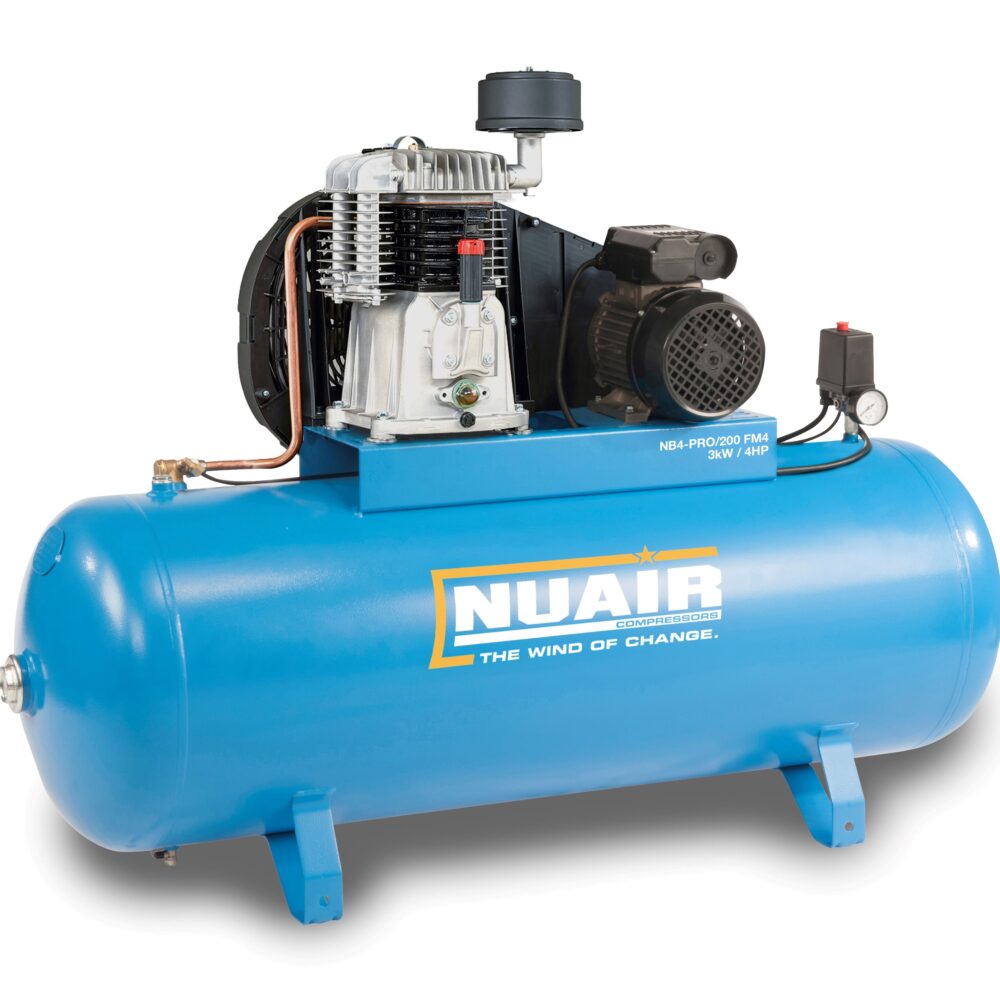
Nuair NB4/200 FM4 Compressor

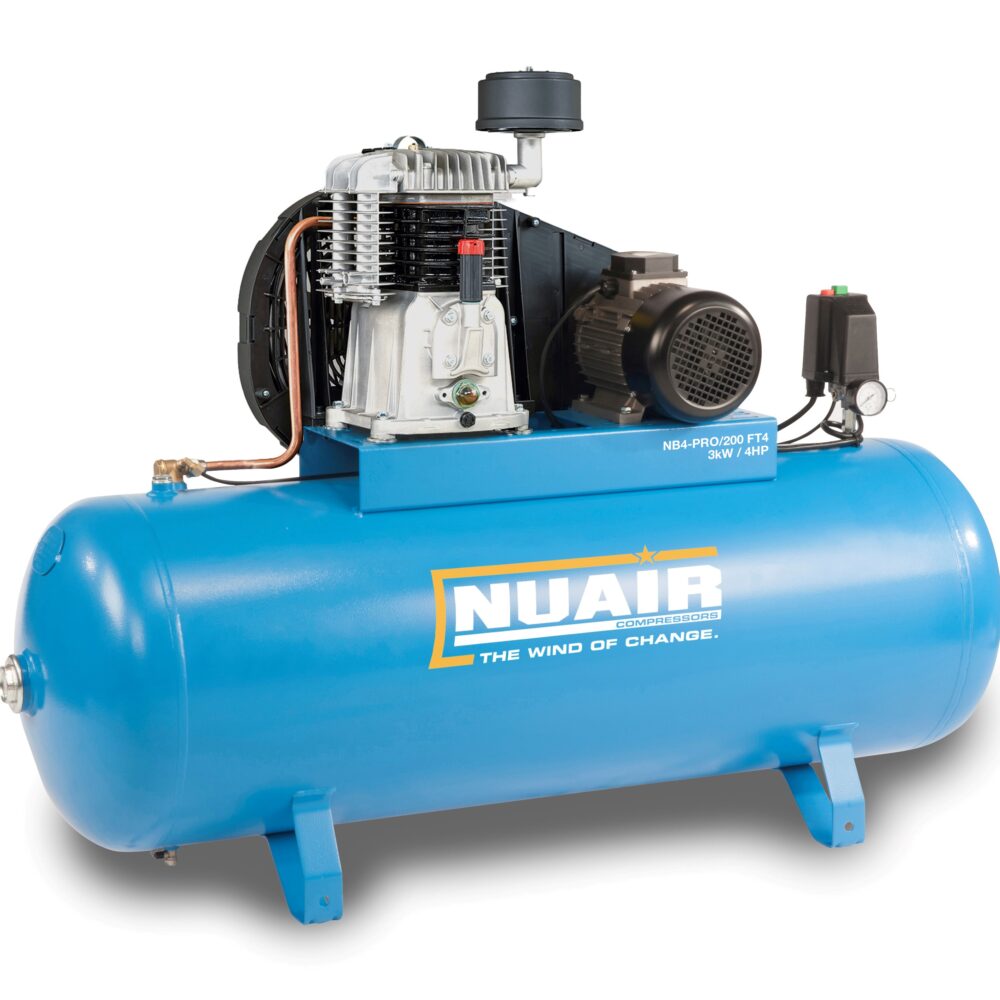
Nuair NB4/200 FT4 Compressor

Nuair NB5/200 FT5 Compressor

Nuair NB7/200 FT 5.5 Compressor

Nuair NB7/270 FT7 Compressor

Nuair NB10/270 FT 7.5 Compressor

Nuair NB10/270 FT 10 DS Compressor

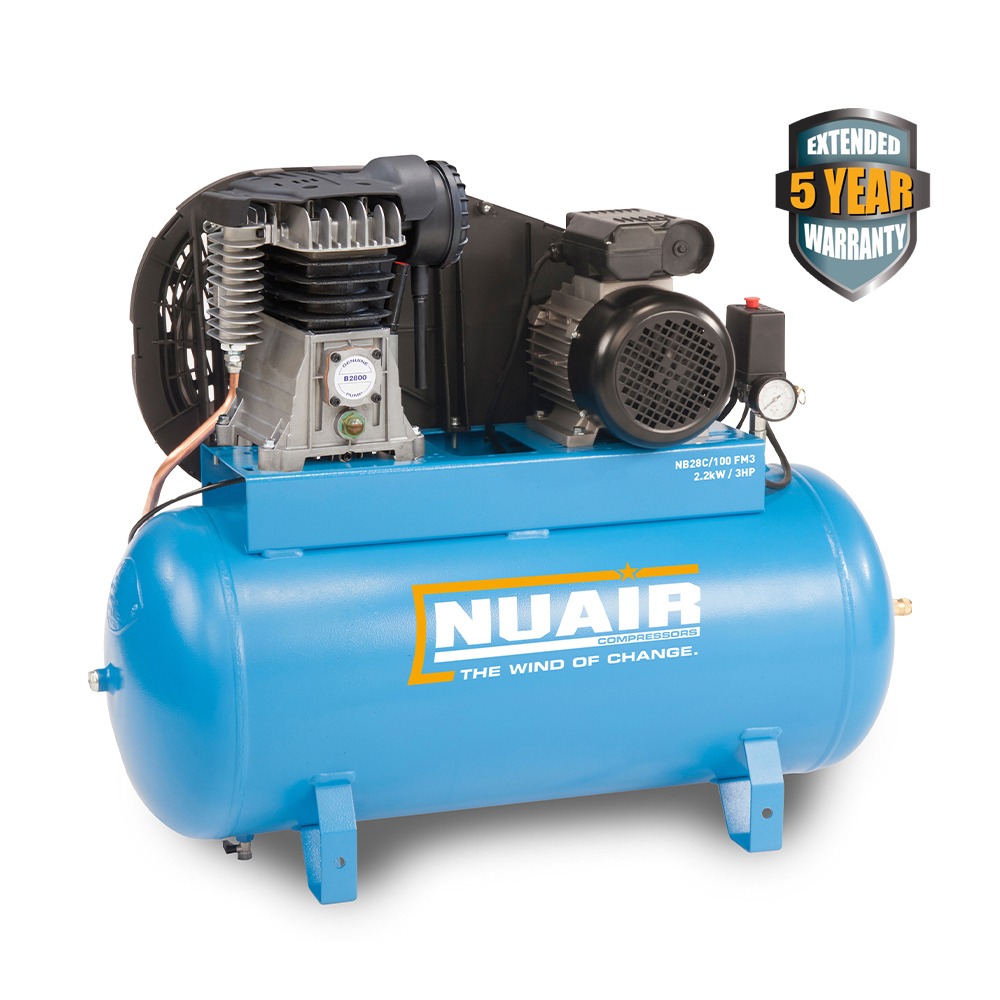
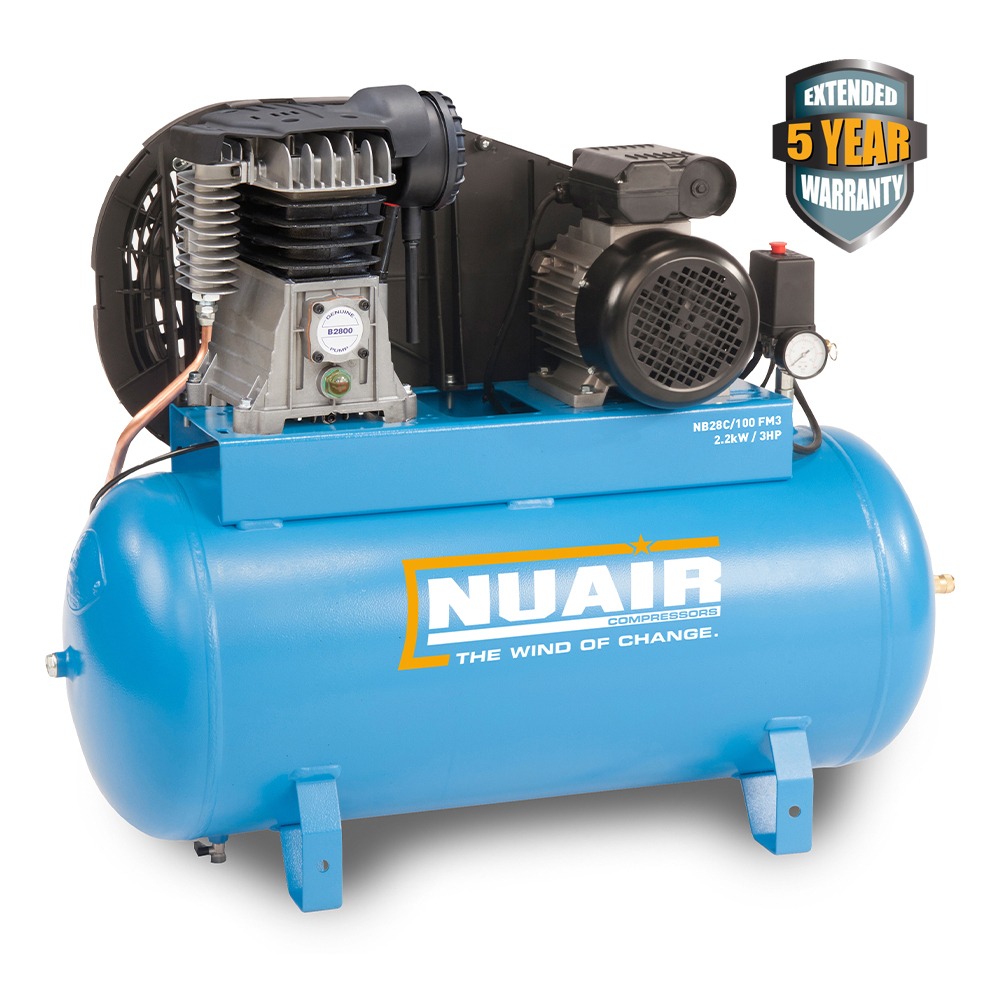
Nuair NB28C/100 FM3 PRO Stationary Compressor

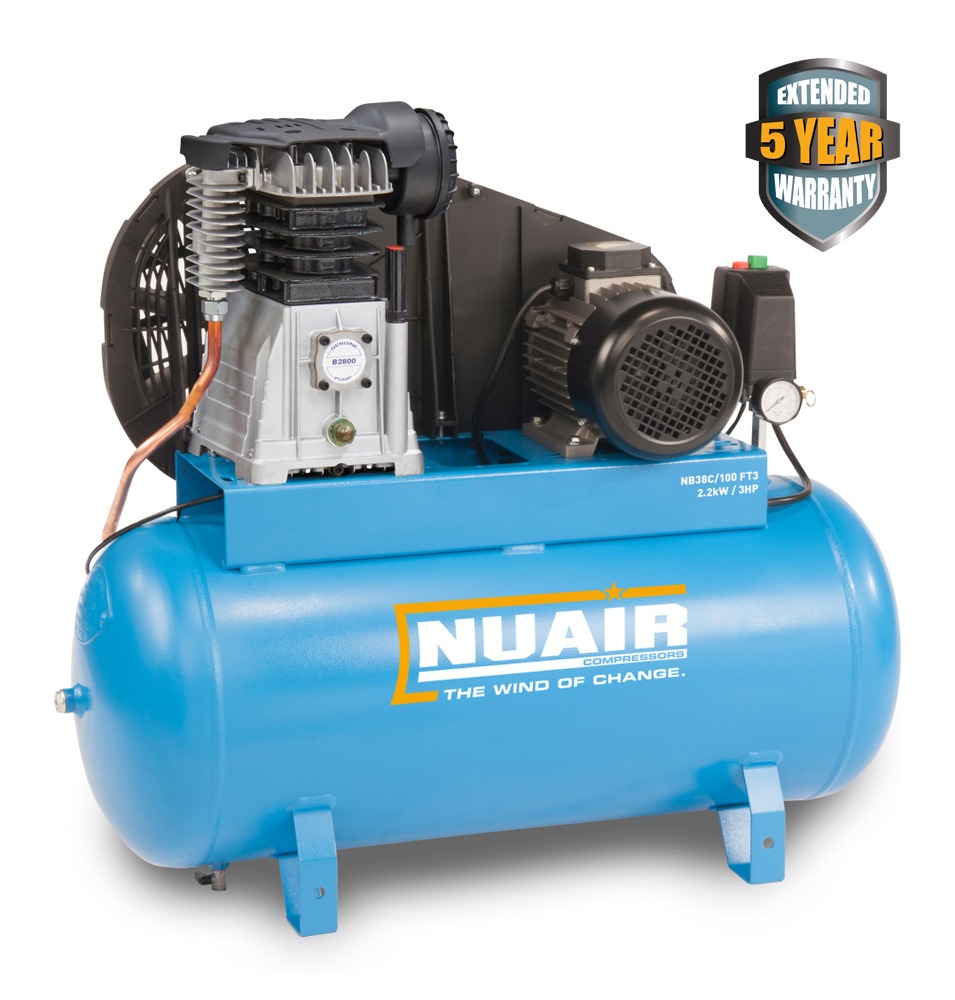
Nuair NB28C/100 FT3 PRO Stationary Compressor

Nuair NB38C/100 FT3 PRO Compressor

Nuair NB38C/150 FM3 PRO Stationary Compressor

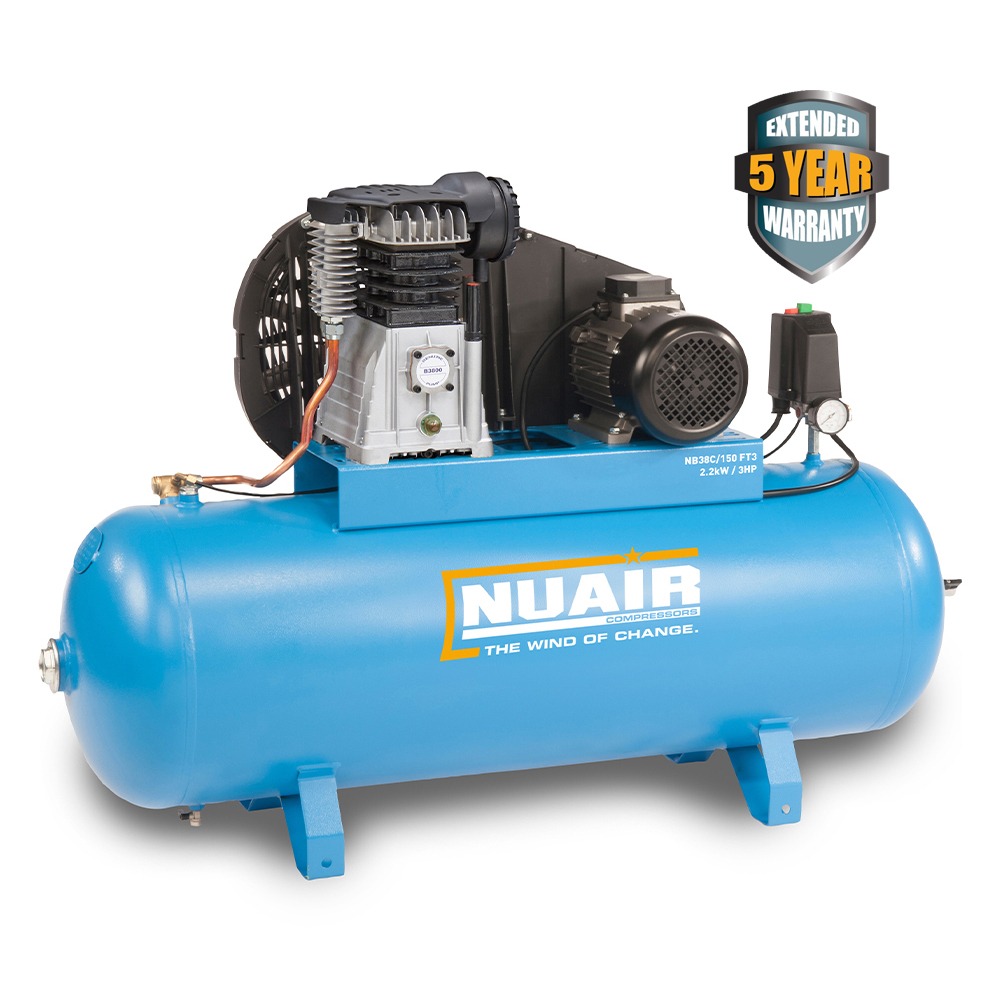
Nuair NB38C/150 FT3 PRO Compressor

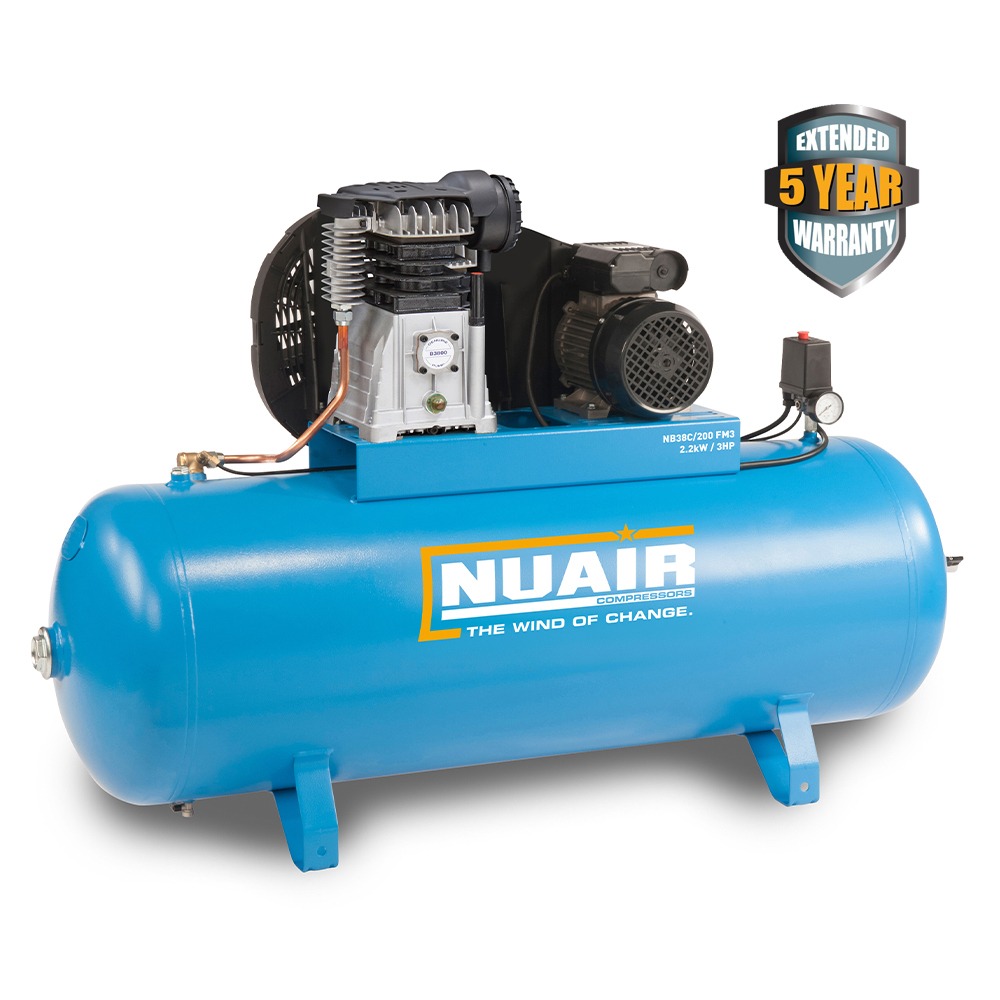
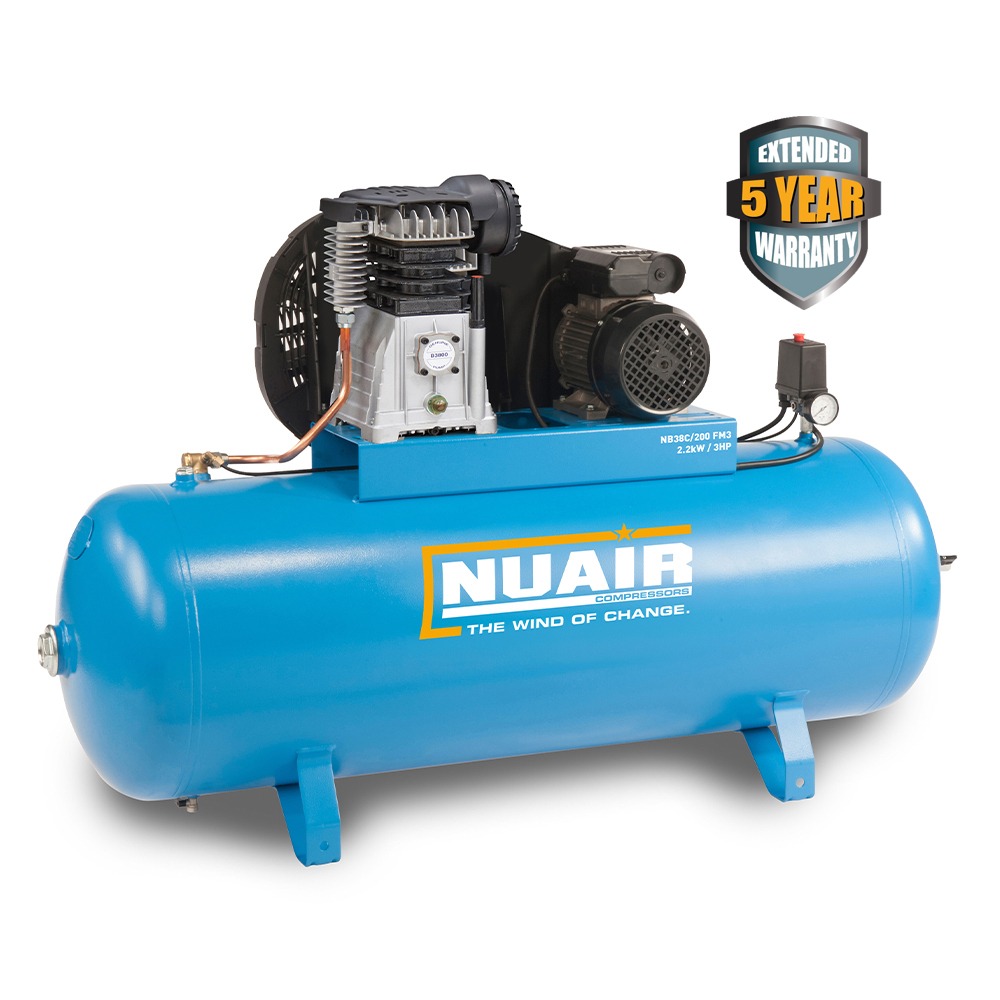
Nuair NB38C/200 FM3 PRO Stationary Compressor

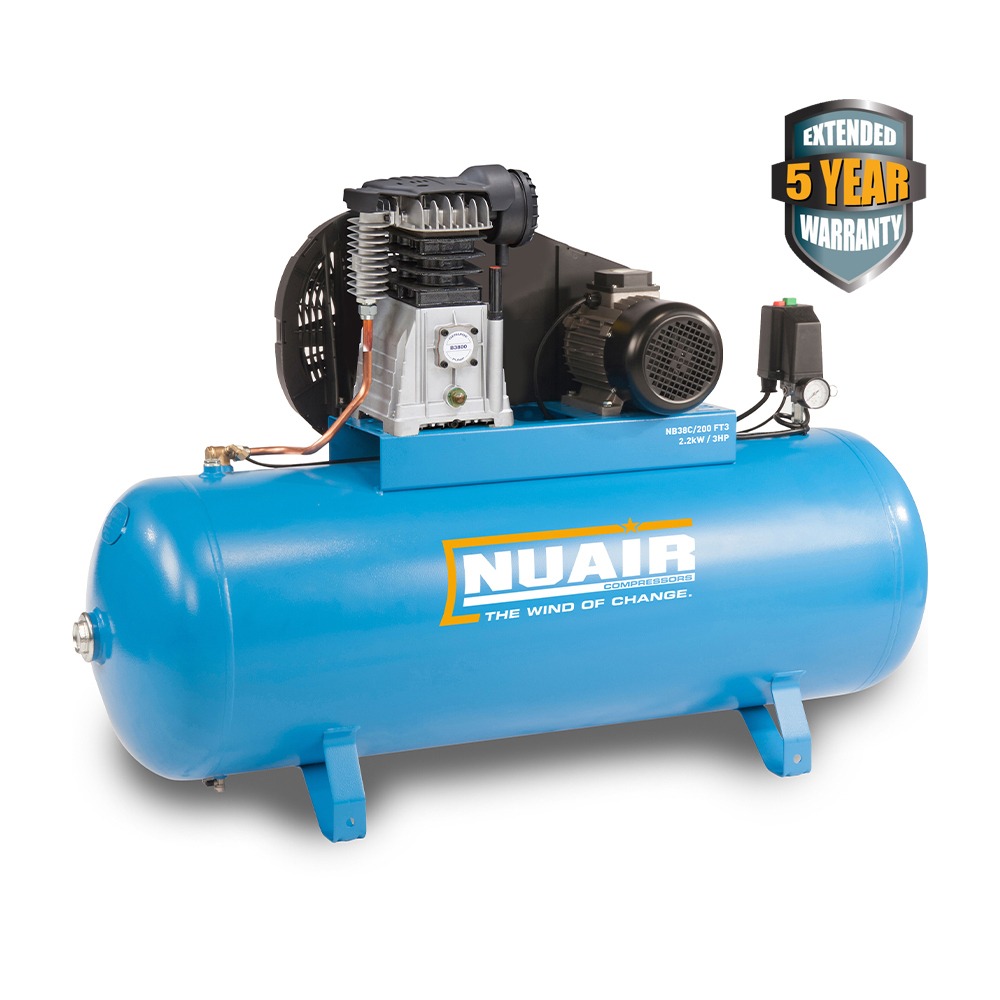
Nuair NB38C/200 FT3 PRO Stationary Compressor

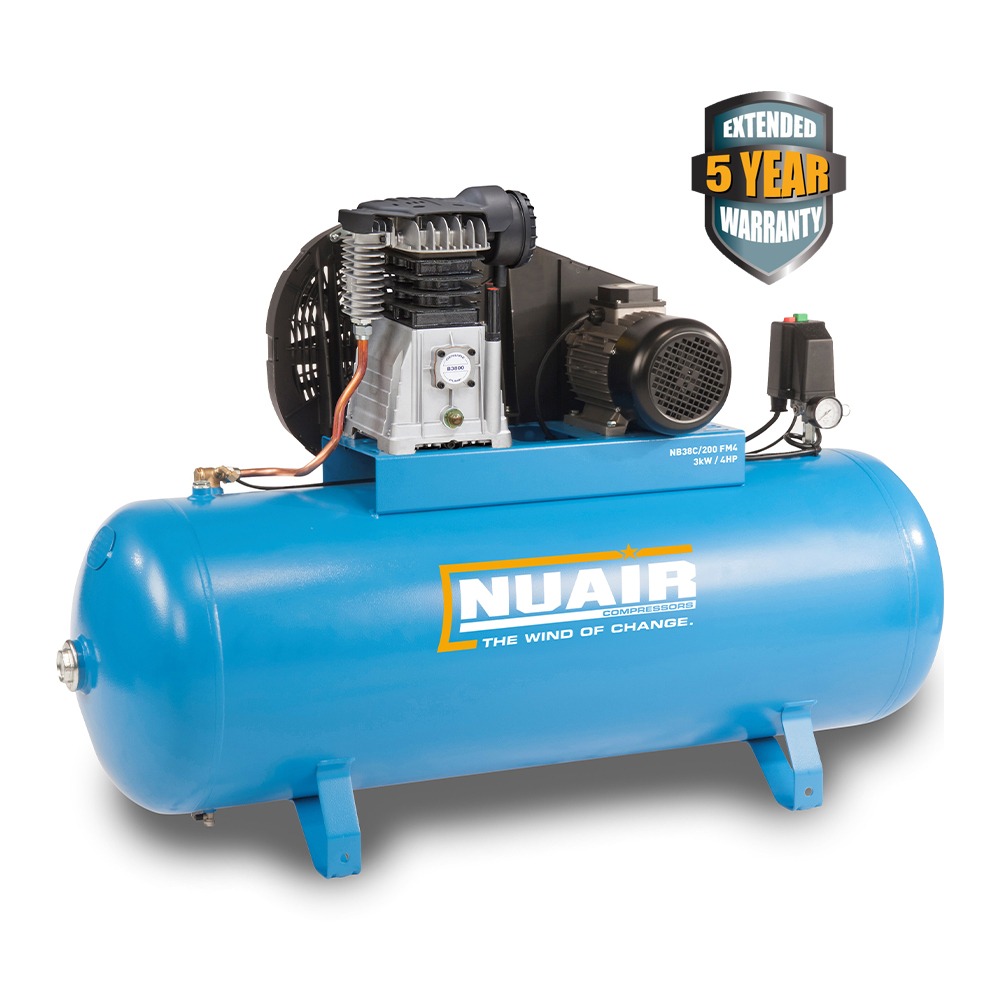
Nuair NB3800B/200 FM4 PRO Stationary Compressor
Understanding CFM, Receiver Size and Duty
Compressor displacement is useful for comparing models, but the connected equipment should be assessed using its actual airflow requirement and expected operating pattern. Intermittent tools may run successfully from a smaller machine, while continuous-use equipment requires greater delivered airflow.
- Allow capacity above the combined airflow demand where possible.
- Check airflow at the required operating pressure.
- Do not use receiver size as a substitute for adequate compressor output.
- Choose a larger receiver where demand is intermittent and pressure stability matters.
- Consider a rotary screw compressor for sustained industrial duty.
Electrical Supply and Installation
The range covers several electrical configurations. Confirm the available supply, protective device and installation requirements before ordering.
- 13-amp models are designed for a suitable 230-volt socket arrangement.
- 16- and 20-amp single-phase models normally require a dedicated supply.
- 400-volt models require a suitable three-phase installation.
- Allow ventilation space around the pump, motor and belt guard.
- Install the compressor on a stable, level surface.
- Arrange receiver inspection requirements where applicable.
Lubricated Belt-Driven Compressor Maintenance
Routine maintenance supports reliability, cooling and air output. Follow the model-specific instructions and service intervals supplied with the compressor.
- Check compressor oil level and use the specified lubricant.
- Drain condensate from the receiver regularly.
- Inspect and clean the air-intake filter.
- Check drive-belt condition and tension.
- Keep the pump, motor and aftercooler free from dust and debris.
- Inspect flexible connections, valves and fittings for leakage.
- Use the correct service kit for the compressor pump.
Workshop Belt-Driven Compressor FAQs
What is the advantage of a belt-driven compressor?
Belt drive allows the compressor pump to run at a controlled speed and supports effective cooling, serviceability and reliable workshop use.
Is a 13-amp compressor suitable for a normal socket?
A model described as 13 amp is intended for a suitable 230-volt supply, but the socket, circuit and installation must still be in good condition and appropriate for the starting load.
Do I need a three-phase compressor?
Three-phase models are suitable where a 400-volt supply is available and higher output or more demanding operation is required. The electrical supply should be confirmed before ordering.
How large should the receiver be?
Receiver size depends on airflow demand, usage pattern and available space. Larger receivers provide more stored air but do not compensate for an undersized compressor pump.
Can these compressors run continuously?
These are workshop piston compressors intended for intermittent duty. Continuous or sustained high-demand applications may be better served by a rotary screw compressor.
How often should the receiver be drained?
Drain frequency depends on operating hours, humidity and air-treatment arrangements. The receiver should be checked regularly and drained before excessive condensate accumulates.
Industries We Support
Support & Aftercare
Our Expert Services
24/7 EMERGENCY BREAKDOWN
Rapid response for all air compressor malfunctions, anytime you need us.
View ServiceINSTALLATIONS
Expert design and bespoke pipework installations tailored to your site.
View ServiceSERVICING
Comprehensive maintenance to keep your air systems running at peak performance.
View ServiceVISIT OUR TRADE COUNTER
Come meet our experts in person at our dedicated Birmingham trade hub.
Get DirectionsSHOP NOW
Browse our full range of air compressors, parts, and industrial tools online.
Go To ShopCONTACT US
Have a question? Reach out to our team today for expert advice and support.
Send MessageBelt Drive Vertical Piston Air Compressors (2.2kW – 4kW)
Belt drive vertical piston air compressors in the 2.2kW to 4kW range offer a reliable and efficient compressed air solution for workshops, garages and light industrial applications. Combining compact design with dependable performance, these compressors are ideal where floor space is limited but consistent air delivery is essential.
Compact Vertical Design
The vertical receiver configuration provides a space-saving footprint, making these compressors suitable for smaller plant rooms and workshop environments. The upright design also allows improved access to key service components, simplifying maintenance and routine inspections.
Reliable Performance for Professional Use
With power outputs between 2.2kW and 4kW, these compressors deliver dependable air pressure and flow for a wide range of tasks, including:
- Powering pneumatic tools
- Operating workshop machinery
- Automotive and tyre bay applications
- Light manufacturing and fabrication
The combination of strong air delivery and efficient motor performance ensures smooth operation throughout the working day.
Advantages of Belt Drive Operation
The belt drive system separates the motor from the pump using pulleys and belts. This design reduces vibration and lowers operating noise compared to many direct drive models. Slower pump speeds also minimise heat build-up and mechanical wear, helping extend component lifespan.
- Quieter running performance
- Reduced vibration and mechanical stress
- Improved cooling and longevity
- Flexible motor and pump configurations
Built for Durability
Manufactured using robust components and high-quality materials, belt drive vertical piston compressors are designed for continuous operation in demanding environments. They maintain stable pressure output and reliable airflow without excessive strain on internal parts.
Simple Maintenance & Long Service Life
Routine servicing is straightforward thanks to the accessible vertical layout. Tasks such as belt adjustment, oil changes and general inspection can be carried out quickly, helping maintain peak efficiency and maximise operational lifespan.
Belt Drive Vertical Compressors at Compressed Air Systems UK
At Compressed Air Systems UK, we supply high-quality belt drive vertical piston air compressors designed for durability, efficiency and professional performance. Our team can help you select the right model based on your air demand, workspace and application requirements.