
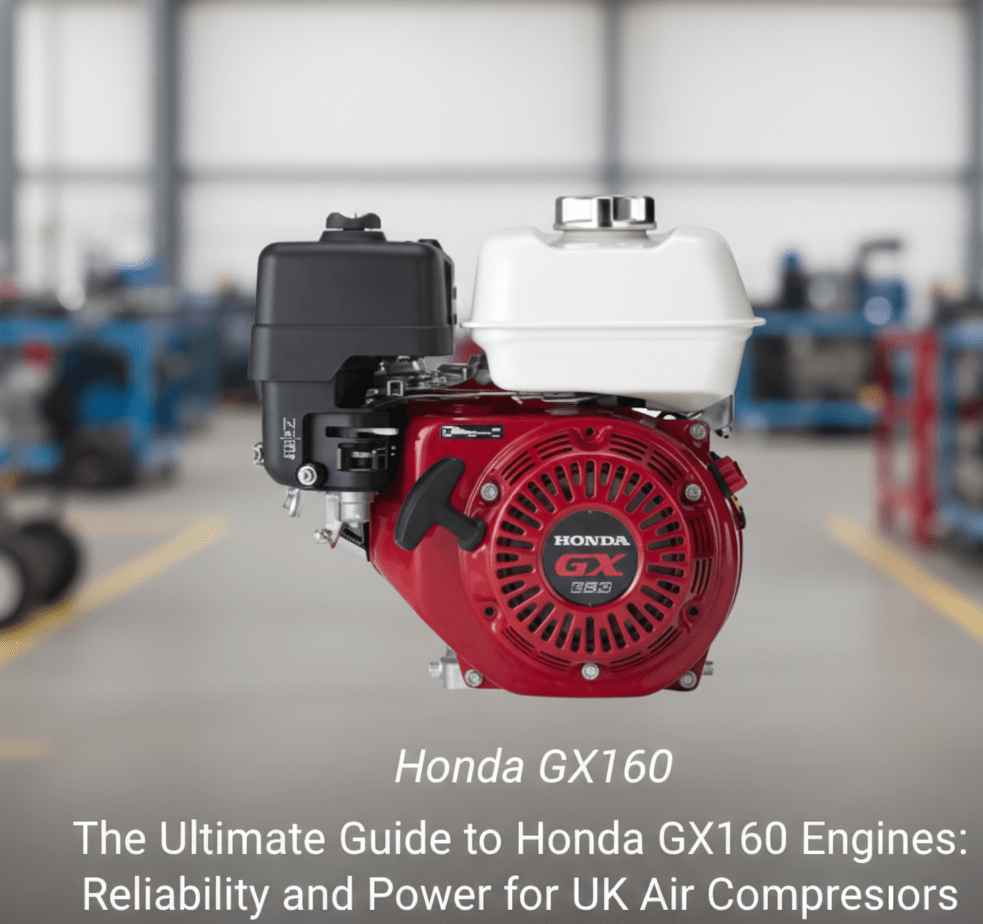
The Ultimate Guide to Petrol Compressors: Portable Power for UK Sites and Workshops
Everything UK tradespeople and site managers need to know about petrol compressors — from types and CFM selection to maintenance and compliance.
Key areas covered in this guide
Whether you're sourcing a petrol compressor for a remote build, agricultural work, or a mobile trade van, this guide covers everything you need to make the right choice.
Introduction: Why Petrol Compressors Matter on UK Sites
Petrol compressors provide essential portable compressed air solutions for UK professionals who operate away from power sources. They combine reliable engines with robust pumps to drive pneumatic tools efficiently across remote builds, agricultural sites, and mobile trades.
Amid rising site mobility demands and fluctuating energy costs, these units excel in delivering consistent performance without electrical restrictions — and modern EURO V-compliant engines mean they meet the requirements of regulated environments.
Petrol compressors can deliver up to 16 CFM without relying on mains electricity — enabling seamless operation on remote UK construction sites and eliminating generator dependency.
What Are Petrol Compressors?
Petrol compressors feature petrol engines — often Honda GX series — that drive belt-driven or direct pumps to compress air into tanks or directly to tools. They come in two primary configurations: basemount designs for compact, flexible setups, and receiver-mounted versions with integrated tanks for extended runtime.
Why Petrol Compressors Suit UK Needs
Unlike electric models limited by cables, petrol compressors offer unrestricted mobility for remote sites, farms, and mobile trades. Key advantages for UK users include:
- Complete freedom from mains electricity — ideal for rural and remote sites
- Strong torque for high-CFM demands and continuous use
- EURO V emissions compliance for regulated environments
- Lower running costs than diesel alternatives in moderate-duty scenarios
- Proven reliability from brands like Honda and SIP
Types of Petrol Compressors
There are several configurations to choose from depending on your application, required mobility, and whether you need stored air or continuous output.
Quick comparison by type
| Type | Best For | CFM Range | Tank Size | Engine Example |
|---|---|---|---|---|
| Basemount | Custom / mobile van | 10–15 | None | Honda GX160 |
| Receiver-Mounted | Site / workshop | 12–16 | 50–150 L | Honda GX series |
| Portable Wheeled | Trades on the move | 10–14 | 50 L | 5.5 hp petrol |
| Static Heavy-Duty | Fixed high demand | 15+ | 100+ L | 9–11 hp |
Use our our compressor size guide to calculate your required CFM and choose the right tank size for your tools.
Uses of Petrol Compressors
Petrol compressors cover a broad range of UK applications where electrical supply is limited or unavailable.
How to Choose the Right Petrol Compressor
Selecting the correct petrol compressor comes down to four core factors. Get these right and you'll avoid undersizing (frustrating downtime) or oversizing (unnecessary cost and weight).
1. Air Output — CFM & Pressure
Match your compressor's CFM output to your tools' combined air demand. Add a 20% safety buffer on top for realistic performance across the working day.
| Tool / Application | Typical CFM | Notes |
|---|---|---|
| Tyre inflation / blow gun | 2–3 CFM | Short bursts; low demand |
| Nail gun / stapler | 2–4 CFM | Intermittent; small tank sufficient |
| ½" Impact wrench | 4–6 CFM | Higher demand for continuous use |
| Spray gun (panel work) | 7–12 CFM | Consistent airflow critical; use a dryer |
| DA / orbital sander | 8–15 CFM | Often continuous; larger tank helps |
| Small sandblaster | 15–25+ CFM | High continuous demand; size up |
Use our our compressor size guide to calculate your total simultaneous tool CFM and find the right model.
2. Tank Size
Tank size buffers demand and stabilises pressure — but it does not increase your CFM output. For continuous tools like sanders or spray guns, prioritise compressor output over tank volume.
- Smaller tanks (25–50 L): lightweight and portable; best for burst tools like nail guns
- Medium tanks (50–100 L): versatile for most mobile trade use
- Larger tanks (150–200 L): sustained output for demanding or multi-tool setups
3. Engine Quality & Compliance
Engine choice has a major impact on starting reliability, fuel economy, and service intervals. For UK professional use:
- Honda GX series: industry benchmark for easy starting and longevity
- EURO V compliance: required for most regulated sites and environmental zones
- Belt-driven pumps: reduced wear and lower running temperatures versus direct drive
- Low-oil protection: automatic shutdown prevents engine damage on demanding sites
4. Build Quality & Portability
- Sturdy welded steel frames: essential for site conditions
- Pneumatic wheels: smooth movement across uneven ground
- UK-assembled units: often offer better parts availability and support
- Compact basemount designs: perfect for van integration
Not sure which model is right for your site?
Tell us your tools, duty cycle, and mobility requirements — our team will confirm the right petrol compressor and any recommended accessories.
Petrol vs Electric vs Diesel: Which Should You Choose?
For UK professionals, the choice of power source is often determined by site conditions and duty cycle. Here's a quick overview:
If you have 110V available, our TAN-PC 1.5/110/25L is designed for standard UK site voltage.
Maintenance & Troubleshooting
Consistent maintenance is the single biggest factor in extending the service life of a petrol compressor. Follow these intervals to avoid costly downtime.
Regular care routines
- Change engine oil every 50–100 hours
- Inspect and clean air filters seasonally
- Drain tank condensate daily
- Check drive belts and spark plugs regularly
- Store in dry conditions; run periodically if idle
- Full service annually for thousands of hours of reliable use
Common issues & fixes
- Hard starting: Use fresh fuel; clean the carburettor; check recoil or electric start mechanism
- Low air pressure: Inspect for leaks; service pump valves; verify engine is reaching correct RPM
- Overheating: Maintain ventilation around the unit; clean cooling fins; monitor oil levels
- Excessive noise: Check belt tension; inspect for loose fasteners or worn bearings
Running your petrol compressor periodically during long idle periods prevents carburettor gumming and keeps seals in good condition — particularly important over winter storage.
Don't Forget Air Treatment
For applications requiring clean, dry air — particularly spray painting, surface prep, and any tool where moisture causes damage — pairing your petrol compressor with the correct air treatment is essential.
2025/26 Trends in Petrol Compressors
The petrol compressor market is evolving quickly in response to tightening emissions regulations, rising fuel costs, and demand for quieter site operation.
- Enhanced fuel mapping: Newer engines optimise fuel delivery across load ranges, improving economy and reducing emissions
- Bio-petrol compatibility: Engines certified for E10 and emerging bio-fuel blends to meet sustainability requirements
- Quieter operation: Improved acoustic shrouding and low-noise pump designs for compliance with stricter site noise limits
- Hybrid integration: Emerging petrol-battery hybrid systems offer greener alternatives while retaining the portability of petrol
- Improved low-oil protection: Advanced sensors provide better engine protection, reducing costly failures in demanding UK conditions
Our team stays up to date with the latest models and compliance requirements. Contact us for advice on the most current options for your application.
Ready to Go Mobile? Shop the Range
Explore our curated range of petrol compressors — from compact basemount units for van integration to heavy-duty receiver-mounted models for extended site work.
Frequently Asked Questions
Common queries from UK tradespeople and site managers about petrol compressors, answered by our engineering team.
What advantages do petrol compressors have over electric ones in the UK?
They provide complete mobility without power cables — ideal for remote construction sites, farms, and mobile repairs where electricity is unavailable or impractical. They're also unaffected by site power failures and can be moved instantly between locations. If you do have access to mains power, see our electric belt-driven range.
What CFM should I aim for in a petrol compressor?
10–16 CFM suits most tools like impact wrenches, nail guns, and spray guns. Calculate your total simultaneous tool demand and add a 20% safety buffer for reliable real-world performance. Use our our compressor size guide for a detailed walkthrough.
Are petrol compressors compliant with UK emissions standards?
Modern petrol compressors with EURO V engines meet current UK and EU emissions regulations. Always verify engine certification before specifying for regulated environments or sites in Low Emission Zones. Contact our team for confirmation on specific models.
How fuel-efficient are petrol compressors?
Expect approximately 1–2 litres per hour at load, depending on engine size and duty cycle. Honda GX series engines are generally among the most fuel-efficient options for this class of compressor, reducing operating costs over extended site use.
How often should I maintain a petrol compressor?
Change engine oil every 50–100 hours, carry out full seasonal checks on filters and belts, and drain the tank condensate daily. A full annual service helps achieve thousands of hours of reliable operation. See our maintenance section above for a full checklist.
Do I need a dryer or filtration with a petrol compressor?
For spray painting, CNC tooling, or any application where moisture causes damage, a dryer and appropriate filtration is strongly recommended. View our refrigeration dryer packages and high-efficiency filters.
Where can I buy reliable petrol compressors in the UK?
Tanair Compressors has been a UK industry leader since 1992, stocking high-quality basemount and receiver-mounted petrol compressor models with fast delivery and expert pre-sale advice. Contact our team or call 0121 753 3330.
Still have questions?
Our engineering team is happy to advise on petrol compressor selection, sizing, compliance, and accessories — whether you need one unit or a fleet.
Explore More of Our Articles
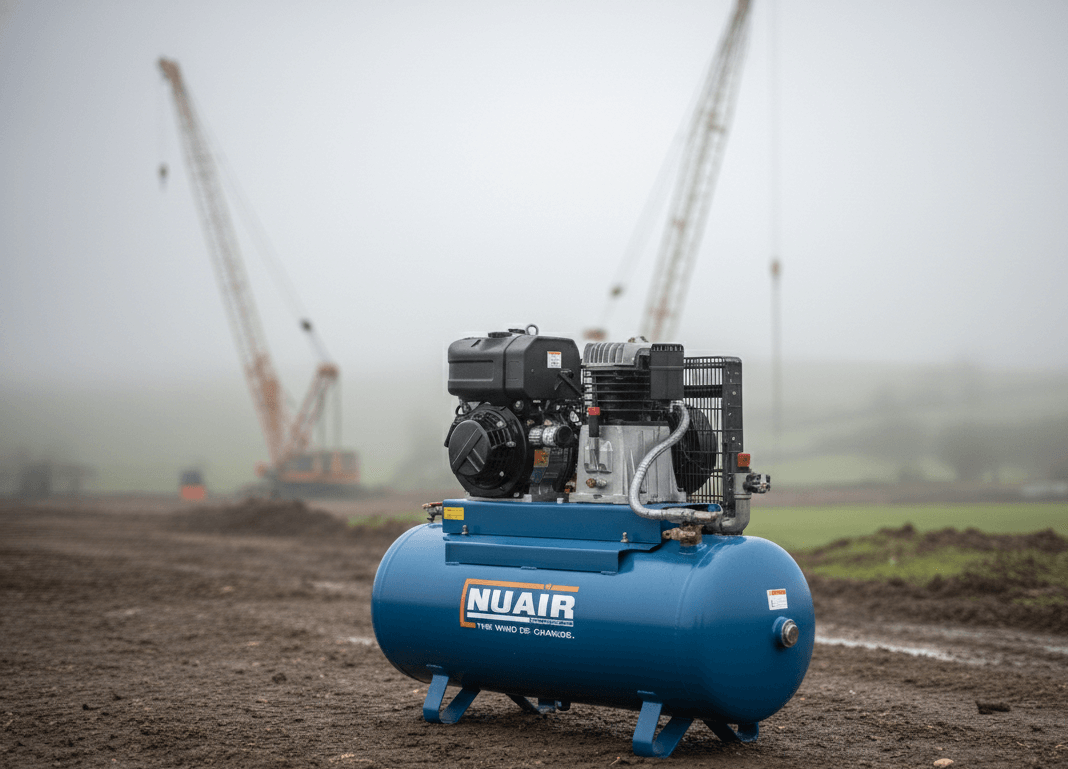
The Ultimate Guide to Diesel Air Compressors: Power, Portability, and Performance for UK Applications
The Ultimate Guide to Diesel Air Compressors: Power, Portability, and Performance for UK Applications Everything UK professionals need to know about diesel air compressors —
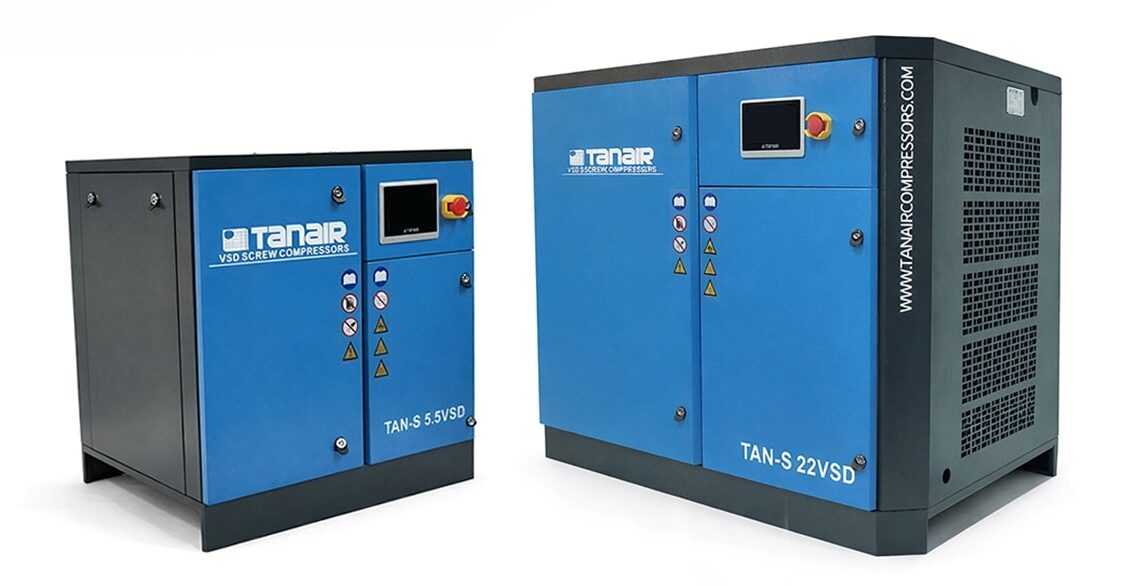
What Size Air Compressor Do You Need? (CFM, Tank Size & Power Guide UK)
What Size Air Compressor Do I Need? Use this UK-focused guide to calculate CFM, choose the right tank size, and match voltage & duty cycle—then
Explore Our Complete Air Compressor Range
Shop the Full Tanair Air Compressor Range Compare portable direct drive, belt-driven workshop and energy-saving VSD compressors — then buy online, call for instant advice,
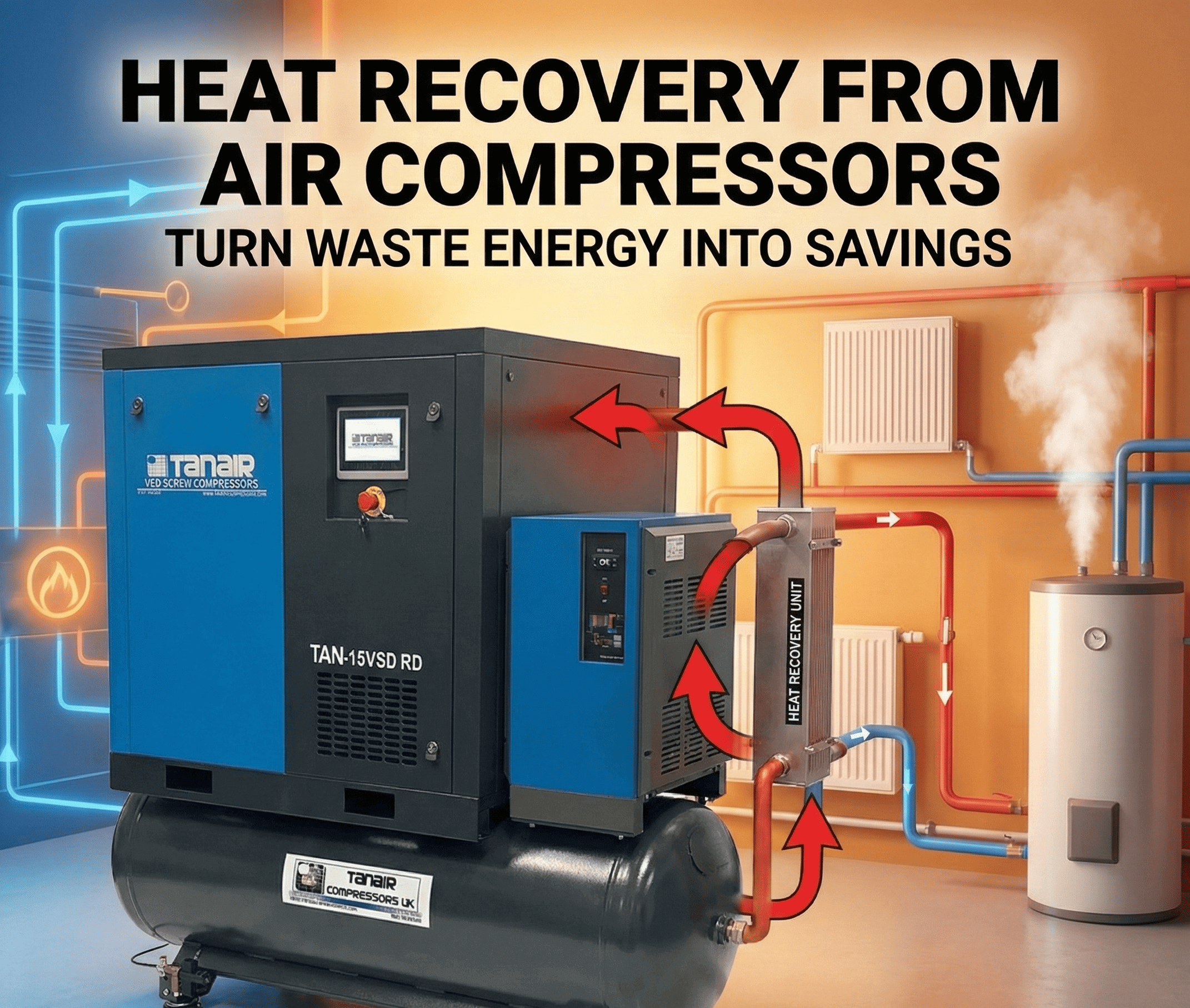
Heat Recovery from Air Compressors: Turn Waste Energy into Savings for UK Workshops 2026
What if up to 94% of the energy used by your air compressor is converted into heat, much of which is simply wasted, potentially costing
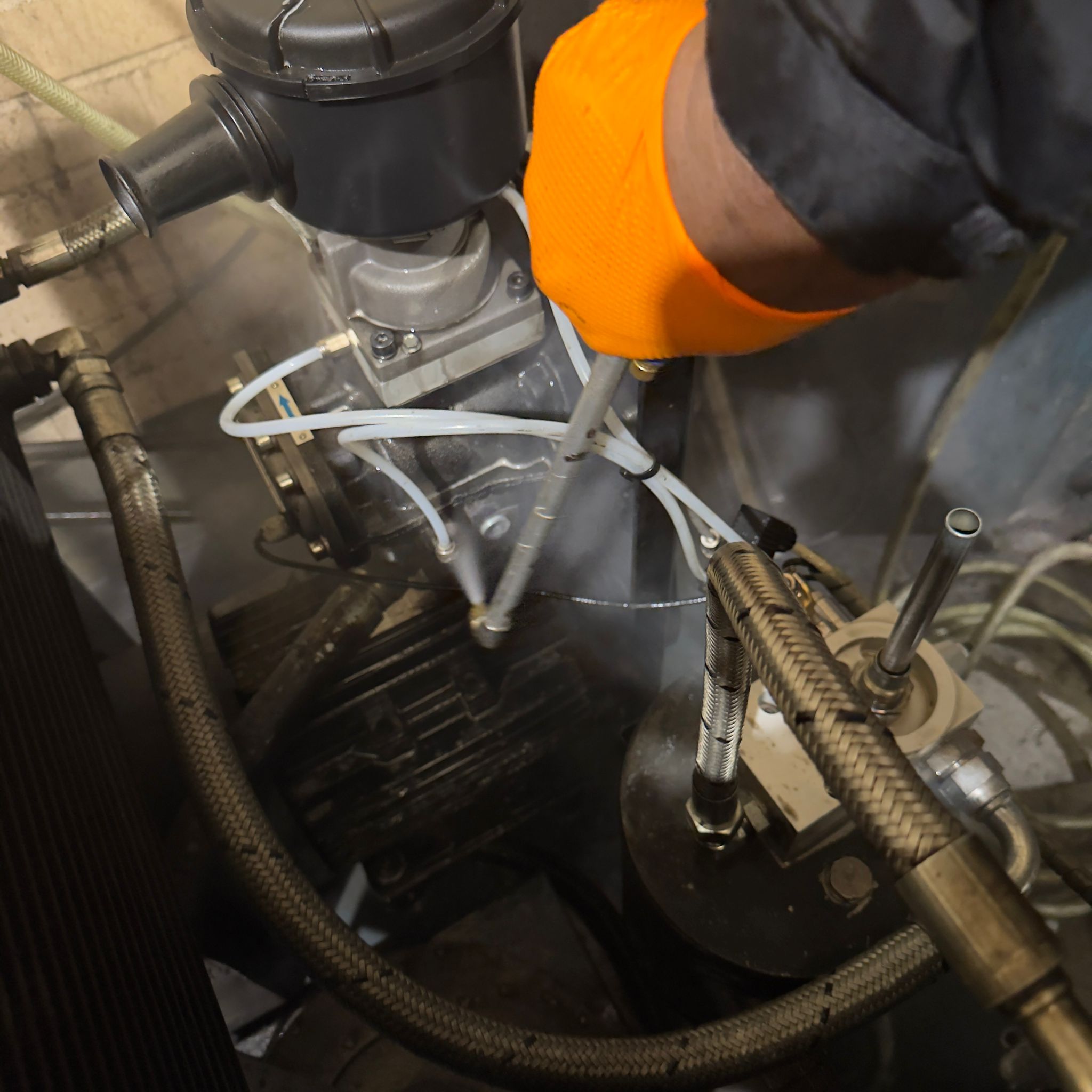
The Benefits of Deep Cleaning Your Compressed Air System
Did you know that accumulated contaminants in compressed air systems can cause up to 30% energy waste, adding thousands to annual electricity costs for UK

The Ultimate Guide to Air Line Fittings: Types, Uses, and Maintenance for UK Workshops
Did you know that poor quality air line fittings can cause up to 30% energy loss in compressed air systems, costing UK workshops thousands in