When a Petrol Compressor Makes Sense
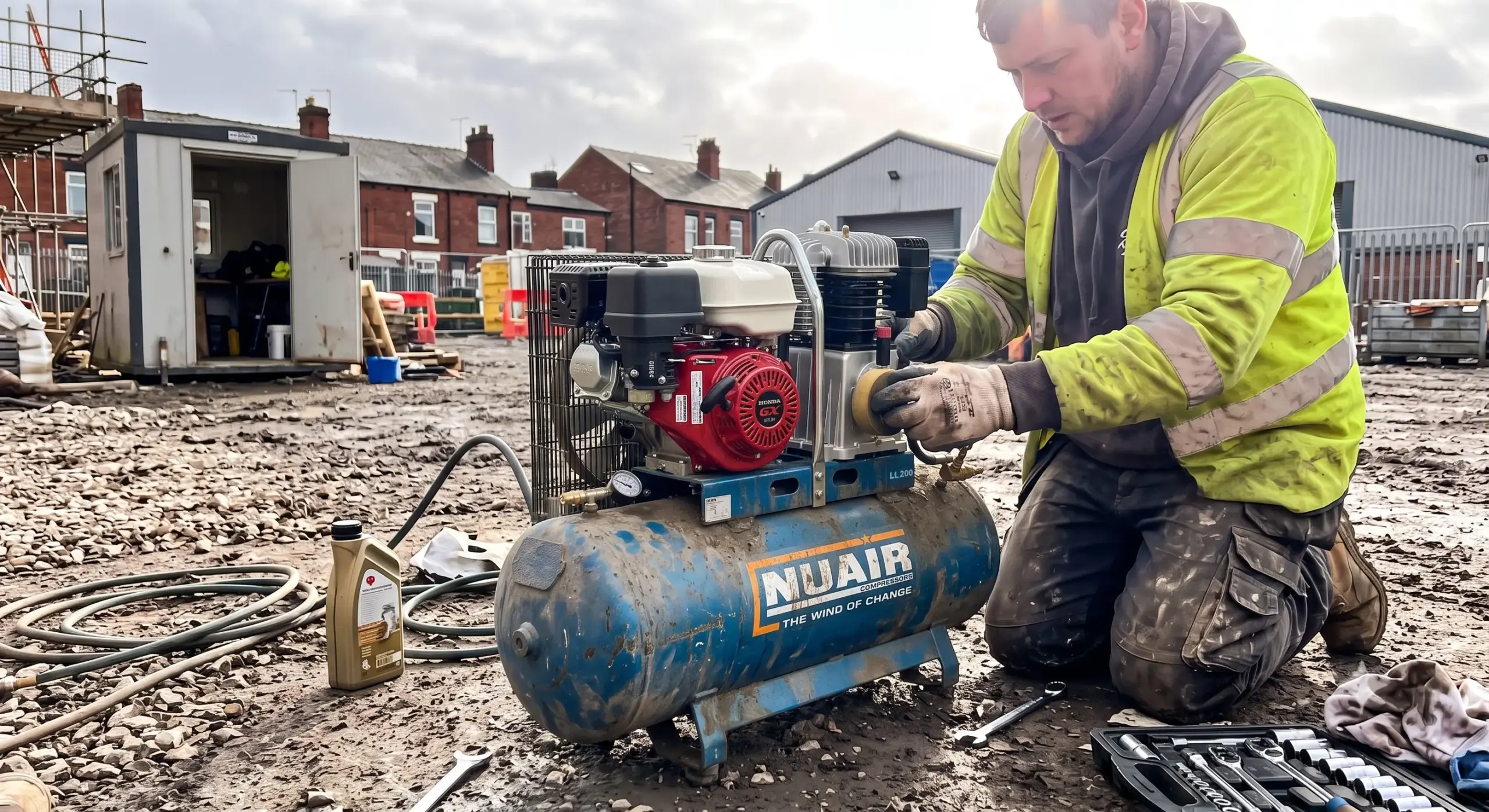
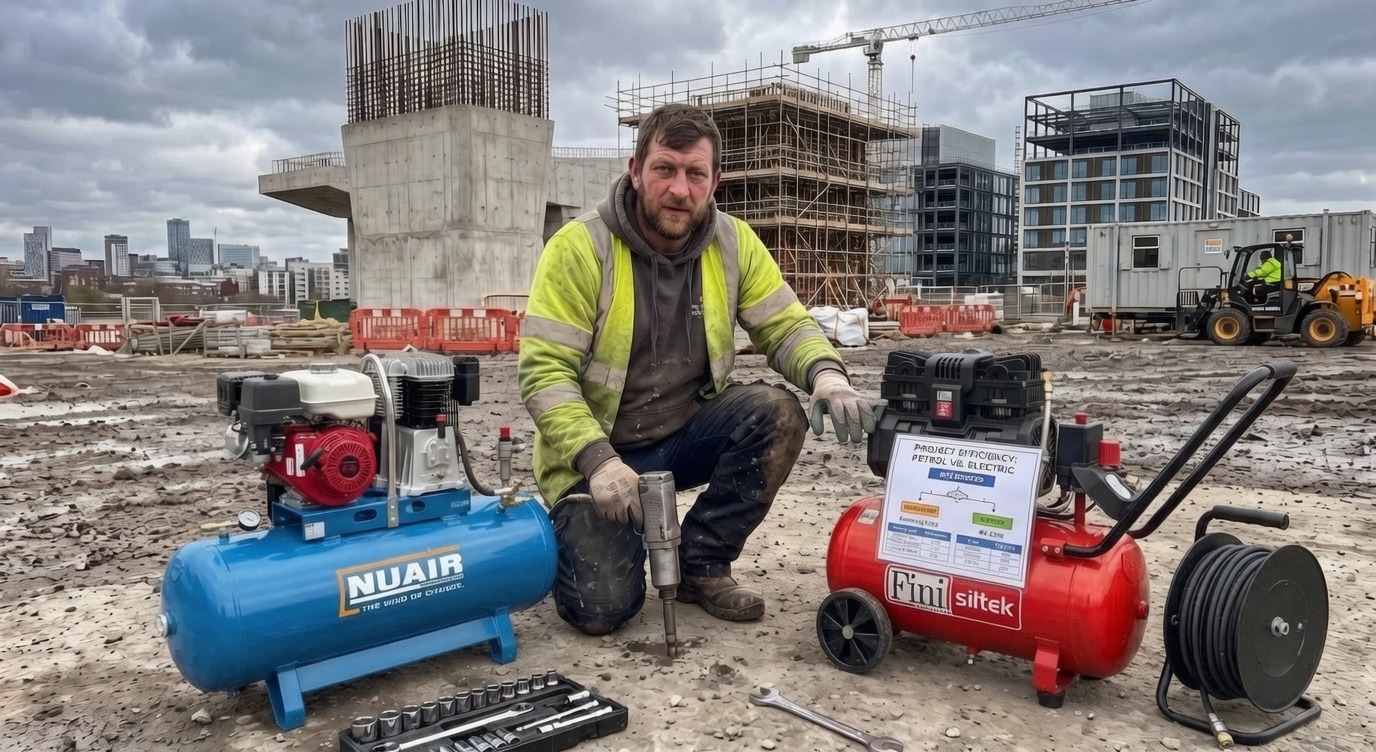
A petrol compressor is primarily useful where compressed air is required but a suitable mains electrical supply is unavailable or impractical. Typical examples include mobile service vehicles, agricultural work, remote maintenance and some construction or outdoor site applications.
The key advantage is independence from mains power. The trade-off is that an internal-combustion engine introduces fuel, exhaust, noise, heat and maintenance considerations that do not apply in the same way to an electric compressor.
Start with the job: choose the compressor from the actual tool airflow, working pressure, duty cycle, mobility requirement and operating environment — not simply from engine horsepower or receiver size.
Petrol Compressor Safety Comes First
Petrol engines produce exhaust gases including carbon monoxide. This is a serious consideration when choosing where and how a petrol compressor will operate.
Carbon monoxide warning
Do not treat a petrol compressor as an indoor workshop compressor. Petrol-powered equipment can produce dangerous carbon monoxide in enclosed or poorly ventilated spaces. Position combustion-engine equipment outdoors in a suitable well-ventilated location unless a competent site-specific assessment has established appropriate controls.
- Keep exhaust gases away from doors, windows, air intakes and occupied areas.
- Assess fire and fuel-storage risks before use.
- Follow the engine and compressor manufacturer's operating instructions.
- Use suitable hearing and workplace controls where noise exposure requires them.
- Check site rules before bringing petrol-powered plant onto a construction or controlled site.
Types of Petrol Air Compressor
Basemount Petrol CompressorAn engine-and-pump assembly without an integral receiver. Useful for vehicle, trailer or engineered installations where a suitable separate receiver and controls are provided.
Receiver-Mounted CompressorCombines the engine, compressor pump and air receiver into a more complete package for applications that benefit from stored compressed air.
Recoil StartManual starting keeps the package relatively simple, but suitability depends on engine size, accessibility and how frequently the unit is started.
Electric StartAvailable on some larger petrol-powered packages and useful where easier starting is important for frequent professional use.
Mobile / Vehicle InstallationBasemount equipment can suit service vans and trailers when the receiver, ventilation, guarding, exhaust routing and installation are engineered correctly.
Higher-Output Petrol UnitsCurrent petrol compressor ranges extend beyond small portable machines, so always compare actual delivered airflow rather than assuming petrol compressors are limited to a particular CFM.
Current Tanair Petrol Compressor Range
The current Tanair petrol range includes Honda-powered basemount machines at several airflow levels, together with receiver-mounted options. The product categories below are retained from the original guide.
Examples From the Current Basemount Range
Current Tanair petrol basemount listings demonstrate why it is important not to rely on old generic statements such as “petrol compressors only go up to 16 CFM”. The present range includes substantially higher-output models.
| Current Model | Published Airflow | Engine / Start | Best Used As |
|---|
| Tanair B38B-5.5-BM.S | 15 CFM | Honda 5.5HP / recoil start | Compact basemount solution where the installation is correctly engineered. |
| Tanair B59-9-BM.ES | 24 CFM | Honda 9HP / electric start | Higher-flow mobile or static basemount applications. |
| Tanair B60-11-BM.ES | 26 CFM | Honda 11HP / electric start | Applications requiring greater output without relying on mains power. |
| Tanair TANB70-13-BM.ES | 41 CFM | Honda 13HP / electric start | Higher-demand basemount applications where the full installation is suitably designed. |
Check the live product page before ordering: specifications, configuration and availability can change. Always confirm delivered airflow, pressure, dimensions, start arrangement, receiver requirement and installation details for the exact model.
How to Choose the Right Petrol Compressor
1. Work Out Simultaneous Air Demand
Use the manufacturer's air-consumption data for each pneumatic tool or process and determine which items can run together. Do not rely on generic internet CFM tables where tool models and duty cycles differ.
2. Confirm Working Pressure
The compressor must provide sufficient airflow at the pressure the tool actually needs, allowing for sensible losses through hose, fittings, filters and other treatment equipment.
3. Consider Duty Cycle
A tyre inflator used in short bursts has a very different demand profile from a sander or other tool operating for sustained periods. Compressor duty needs to match the real workload.
4. Decide How Mobile It Must Be
For a vehicle or trailer installation, consider weight, securing, ventilation, receiver arrangement, exhaust direction, service access and the safe storage of fuel.
Receiver Size: Useful, but Not a Substitute for CFM
An air receiver stores compressed air and can help buffer short peaks in demand. It does not increase the compressor's underlying airflow.
If a tool consumes air continuously faster than the compressor can produce it, a larger receiver only delays the pressure drop. For sustained work, the compressor pump must be capable of keeping up with the demand.
For basemount installations: the separate receiver, pressure controls, safety valve, drainage and associated pipework need to be correctly specified and installed. Do not treat a basemount compressor as a complete plug-and-play air system.
Petrol vs Electric: Which Is the Better Choice?
Choose Petrol When…
- A suitable electrical supply is genuinely unavailable.
- The compressor needs to move between outdoor or remote work locations.
- A vehicle or trailer installation is appropriate for the application.
- The site's rules permit petrol-powered equipment.
Choose Electric When…
- A suitable mains supply is readily available.
- The compressor will operate inside a workshop or building.
- Exhaust emissions and fuel handling would create unnecessary risk.
- The application benefits from a stationary industrial compressor system.
If You Have 110V Site Power
The original guide linked to the Tanair TAN-PC 1.5/110/25L as an electric alternative for sites with 110V supply. That remains a useful option where its output and duty are suitable for the connected tools.
Do Petrol Compressors Need Dryers or Filters?
Petrol power changes how the compressor is driven; it does not remove the normal compressed-air issues of moisture, particles or oil aerosols. The required air treatment depends on what the compressed air is being used for.
Moisture Control
Applications such as spraying or moisture-sensitive pneumatic equipment may need appropriately sized drying or water separation. A refrigeration dryer also needs its own suitable electrical supply.
Filtration
Choose filtration according to the required delivered air quality and the compressor airflow. Different filter grades perform different functions, so one filter is not automatically suitable for every application.
Maintenance: Follow the Exact Engine and Compressor Schedule
The original guide gave blanket oil-change and servicing intervals. Those should not be applied across every petrol compressor because maintenance requirements vary by engine, pump and operating conditions.
- Check engine oil and compressor-pump oil where applicable.
- Inspect and maintain air filters in accordance with the manufacturer's schedule.
- Drain receiver condensate safely and regularly on receiver-mounted systems.
- Inspect belts, guards, hoses, fittings and fasteners for wear or damage.
- Keep engine cooling areas and compressor cooling surfaces clean.
- Use the correct fuel and storage procedure stated by the engine manufacturer.
- Do not alter governed engine speed unless specifically instructed by the manufacturer.
Service intervals: use the manual for the exact engine and compressor model. Dusty, hot or intensive operating conditions may require more frequent inspection or maintenance.
Engine Emissions and Site Requirements
The old article repeatedly described petrol engines as “EURO V compliant”. For non-road mobile machinery, the relevant terminology is generally Stage V engine type approval rather than the “Euro” standards commonly associated with road vehicles.
New non-road mobile machinery sold in Great Britain is subject to engine type-approval and marking requirements. Site-specific rules can also apply, particularly on controlled construction projects or within schemes covering non-road mobile machinery.
Before specifying for a regulated site: confirm the exact engine type approval and markings on the particular machine rather than assuming every petrol compressor meets the same emissions requirement.
Common Applications
Mobile Tyre & Vehicle ServiceUseful where inflation and pneumatic tools are required away from a workshop. Size from the actual tools and simultaneous demand.
Agricultural & Rural WorkCan provide portable air for maintenance tasks where mains electricity is unavailable, subject to safe exhaust and fuel handling.
Construction & Outdoor SitesSuitable where site rules permit petrol equipment and the compressor is positioned safely away from enclosed or occupied areas.
Service Vans & TrailersBasemount machines can form part of a professionally designed mobile compressed-air installation.
Remote MaintenanceUseful for intermittent maintenance work where transporting an electric supply would be impractical.
Temporary Outdoor WorkCan be a practical alternative to an electric compressor and separate generator where the full risk assessment supports its use.
Related Petrol Compressor Guides
Petrol Air Compressor FAQs
What is the main advantage of a petrol air compressor?
The main advantage is the ability to produce compressed air without relying on a mains electrical supply, making petrol compressors useful for suitable outdoor, remote and mobile applications.
Can I use a petrol compressor inside a workshop?
Petrol engines produce carbon monoxide and other exhaust gases, so they should not be treated like normal indoor electric workshop equipment. HSE guidance warns that petrol-powered equipment can create dangerous carbon monoxide levels in enclosed spaces. A suitable electric compressor is normally the safer choice for an indoor workshop.
How many CFM can a petrol compressor produce?
There is no universal petrol-compressor CFM limit. Current Tanair basemount products range from smaller 15 CFM units through to models published at 41 CFM, so choose by the actual required airflow and pressure rather than an assumed range.
How do I calculate the CFM I need?
Use the air-consumption figures supplied by the manufacturers of your pneumatic tools or equipment, identify which can operate simultaneously and size the compressor to deliver sufficient air at the required working pressure.
Does a larger air receiver give me more CFM?
No. A larger receiver stores more compressed air and can buffer short peaks in demand, but it does not increase the compressor pump's continuous airflow.
Are petrol compressor engines Stage V compliant?
Do not assume that every petrol compressor has the same engine approval. Check the exact model's engine type-approval markings and any site-specific emissions requirements before purchase or use.
How often should a petrol compressor be serviced?
Follow the service schedule for the exact compressor pump and petrol engine. Oil, filter, spark plug, belt and other maintenance intervals vary by model and operating conditions.
Do petrol compressors need filtration?
They can. The fact that the compressor is petrol-driven does not change the air-quality requirement. Filtration, water separation or drying should be selected according to the application and the required delivered air quality.
Need Help Choosing a Petrol Compressor?
Tell us what tools you need to run, the required airflow and pressure, whether the compressor will be vehicle-mounted or standalone, and where it will operate. We can help narrow down the suitable options.
Compressed Air Systems UK · Unit 15, Fortnum Close, Birmingham, B33 0LG