What Size Air Compressor Do I Need?
Use this UK-focused guide to calculate CFM, choose the right tank size, and match voltage & duty cycle—then jump straight to the correct Tanair model.
Quick answer: choose by airflow (CFM)
Most sizing mistakes come from guessing. Start by calculating your required CFM and adding a safety margin—then choose the compressor type for your duty cycle.
Step 1: Calculate your required CFM (airflow)
CFM (Cubic Feet per Minute) is the amount of air your tools/machinery consume. Add the CFM of any tools that may run at the same time, then add a safety margin (typically 20–30%).
| Tool / Application | Typical CFM | Notes |
|---|---|---|
| Blow gun / inflation | 2–3 CFM | Short bursts; low demand |
| Nail gun / stapler | 2–4 CFM | Intermittent; tank size helps burst performance |
| ½” Impact wrench | 4–6 CFM | Intermittent to medium duty; higher demand for continuous use |
| Spray gun (panel work) | 7–12 CFM | Depends on gun type and technique; steady airflow matters |
| Plasma cutter (light duty) | 6–10 CFM | Varies by machine; check manufacturer data |
| Orbital / DA sander | 8–15 CFM | Often continuous; consider VSD for long duty cycles |
| Small sandblaster | 15–25+ CFM | High continuous demand; size up and treat air properly |
Quick sizing formula
Total CFM (simultaneous tools) + 20–30% margin = target compressor output.
Step 2: Choose the right tank size (receiver)
Tank size helps with pressure stability and short burst demand. It does not increase CFM—your compressor output determines airflow.
| Receiver size | Best for | What to expect |
|---|---|---|
| 25–50 L | DIY / mobile / light use | Great for bursts; not ideal for continuous tools |
| 150 L | Small workshop | More stable pressure for common workshop tools |
| 200–270 L | Professional garages / fabrication | Improves recovery and supports multi-user work |
| 500 L+ | Industrial systems | Better buffering across large networks and fluctuating demand |
Rule of thumb
If your tools run continuously (spraying, sanding, production lines), prioritise CFM and compressor type over tank size.
Step 3: Match the compressor to your voltage supply
Voltage availability quickly narrows down the right model range. If you’re unsure, tell us what’s available on site and we’ll advise.
Piston vs VSD: which compressor type should you choose?
Choosing the right type is as important as choosing the right size. It impacts reliability, running costs and performance under continuous demand.
Choose a Belt-Driven Piston Compressor if you need:
- Intermittent tool use (bursts, not continuous)
- Lower upfront cost
- Workshop duties (garage/maintenance/fabrication)
Choose a VSD Screw Compressor if you need:
- Continuous duty or shift-based operation
- Multiple users / stations running together
- Stable pressure and efficiency for fluctuating demand
Don’t forget air quality (dryers & filtration)
For spraying, CNC, and clean dry air requirements, match your compressor with the correct air treatment.
Smoke Ventilation Air Compressors (Range Overview)
For smoke ventilation and other safety-critical systems, correct specification and reliability matter. Explore our smoke ventilation range overview — including critical-duty options such as Semi-Duplex and tandem redundancy.
- Overview of smoke ventilation compressor options
- Guidance on duty cycle, redundancy and site voltage
- Speak to an engineer to confirm the right setup
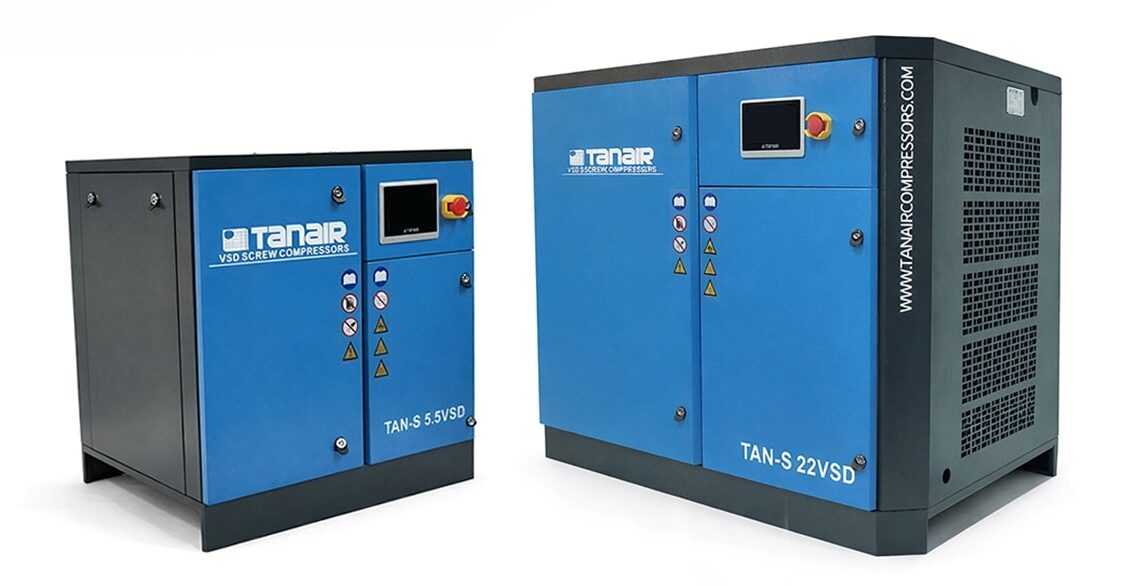
Quick recommendations: choose your compressor by CFM
Use these tiers to shortlist the right model fast. If you want, we’ll confirm sizing from your tool list and duty cycle.
Still not sure?
Send us your tools/process and we’ll calculate your total air demand and recommend the correct compressor + dryer + filtration package.
What Size Compressor Do I Need For Specific Tools?
Below are common workshop questions we get asked — and the compressor size typically required.
What Size Compressor for an Impact Wrench?
Most ½” impact wrenches require 4–6 CFM at 8 bar for intermittent use. A 6–7 CFM piston compressor is typically suitable for garage and light workshop use.
What Size Compressor for Spray Painting?
Spray guns typically require 7–12 CFM with consistent airflow. For regular spraying, step up to a belt-driven piston or a VSD screw compressor for better stability.
For paint finish quality, pair your compressor with an appropriate dryer and filtration.
What Size Compressor for Sandblasting?
Sandblasting typically requires 15–25+ CFM continuous airflow. For regular blasting, choose heavy-duty belt-driven compressors, semi-duplex/tandem for critical duty, or VSD for continuous industrial supply.
Frequently asked questions
Is a bigger tank the same as more CFM?
No. The tank helps buffer demand and stabilise pressure, but your compressor’s pump output determines CFM. For continuous tools, prioritise airflow (CFM) and compressor type.
How much safety margin should I add?
As a rule, add 20–30% above your calculated simultaneous tool CFM. If demand fluctuates heavily, consider a VSD compressor for efficiency and stable system pressure.
Should I choose piston or VSD for spraying?
Light, occasional spraying can suit piston compressors if airflow is sufficient. For frequent spraying, sanding, or production work, VSD screw compressors generally deliver better stability, duty cycle and running costs.
What voltage do I need for industrial airflow?
Higher airflow and continuous-duty setups typically require 415V three phase. If you’re limited to 230V, we can recommend suitable alternatives based on duty cycle and total CFM.
Do I need a dryer and filtration?
For spraying, CNC and clean dry air, a dryer and correct filtration package is strongly recommended. We can advise based on application.
Do you supply compressors for smoke ventilation systems?
Yes. We can help specify critical-duty compressor setups for smoke ventilation applications, including redundancy options where required. See our smoke ventilation range overview or contact our team for advice.
Want a recommendation in 2 minutes?
Tell us what you’re running (tools/process), how many users, and your voltage—our team will confirm the right compressor size and setup.