
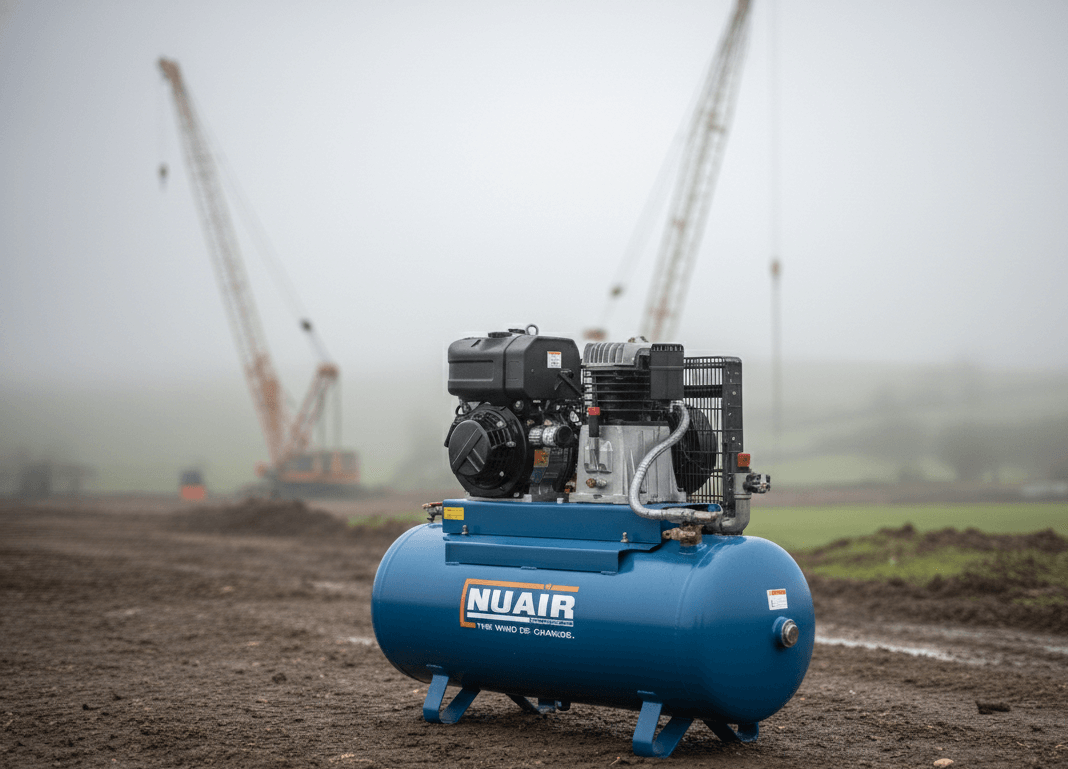
The Ultimate Guide to Diesel Air Compressors: Power, Portability, and Performance for UK Applications
Everything UK professionals need to know about diesel air compressors — from types and CFM selection to emissions compliance and maintenance.
Key areas covered in this guide
Whether you're powering a remote construction site, an agricultural operation, or an industrial facility, this guide covers everything you need to choose the right diesel compressor.
What Are Diesel Air Compressors?
Diesel air compressors use internal combustion engines to drive the compression process, converting fuel into mechanical energy that pressurises air for storage or direct tool use. They feature components such as Yanmar or Honda engines, air receivers, and pressure regulators — delivering consistent, high-output performance without any electrical dependency.
Unlike petrol variants, diesel models offer superior torque and fuel economy, making them the preferred choice for prolonged use in harsh or remote UK conditions.
Diesel air compressors can operate continuously for up to 12 hours on a single tank — making them indispensable for remote UK construction sites where electricity is unavailable.
Why Choose Diesel Over Electric or Petrol in the UK?
In locations with unreliable power grids or off-site work, diesel compressors provide uninterrupted operation. They handle higher loads with lower fuel consumption than petrol equivalents, reducing costs against UK energy price fluctuations. Key considerations for UK buyers:
- Complete independence from mains electricity — no cable runs or generator dependency
- Superior torque and fuel economy for prolonged, continuous use
- Better suited to heavy continuous loads than petrol alternatives
- Must meet UK Stage V emissions standards — always verify certification
- Higher upfront cost offset by lower running costs over the machine's lifetime
Types of Diesel Air Compressors
The right type depends on your application, required duty cycle, and whether you need portability or a fixed installation. Here are the main options available to UK buyers.
Quick comparison by type
| Type | Best For | CFM Range | Duty Cycle | Typical Use |
|---|---|---|---|---|
| Reciprocating | Intermittent site work | 10–50 | Intermittent | Workshops, construction |
| Rotary Screw | Continuous industrial | 50–175+ | Continuous | Manufacturing, large sites |
| Portable / Towable | Mobile trades | 20–100 | Moderate | Road work, agriculture |
| Stationary | Fixed factories | 100+ | Continuous | Production facilities |
For intermittent workshop use, a piston compressor is often the most cost-effective. For continuous or multi-user operation, a rotary screw or VSD unit delivers better efficiency. View our VSD range for continuous-duty options.
Uses of Diesel Air Compressors
Diesel compressors cover the full breadth of UK off-grid and high-demand applications — from remote builds to industrial production lines.
How to Choose the Right Diesel Air Compressor
Getting the specification right avoids two common and costly mistakes: undersizing (downtime and frustration) and oversizing (unnecessary cost and fuel waste). Focus on these four factors.
1. Power & Output — CFM and PSI
Add the CFM requirements of all tools likely to run simultaneously, then add a 20% safety buffer. Most diesel compressors operate between 7–14 bar — verify your tools' pressure requirements before specifying.
| Tool / Application | Typical CFM | Notes |
|---|---|---|
| Impact wrench (½") | 4–6 CFM | Intermittent; higher for continuous use |
| Spray gun (panel work) | 7–12 CFM | Consistent flow critical; pair with dryer |
| Jackhammer / breaker | 25–40 CFM | High demand; size generously |
| Sandblaster (small) | 15–25 CFM | Continuous; size up and treat air |
| Sandblaster (large) | 50–100+ CFM | Rotary screw diesel recommended |
| Pneumatic drill / rock drill | 30–50 CFM | Sustained demand; check engine torque |
2. Fuel Efficiency & Emissions Compliance
Modern diesel compressors must comply with UK Stage V emissions standards. Always verify engine certification, particularly for use in regulated environments, Low Emission Zones, or sites near residential areas. Emerging hybrid diesel-electric options offer a path toward lower emissions without sacrificing portability.
- Stage V engines are the current UK compliance benchmark
- Expect 0.5–1 litre per hour at full load — low-emission engines improve on this
- Bio-diesel compatibility is increasingly available on newer models
- IoT monitoring on modern units enables predictive maintenance, reducing fuel use by 15–20%
3. Tank Size & Portability
- 150–270 L: versatile for most site and workshop applications
- 270–500 L: sustained buffering for high-demand or multi-tool setups
- Towable units: for maximum mobility between locations
- Stationary: where output volume and runtime are the priority over mobility
4. Build Quality & Support
- Yanmar and Honda engines: proven reliability for UK professional use
- Robust steel frames: essential for demanding site environments
- Electric start: important for reliability in cold UK conditions
- UK supplier support: parts availability and service response time matter
Not sure which spec is right?
Tell us your application, tools, and site conditions — our team will confirm the right diesel compressor and any recommended air treatment.
Diesel vs Petrol vs Electric: Which Should You Choose?
The right power source depends on where you're working, how long you need to run, and what load you're putting through the machine.
Our belt-driven piston range and VSD screw compressors offer lower running costs and quieter operation where electricity is available — from 110V site supply up to 415V three-phase.
Don't Forget Air Treatment
Diesel compressors introduce moisture and particulates into the air supply. For spray painting, precision tooling, or any application where contamination causes damage, pairing with the correct air treatment is essential.
Maintenance & Troubleshooting
Regular maintenance is the single biggest factor in extending the service life of a diesel compressor and avoiding costly unplanned downtime on site.
Regular care routines
- Check fuel filters, oil levels, and drive belts every 200 hours
- Drain tank condensate daily to prevent internal corrosion
- Service engines biannually to maintain efficiency and compliance
- Replace key components every 1,000–2,000 hours
- Use ultrasonic leak detection to catch pressure losses early
- Upgrade to eco-engines when replacing to maintain Stage V compliance
Common issues & fixes
- Overheating: Clean radiators and cooling fins; ensure adequate ventilation around the unit
- Low pressure: Inspect for leaks with ultrasonic tools; check and replace worn seals
- Starting problems: Test and charge batteries; use the electric start feature in cold conditions
- Excessive fuel use: Check for air leaks in the system; verify engine is tuned to correct RPM
- Vibration / noise: Check belt tension and inspect for loose fasteners or worn bearings
IoT monitoring systems available on modern diesel compressors can reduce fuel consumption by 15–20% through predictive maintenance — identifying issues before they cause downtime.
2025/26 Trends in Diesel Air Compressors
The diesel compressor market is evolving quickly in response to tightening emissions regulations, rising fuel costs, and increased demand for connected, intelligent equipment on UK sites.
- Bio-diesel compatibility: Newer engines are certified for HVO and bio-diesel blends, reducing net carbon output without sacrificing performance
- IoT monitoring: Remote diagnostics and predictive maintenance alerts help UK site managers reduce fuel use by 15–20% and pre-empt costly failures
- Hybrid diesel-electric models: Battery-assisted units bridge the gap toward net-zero site targets while retaining diesel portability for remote locations
- Stage V compliance as standard: All new diesel compressors for UK sale must meet Stage V — verify certification when purchasing older or imported stock
- Quieter operation: Improved acoustic enclosures and low-noise pump designs address tightening site noise regulations in urban and residential areas
Our team stays up to date with the latest models and compliance requirements. Contact us for current options that meet Stage V and future-proof your investment.
Explore the Full Tanair Range
Not every application needs diesel. Browse the full Tanair range to find the right power source, type, and size for your specific requirements.
Frequently Asked Questions
Common queries from UK professionals and businesses about diesel air compressors, answered by our engineering team.
What is the difference between reciprocating and rotary screw diesel compressors?
Reciprocating (piston) models use a cyclic compression process — well-suited to intermittent use in workshops and on site. Rotary screw models deliver continuous, steady airflow at higher CFM outputs — the better choice for sustained industrial demand, multi-tool setups, or shift-based operation.
How do I calculate the right CFM for my diesel compressor?
Add the CFM requirements of all tools you expect to run simultaneously, then add a 20% safety buffer on top. For example, two breakers at 30 CFM each plus 20% gives a minimum target of 72 CFM. Our engineering team can confirm the right spec for your exact tool list — contact us for advice.
Are diesel air compressors compliant with UK emissions regulations?
Modern diesel compressors must meet UK Stage V emissions standards. Always verify engine certification before purchasing, particularly for use in regulated environments, urban sites, or Low Emission Zones. Contact our team for confirmation on specific models and applications.
What fuel efficiency can I expect from a diesel compressor?
Typically 0.5–1 litre per hour at full load, varying by engine size and duty cycle. Low-emission Stage V engines generally improve on this figure, and newer IoT-equipped models can reduce fuel use by a further 15–20% through smarter load management.
How often should I service a diesel air compressor?
Check fuel filters, oil levels, and belts every 200 hours and drain condensate daily. Carry out a full engine service biannually, and replace key wear components every 1,000–2,000 hours. Regular servicing is the most effective way to prevent costly unplanned downtime. See the full maintenance checklist above.
Do I need a dryer or filtration with a diesel compressor?
For spray painting, CNC tooling, food production, or any application where moisture or oil contamination causes damage, a refrigeration dryer and appropriate filtration is strongly recommended. View our refrigeration dryer packages and high-efficiency filters.
Where can I buy quality diesel air compressors in the UK?
Tanair Compressors has been a UK industry leader since 1992, offering expert pre-sale advice, fast delivery, and ongoing support. Contact our team or call 0121 753 3330 to discuss your requirements.
Still have questions?
Our engineering team is happy to advise on diesel compressor selection, sizing, emissions compliance, and air treatment — whether you need one unit or a fleet.
Explore More of Our Articles
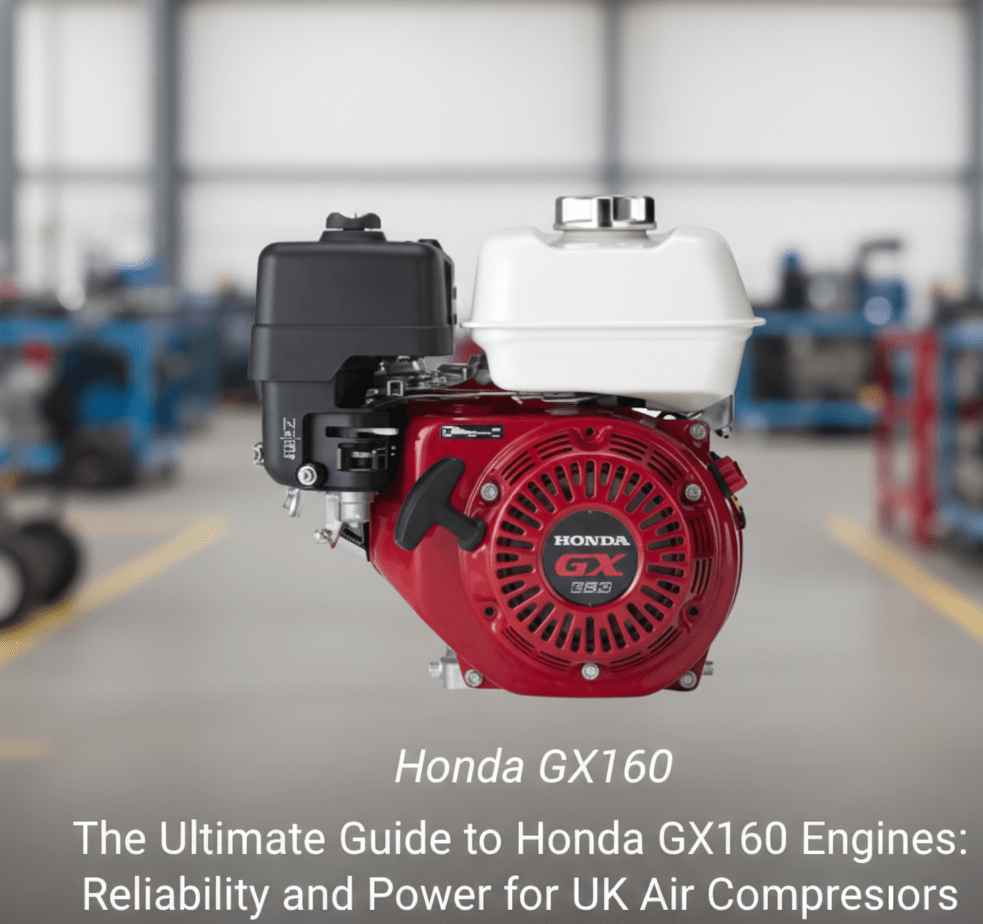
The Ultimate Guide to Petrol Compressors: Portable Power for UK Sites and Workshops
The Ultimate Guide to Petrol Compressors: Portable Power for UK Sites and Workshops Everything UK tradespeople and site managers need to know about petrol compressors
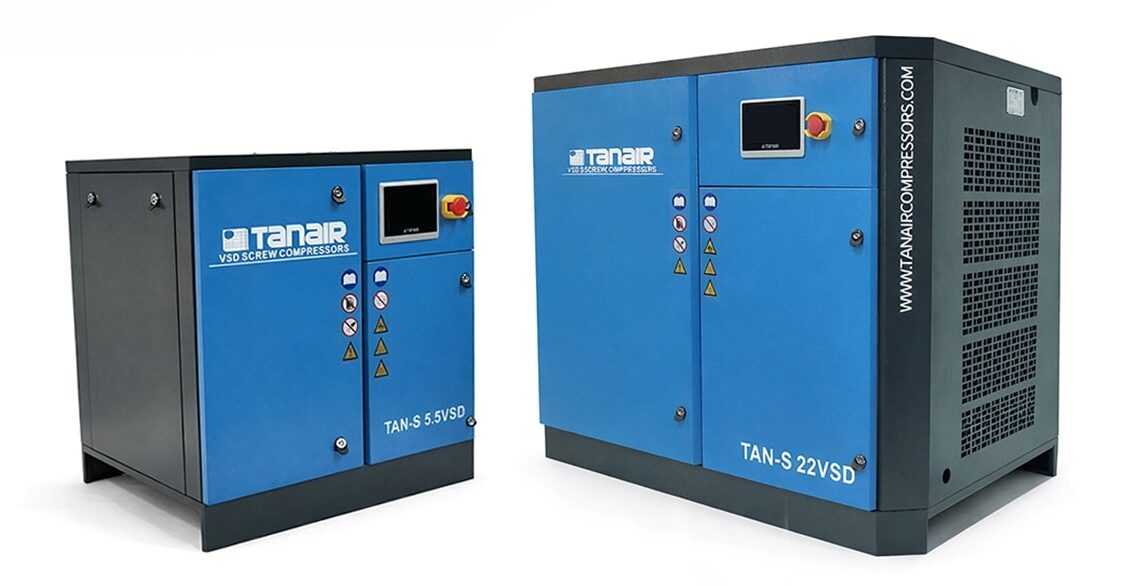
What Size Air Compressor Do You Need? (CFM, Tank Size & Power Guide UK)
What Size Air Compressor Do I Need? Use this UK-focused guide to calculate CFM, choose the right tank size, and match voltage & duty cycle—then
Explore Our Complete Air Compressor Range
Shop the Full Tanair Air Compressor Range Compare portable direct drive, belt-driven workshop and energy-saving VSD compressors — then buy online, call for instant advice,
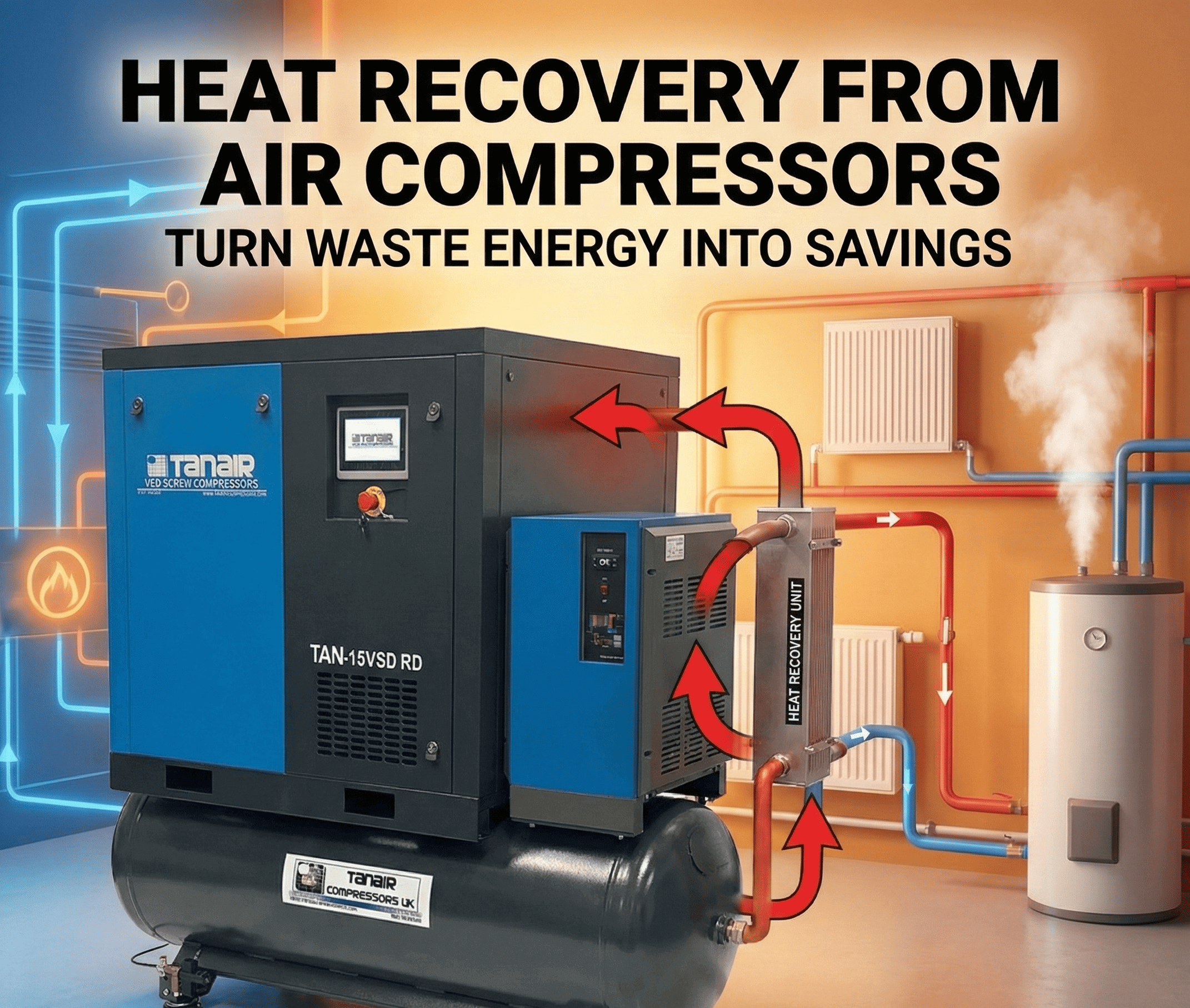
Heat Recovery from Air Compressors: Turn Waste Energy into Savings for UK Workshops 2026
What if up to 94% of the energy used by your air compressor is converted into heat, much of which is simply wasted, potentially costing
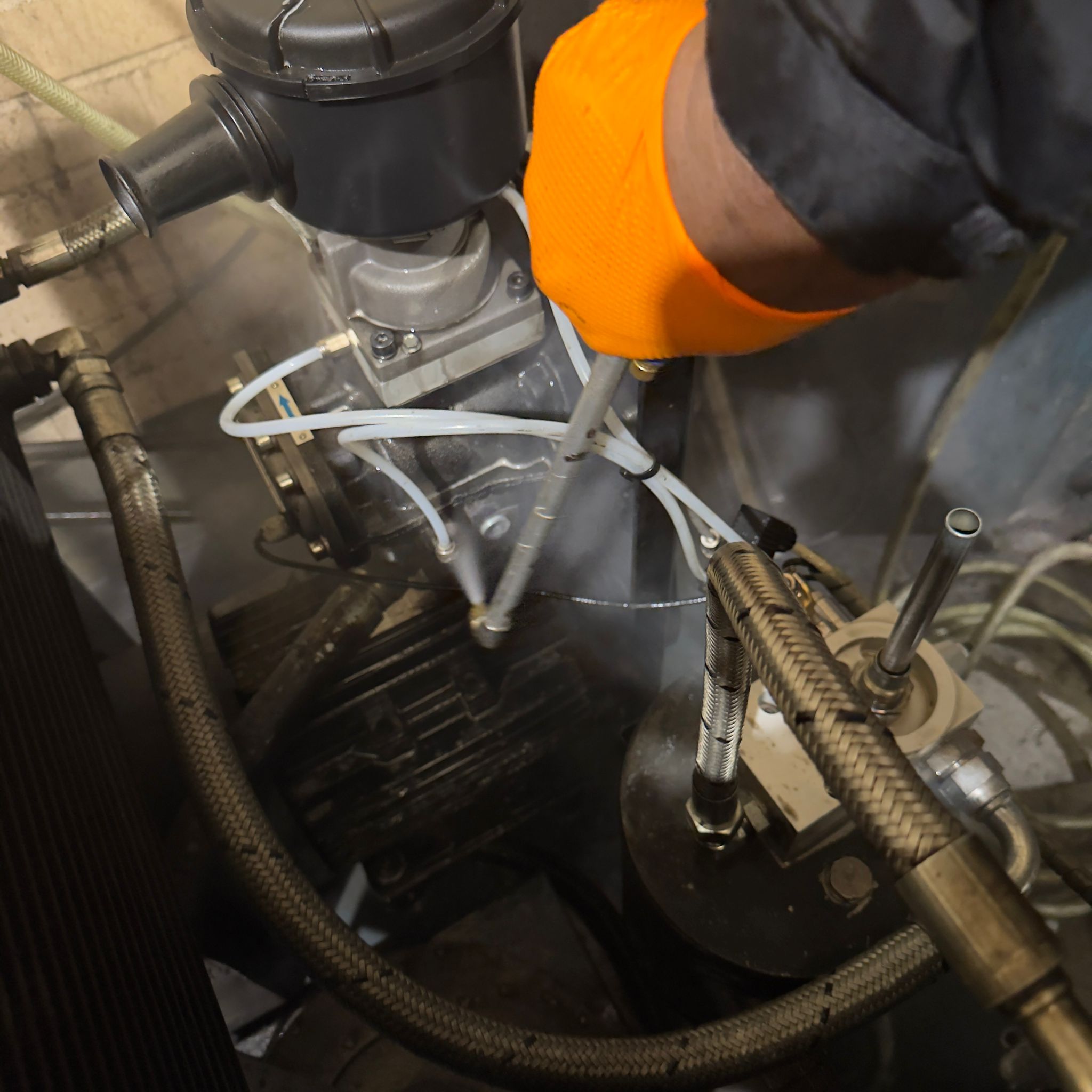
The Benefits of Deep Cleaning Your Compressed Air System
Did you know that accumulated contaminants in compressed air systems can cause up to 30% energy waste, adding thousands to annual electricity costs for UK

The Ultimate Guide to Air Line Fittings: Types, Uses, and Maintenance for UK Workshops
Did you know that poor quality air line fittings can cause up to 30% energy loss in compressed air systems, costing UK workshops thousands in