
Find the Right Air Compressor
Choose by application, compare compressor technologies or speak to our technical team
Start with Your Application
Air compressors are available in different technologies, sizes and configurations. The correct choice depends on your required airflow, pressure, operating hours, duty cycle, available power supply and future demand.
Choose the route that best describes how the compressor will be used, then browse the relevant range or use the selector for an initial recommendation.
Choose an Air Compressor by Application
These routes help narrow the choice and direct you to the most relevant compressor range.
Workshop & Garage
Piston compressors for intermittent use, air tools, tyres and smaller workshop demand.
Best for intermittent use →Manufacturing & Continuous Use
Rotary screw and vane compressors for production environments and long daily runtimes.
Best for continuous demand →Variable Demand & Energy Saving
Variable-speed compressors for sites where compressed air demand changes during the day.
Best for changing demand →Specialist & Portable
Medical, dental, smoke ventilation, petrol, diesel and compact compressor options.
View specialist routes →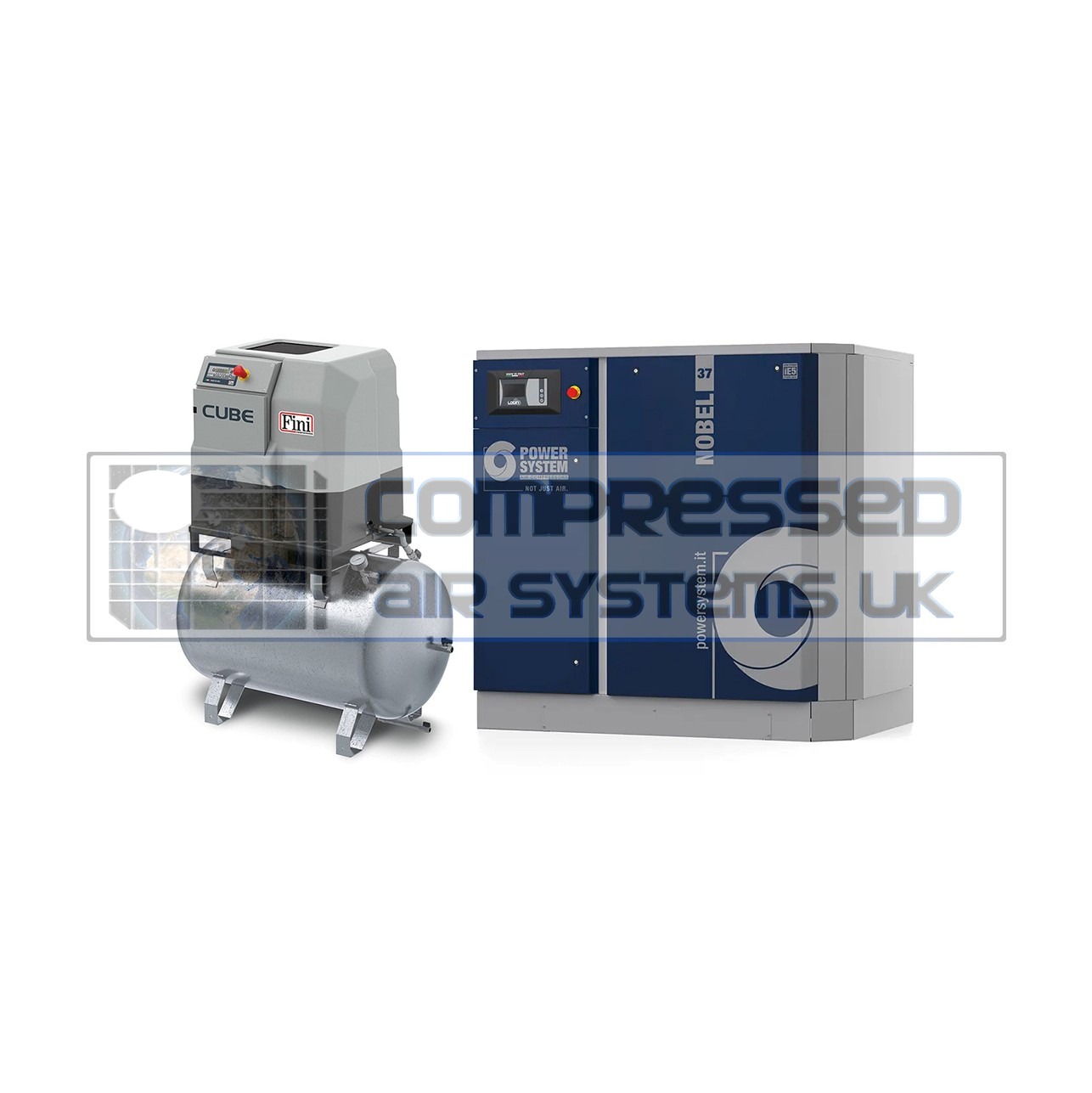
Rotary Screw Compressors
Industrial compressors for regular and continuous-duty applications.
View Range
Energy Efficient VSD Compressors
Variable-speed systems designed for changing compressed air demand.
View Range
Piston Air Compressors
Cost-effective compressors for workshops and intermittent demand.
View Range
Smoke Ventilation Compressors
Specialist systems for smoke ventilation and life-safety applications.
View Range
Dental & Medical Compressors
Specialist compressor options for dental and medical environments.
View Range
Petrol Air Compressors
Portable compressed air where a mains electrical supply is unavailable.
View Range
Diesel Air Compressors
Engine-driven compressors for demanding site and mobile use.
View Range
Wall-Mounted Compressors
Compact compressed air solutions where floor space is limited.
View Range
Air Compressor Kits & Complete Packages
Complete Tanair VSD systems plus practical workshop compressor and tool kits.
View RangeAir Compressor Comparison Guide
Use the selector and comparison table below as an initial guide. It identifies a suitable compressor route, while final machine selection should still be based on airflow, pressure, operating hours and site conditions.
Which Air Compressor Type May Suit Your Application?
Answer two questions for an initial recommendation.
| Compressor Type | Typical Application | Use Pattern | Noise | Energy Performance | Key Considerations |
|---|---|---|---|---|---|
| Piston | Workshops and light-duty applications | Intermittent | Higher | Moderate for suitable duty | Lower purchase cost, but duty cycle and noise must be considered. |
| Rotary Screw | Industrial and production environments | Regular or continuous | Lower | High when correctly sized | Smooth airflow and good suitability for long daily operating periods. |
| Variable Speed Drive | Sites with changing air demand | Variable | Low | Very high potential | Matches output to demand and can reduce unloaded running and energy waste. |
Piston Compressors
Best for: Intermittent workshop and light-duty use.
Consider: Duty cycle, noise and actual delivered airflow.
Rotary Screw Compressors
Best for: Regular and continuous industrial demand.
Consider: Correct sizing, ventilation and service access.
Variable-Speed Compressors
Best for: Demand that changes significantly throughout the day.
Consider: Actual demand profile and minimum operating speed.
Air Compressor Buying Guide
Choosing the right compressor starts with the air demand, not simply the motor size or receiver capacity. Use the points below to narrow down the correct compressor technology and package.
Airflow
Use required free air delivery (CFM) from the tools and processes that may run at the same time.
Pressure
Allow for losses through dryers, filters, regulators, hoses and pipework.
Running Hours
Short intermittent use often points towards piston; longer daily demand usually favours rotary screw.
Demand Profile
Variable-speed control can suit sites where demand rises and falls significantly during the working day.
Power Supply
Confirm 230 V, 415 V three-phase or the need for petrol or diesel before selecting the machine.
Air Quality
Dryer, filtration and oil-free requirements depend on the application and required compressed-air quality.
Receiver Size Does Not Increase Compressor CFM
A larger receiver stores more compressed air and can help with short peaks and cycling, but it does not increase the compressor's continuous delivered airflow.
Which Compressor Technology Should You Consider?
Piston
Best suited to many workshops, garages and intermittent compressed-air applications.
Rotary Screw
Designed for regular or continuous industrial demand and longer daily operating periods.
Variable Speed
Useful where demand changes significantly. VSD is not automatically more efficient on every site.
Petrol & Diesel
For mobile or remote use where a suitable electrical supply is unavailable. Never operate engine-driven compressors in enclosed or poorly ventilated areas.
Medical & Dental
Specialist applications where air quality, treatment, noise and equipment suitability must be considered together.
Smoke Ventilation
Life-safety applications that must be selected around the complete system design, controls and project requirements.
Installation, Service and Aftercare
Choosing the compressor is only part of the project. Correct installation, ventilation, pipework, electrical supply and maintenance all affect long-term reliability.
Installation
Professional compressor and pipework installation support.
Planned Servicing
Routine maintenance based on running hours and site conditions.
Repairs & Breakdown
Engineering support for compressor faults and urgent failures.
Spares & Lubricants
Service kits, filters, separators, oils and replacement components.
Specialist Compressor Routes
Compressed Air Systems UK supports compressed air users across a broad range of commercial, industrial and specialist environments.
Manufacturing
Production machinery, automation and general plant air.
Automotive
Bodyshops, garages, tyre equipment and air tools.
Medical & Dental
Specialist compressed air equipment for clinical environments.
Smoke Ventilation
Duty, standby and semi-duplex compressor packages for life-safety systems.
See the Potential for Compressor Energy Savings
Compare Running Costs Before You Replace
The right compressor can reduce wasted energy where the existing machine is oversized, runs unloaded for long periods or operates above the pressure actually required. Any saving depends on real demand, operating hours and the existing system.
This is why we recommend reviewing real usage rather than simply replacing an older compressor with another machine of the same motor size.
Compressed Air Services
24/7 Emergency Breakdown
24/7 emergency engineering support for compressor breakdown situations.
View Service →Pipework Installations
Compressed air ring mains, branches and equipment connections.
View Service →Compressor Servicing
Planned maintenance, service kits and condition checks.
View Service →Technical Advice
Speak with our team about compressor selection and replacement.
Contact Us →Air Compressor FAQs
Which air compressor is best for a workshop?
A piston compressor is often suitable for intermittent workshop use. Workshops with long daily running hours or higher demand may benefit from a rotary screw or variable-speed compressor.
Which compressor is best for continuous industrial use?
Rotary screw and rotary vane compressors are generally better suited to regular and continuous industrial demand than conventional piston compressors.
When should I choose a VSD compressor?
Variable-speed compressors are most useful where air demand changes throughout the day. They adjust output to demand and can reduce unloaded running and energy waste.
How do I calculate the required compressor CFM?
Add the air consumption of tools and processes that may operate at the same time, then allow a sensible margin for pressure loss, leakage and future demand. Use free air delivery rather than theoretical displacement.
Is a larger air receiver the same as a larger compressor?
No. A larger receiver stores more compressed air and may reduce cycling, but it does not increase the compressor's continuous delivered airflow.
Can Compressed Air Systems UK install and service the compressor?
Yes. Compressed Air Systems UK provides compressor installation, pipework, planned servicing, repairs and emergency breakdown support, subject to the equipment and site requirements.