
Air Receivers & Treatment
Compressed-air storage, drying, filtration, pressure control and condensate-management equipment for workshop, commercial and industrial systems.
Browse Air Receivers & Treatment Equipment
Browse air receivers, dryers, filters, drains, regulators and condensate-treatment equipment. Correct selection should be based on delivered airflow, operating pressure, site conditions and the air quality required at the point of use.

Air Receivers
Compressed-air storage for managing demand peaks and supporting stable system operation.

Air Dryers
Drying equipment for reducing moisture content in compressed-air systems.
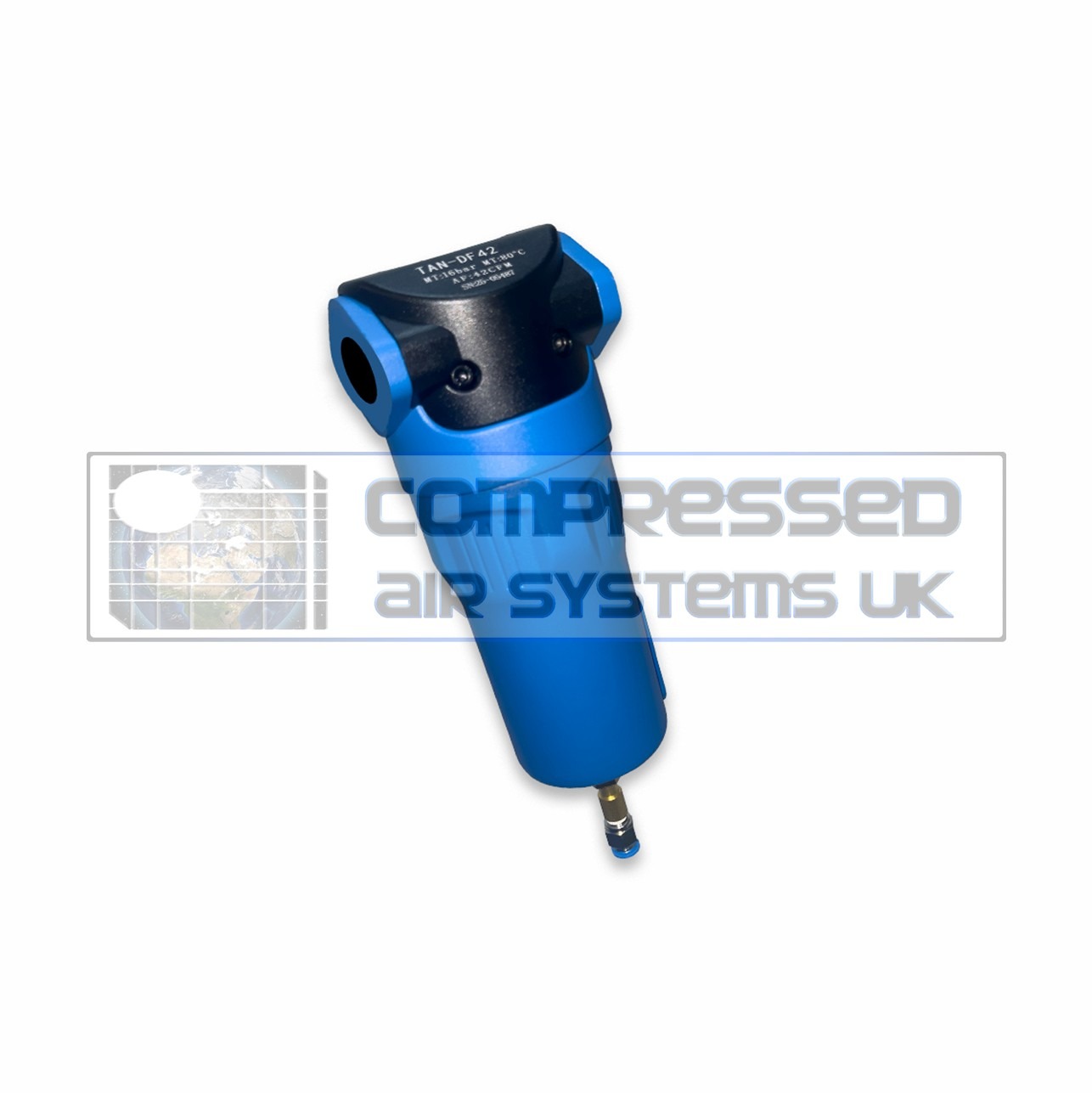
High Efficiency Filters
Filtration for removing specific particulate, liquid and aerosol contamination.

Filter Elements
Replacement elements for compatible compressed-air filter housings.

Coalescing Filters
Fine filtration for oil aerosols, water droplets and sub-micron contamination.

Water Traps
Local separation of condensed moisture and larger contamination.
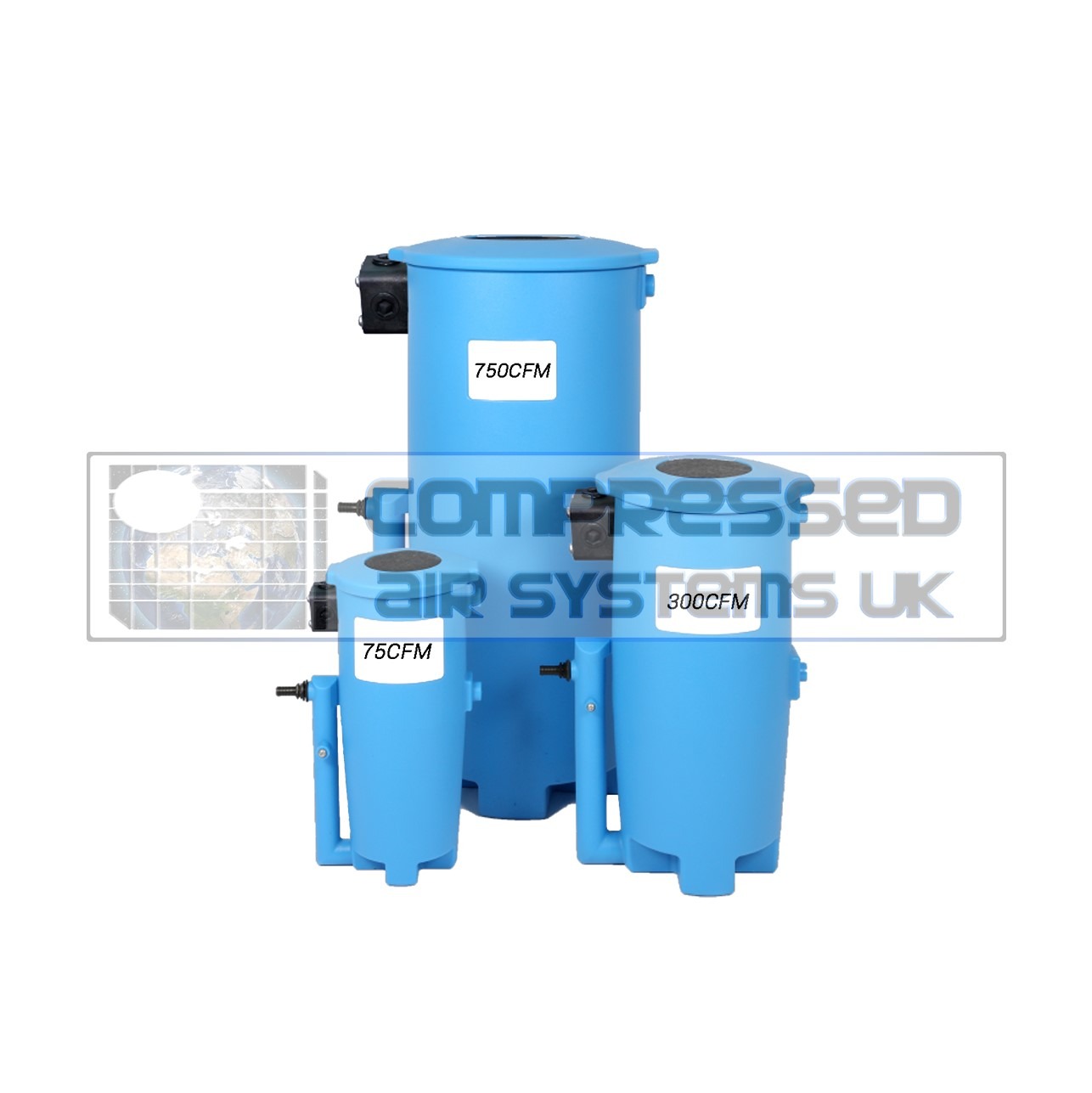
Condensate Systems
Treatment systems for oily compressor condensate before appropriate disposal.

Automatic Drains
Automatic condensate discharge for receivers, filters, dryers and pipework.

Internal Autodrains
Internal drain options for compatible receivers and treatment equipment.

Zero Loss Drains
Condensate drainage designed to avoid routine loss of usable compressed air.

Air Regulators
Downstream pressure control for tools, machinery and individual branches.

Filter Regulators
Combined local filtration and downstream pressure regulation.

Air Line Lubricators
Controlled oil feed for pneumatic equipment that specifically requires lubrication.
Complete Compressed Air Treatment
Producing compressed air is only the first step in creating a reliable system. Depending on the application, the air may also need to be stored, dried, filtered, pressure-controlled and drained before it reaches tools, machinery or production equipment.
Air Receivers & Storage
An air receiver stores compressed air and helps balance fluctuations between compressor output and site demand. It can support short demand peaks, stabilise system pressure and reduce excessive compressor loading and unloading.
Air Dryers & Moisture Control
As compressed air cools, water vapour can condense into liquid water. Refrigerated dryers are suitable for many general workshop and industrial applications, while processes requiring a lower pressure dew point may need adsorption drying or additional treatment.
Compressed Air Filtration
General-Purpose Filtration
For larger particles and bulk liquid contamination.
Fine Aerosol Removal
For fine oil aerosols and water droplets.
Sensitive Applications
For applications requiring a higher level of downstream compressed-air cleanliness.
Replacement Elements
For maintaining compatible filter housings at planned service intervals.
Condensate Management
Moisture removed by receivers, filters and dryers becomes condensate. On lubricated compressor systems, this condensate can contain oil and requires suitable collection, treatment and disposal.
- Automatic timer drains for scheduled condensate discharge
- Internal float drains for compatible equipment
- Zero-loss drains for level-controlled discharge
- Oil-water separators for treating oily compressor condensate
How to Size Air Treatment Equipment
Use Delivered Airflow
Size dryers and filters from actual delivered airflow or CFM rather than compressor motor kW alone.
Check Operating Pressure
Effective treatment capacity can change with system pressure.
Check Inlet & Ambient
High inlet or ambient temperatures can reduce effective dryer capacity.
Define the Requirement
Select treatment stages around the actual air-quality requirement at the point of use.
Installation & Maintenance
- Allow adequate ventilation around refrigerated air dryers
- Provide service access around filters, drains and treatment equipment
- Check condensate drains routinely for correct operation
- Replace filter elements according to manufacturer guidance, operating hours and site conditions
- Use suitable isolation and bypass arrangements where the installation requires them
- Avoid undersized pipework and restrictive connections that create unnecessary pressure loss
- Fully isolate and depressurise compressed-air equipment before carrying out maintenance
Air Receivers & Treatment FAQs
Do I need an air dryer?
If consistent moisture control is required, a correctly sized dryer is normally needed. The appropriate dryer type depends on the required pressure dew point, airflow, operating conditions and application.
Can a water trap replace a dryer?
Not normally. A water trap removes condensed liquid and some contamination, but it does not provide the same moisture control as a correctly sized dryer.
How do I size filters and dryers?
Use actual delivered airflow, operating pressure, inlet temperature, ambient temperature and required air quality rather than selecting treatment equipment from motor size or BSP connection alone.
Does a larger air receiver increase CFM?
No. A receiver increases stored-air capacity but does not increase the compressor's continuous delivered airflow.
What should happen to oily condensate?
Condensate from lubricated compressor systems can contain oil and should be collected and treated using an appropriate condensate-management system before disposal.