
Existing Article Product
Fini Pulsar Ultimate K30-270-5.5 TA
25.6 CFM • 270L • Ultimate Silenced
View ProductModern field compressors are easier to move, quieter, simpler to monitor and available in more configurations than older portable machines. The most useful advances are those that improve real-world mobility, air delivery, serviceability and efficiency without compromising the duty required on site.
Portable compressed air used to mean accepting a fairly crude compromise: heavy equipment, basic controls and limited flexibility. Today there is a much broader choice, ranging from genuinely portable piston compressors through low-noise receiver-mounted machines to compact full-feature screw compressors.
The live article mixes genuinely portable machines with larger silenced and full-feature compressors. That makes sense when “field application” is interpreted broadly: some jobs need equipment that can be transported between sites rather than physically carried by one person.
Compact design matters because site equipment often has to pass through workshops, plant rooms, service corridors or temporary access routes. Lower weight also helps where the compressor needs to be loaded into a service vehicle or moved around a site.
However, reducing size is only useful if the compressor still delivers the required CFM, pressure and duty. A compact compressor that cannot keep up with the tool is not an innovation for that application.
Noise matters in workshops, mobile service environments, construction finishing work and locations close to occupied areas. Purpose-built silenced compressors reduce the need to improvise sound enclosures that could obstruct cooling airflow.
Modern compressor controllers can make field operation easier by displaying pressure, running hours, service intervals, temperature and fault information more clearly than older mechanical-control systems.
Remote connectivity is available on some industrial compressor systems, but it should not be treated as a universal portable-compressor feature. The useful innovation is better information and control where the actual machine supports it.
Where field demand varies throughout the working period, variable-speed control can allow the compressor to reduce output instead of repeatedly producing more air than the site needs.
VSD is most useful when demand genuinely changes. For simple intermittent work, a correctly sized piston compressor may remain the more appropriate solution.
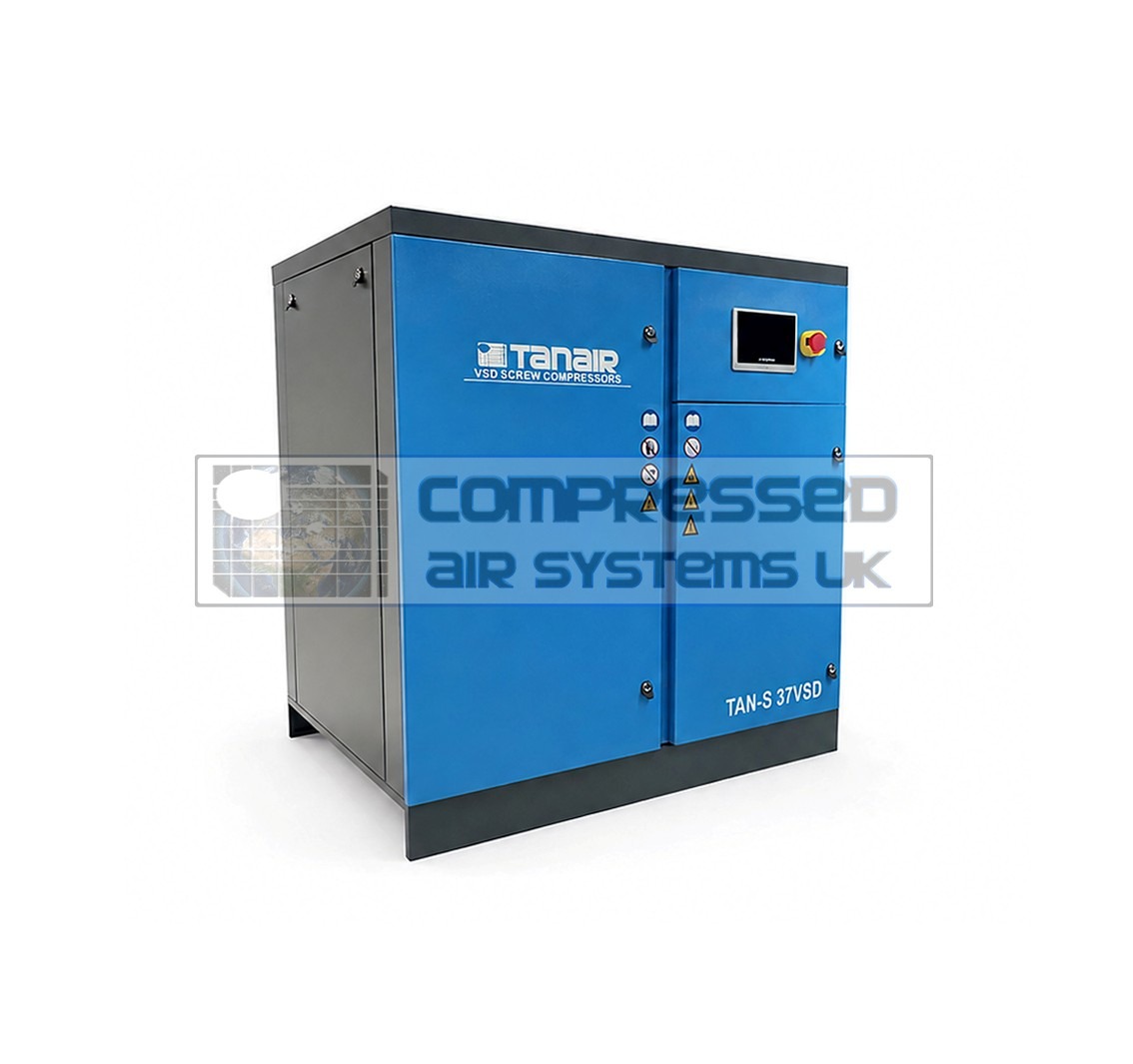
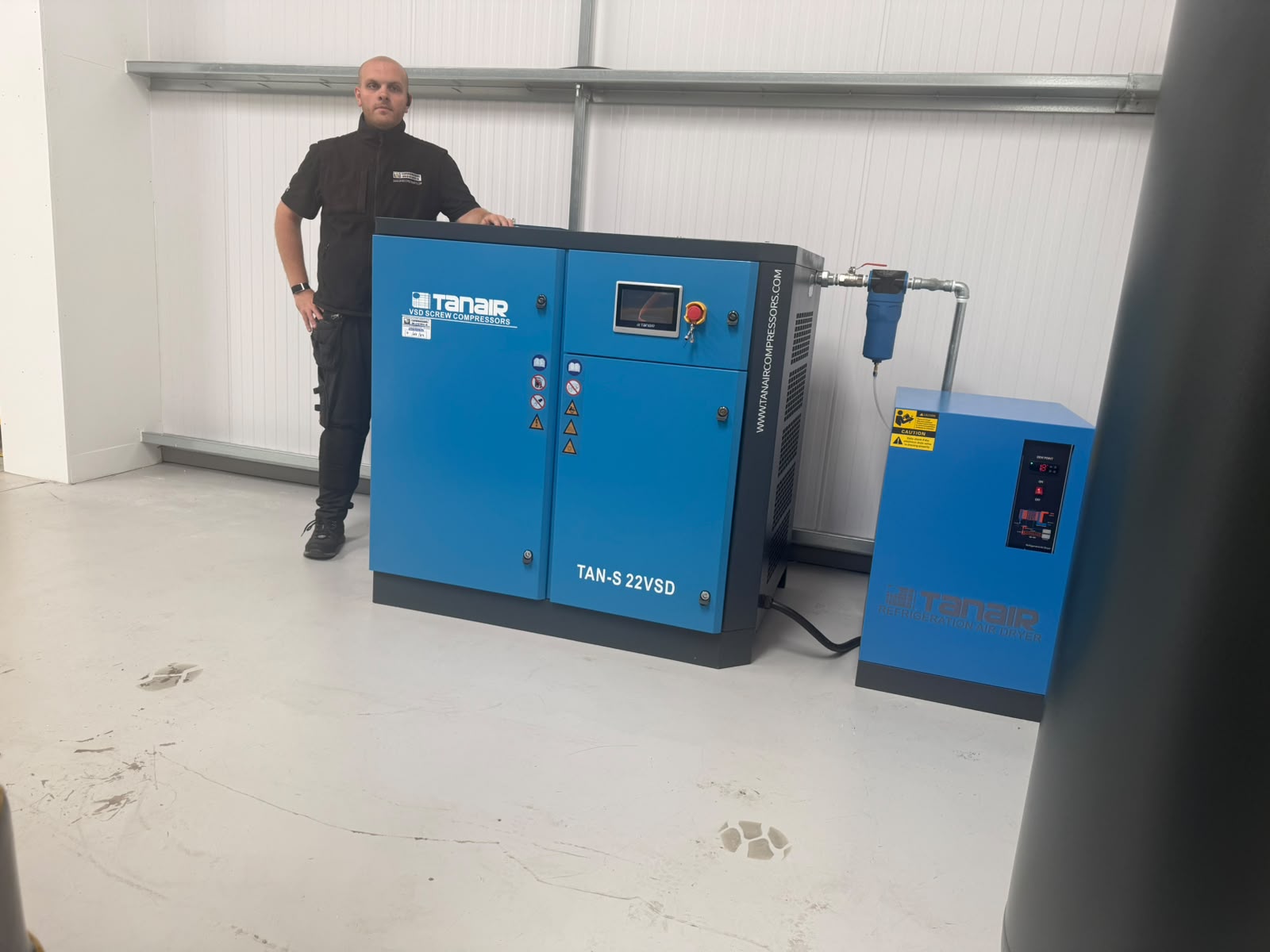
One of the most useful practical developments is the availability of compact compressor packages that combine the compressor, air receiver, dryer and filtration. This can simplify site setup where dry or treated compressed air is required.
The live article contains eight embedded compressor/product recommendations. All eight product routes and the exact article image URLs are retained below.
25.6 CFM • 270L • Ultimate Silenced
View Product
31 CFM • 270L • Ultimate Silenced
View Product
38 CFM • 270L • Ultimate Silenced
View Product
41 CFM • 10 Bar • 415V • Variable Speed
View Product
74 CFM • 415V • Receiver Mounted • Dryer & Filtration
View Product
11.6 CFM • 400V • Low Noise Piston
View Product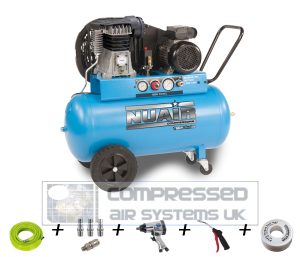
NB2800B/100/3M TECH PRO • Hose • Impact Wrench • Blow Gun
View Product
44 CFM • 8 Bar • 270L • Dryer & Dual Filtration
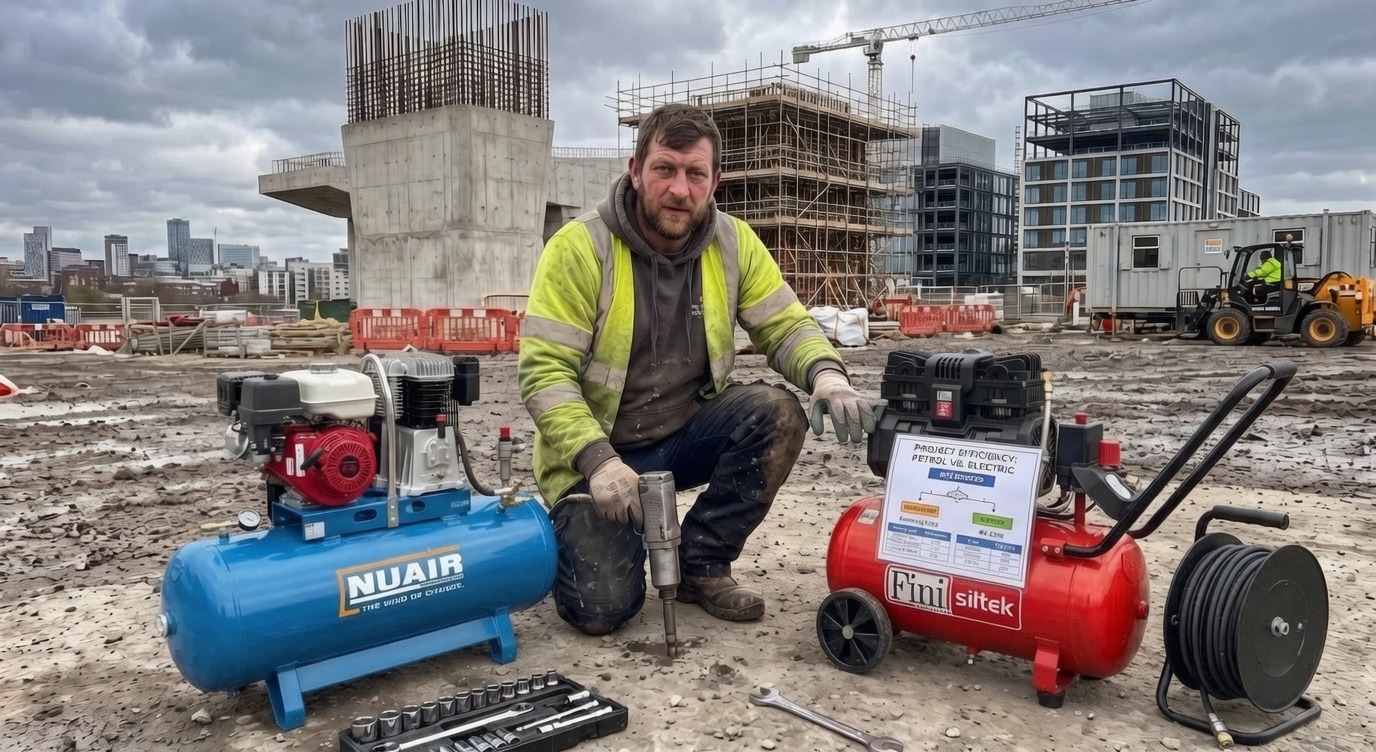
View ProductField compressors can support nailers, impact tools, breakers, spraying equipment and other pneumatic tools where the compressor is genuinely sized for the duty.
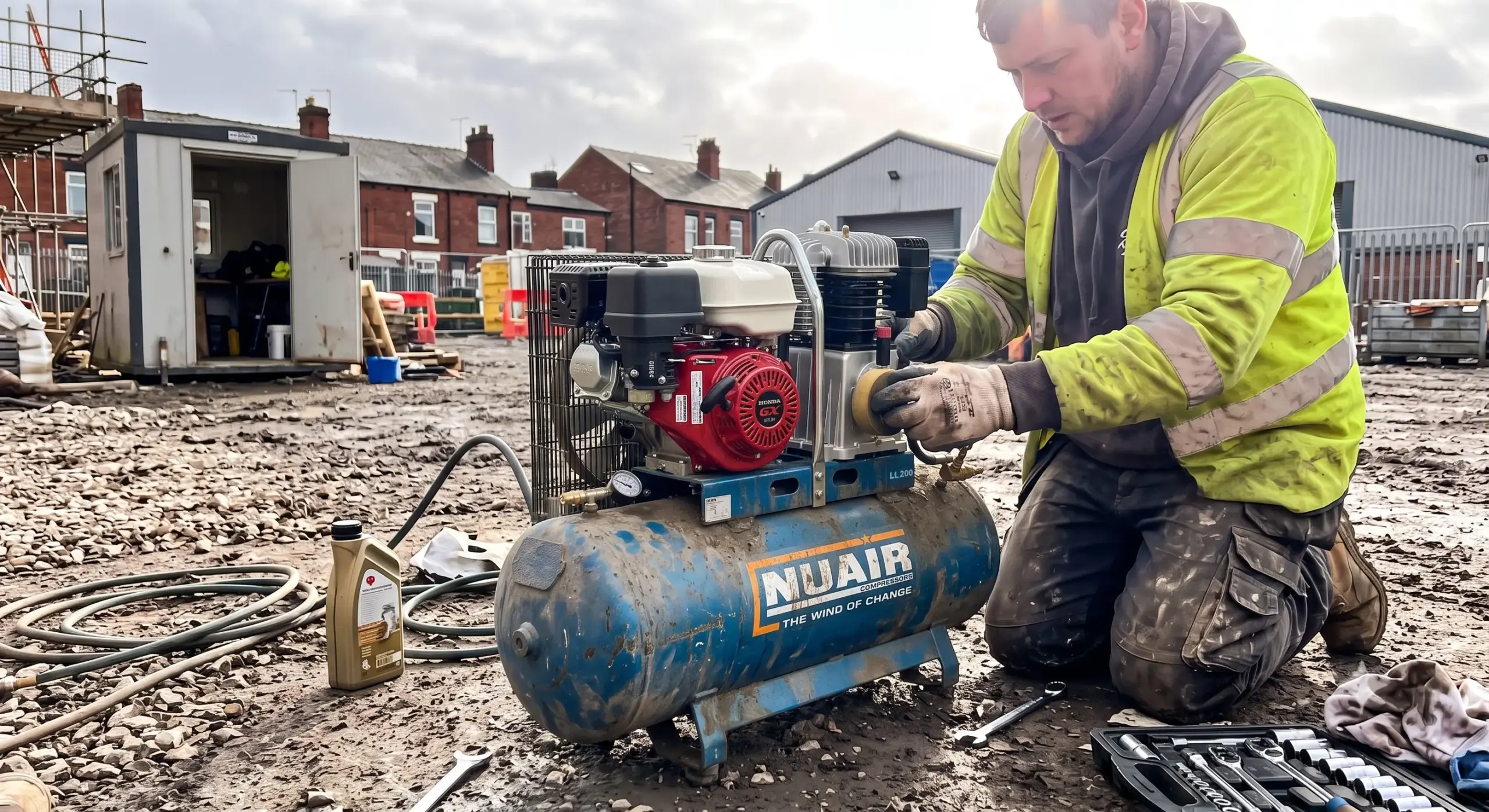
Portable or transportable compressors are useful for machinery maintenance, tyre inflation and approved pneumatic tools around agricultural sites. Compressed air can also be used for selected line-clearing tasks where the equipment manufacturer permits it.
Service vehicles and mobile workshops can use compressed air for inflation, impact tools and other pneumatic equipment. The choice between electric, petrol or diesel drive depends on the available power source and how much air the tools consume.
The strongest future developments are likely to be those that reduce the practical burden of operating compressed air away from a permanent compressor room:
The original article links to other current Tanair advice pages. Those useful routes are retained here rather than being dropped.
It needs to deliver the required CFM and pressure while also fitting the site's power, transport, noise, environment and duty requirements.
Physically, often yes — but portability is only useful if the machine can still supply the required tool. Larger transportable compressors can be the better field solution for high-demand work.
They can be useful for lower-air-demand tasks, but runtime and airflow vary greatly by model. Compare the actual CFM, pressure and battery runtime with the intended job.
Only where the process or tool requires a lower moisture level. Drying and filtration should be selected around the required air quality rather than fitted automatically.
It can be valuable on larger transportable systems where demand varies materially. For small intermittent-duty compressors, simpler fixed-speed operation may be perfectly suitable.
For help choosing a portable, silenced or transportable compressor, use the Contact Us page or call 0121 753 3330.
Offices, Trade Counter & Warehouse
Compressed Air Systems UK
Unit 15, Fortnum Close
Birmingham, B33 0LG
Tell us the tools, CFM, pressure, power supply and how the compressor needs to move and we can help narrow down the right field solution.