Blog
BEAS Grants for Energy Efficient Air Compressors | Up to 50% Funding
BUSINESS ENERGY ADVICE SERVICE Could the BEAS Grant Help Towards Your Next Air Compressor? Eligible West Midlands businesses could access
Air-compressor noise figures can look confusing because sound power and sound pressure are both expressed in decibels but describe different things. Understanding the difference makes it much easier to compare compressors properly.
Sound power describes the total acoustic energy emitted by the compressor. It is a characteristic of the sound source and is useful for comparing machines and for acoustic calculations.
Sound pressure is what is measured at a particular position. It changes with distance from the compressor, reflections from walls and ceilings, room size, surrounding machinery and the acoustic environment.
The original article included this visual reference to put decibel values into everyday context, so it has been retained.
 Existing decibel reference chart retained from the original article.
The compressor itself may have the same sound-power output, but the sound pressure experienced by a person can change dramatically depending on where the machine is installed.
The original article included a useful theoretical comparison table. The important word is theoretical: these values assume idealised free-field behaviour, so real buildings may give different results because of reflections and other sound sources.
| Sound Power Level LWA | Approx. LpA at 1m | Approx. LpA at 4m | Approx. LpA at 15m |
|---|---|---|---|
| 80 dB | 72 dB | 60 dB | 48.5 dB |
| 85 dB | 77 dB | 65 dB | 53.5 dB |
| 90 dB | 82 dB | 70 dB | 58.5 dB |
| 95 dB | 87 dB | 75 dB | 63.5 dB |
| 100 dB | 92 dB | 80 dB | 68.5 dB |
The original post also included an example of the LWA noise marking commonly seen on machinery. I have retained that visual because it helps explain why the number printed on the machine may not match a sound-pressure figure quoted at a particular distance.
 Existing LWA example image retained from the original article.
Decibels do not work like a simple linear scale. A change of 10 dB represents a tenfold change in sound intensity, while perceived loudness is more complicated and depends on frequency and the listener.
This is why a difference of only a few decibels between two compressor specifications can still be meaningful, especially in a workshop where people spend long periods close to the machine.
The original page also displays the Nuair NB3800B/3M/100 Q TECH PRO image directly above the product listing. That image has been retained here alongside all eight linked product cards.

The original article contains a live product block. I have deliberately kept all eight product routes rather than removing them during the rewrite.


230V low-noise piston compressor, currently listed at 65 dB(A).
View Product →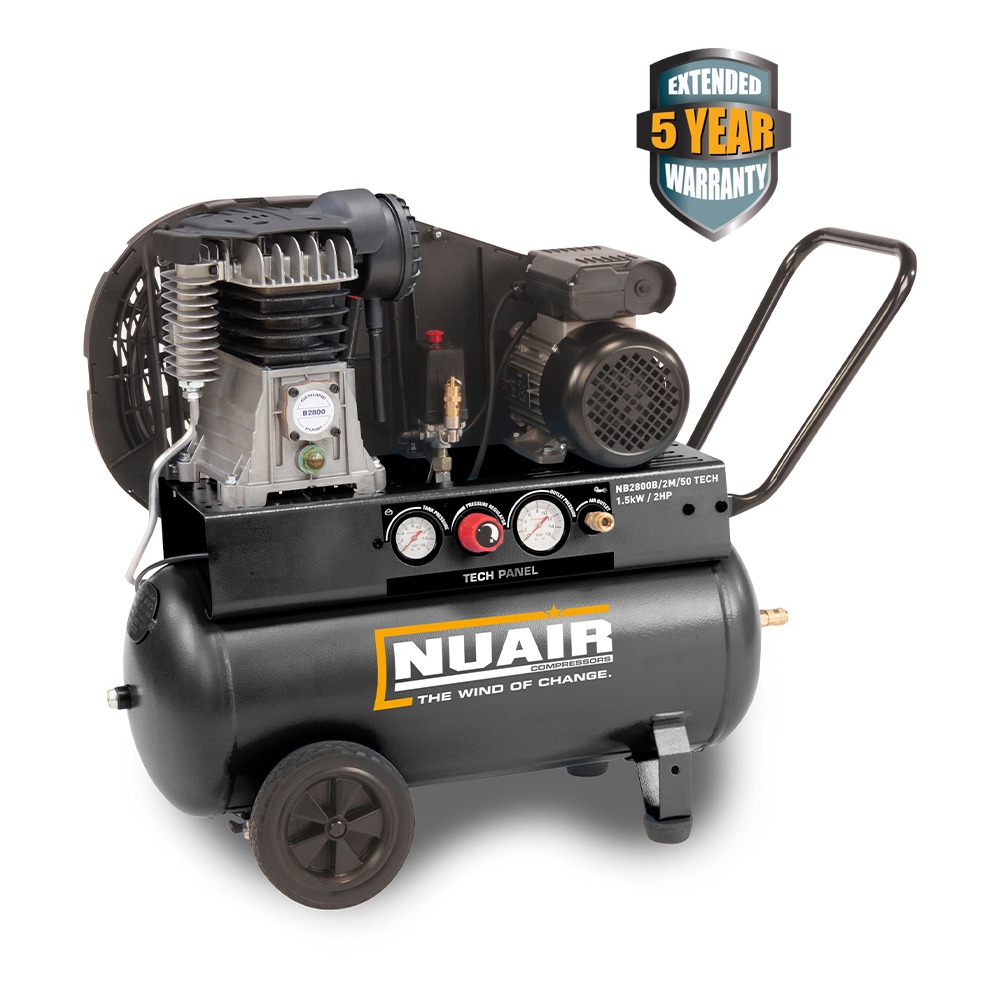
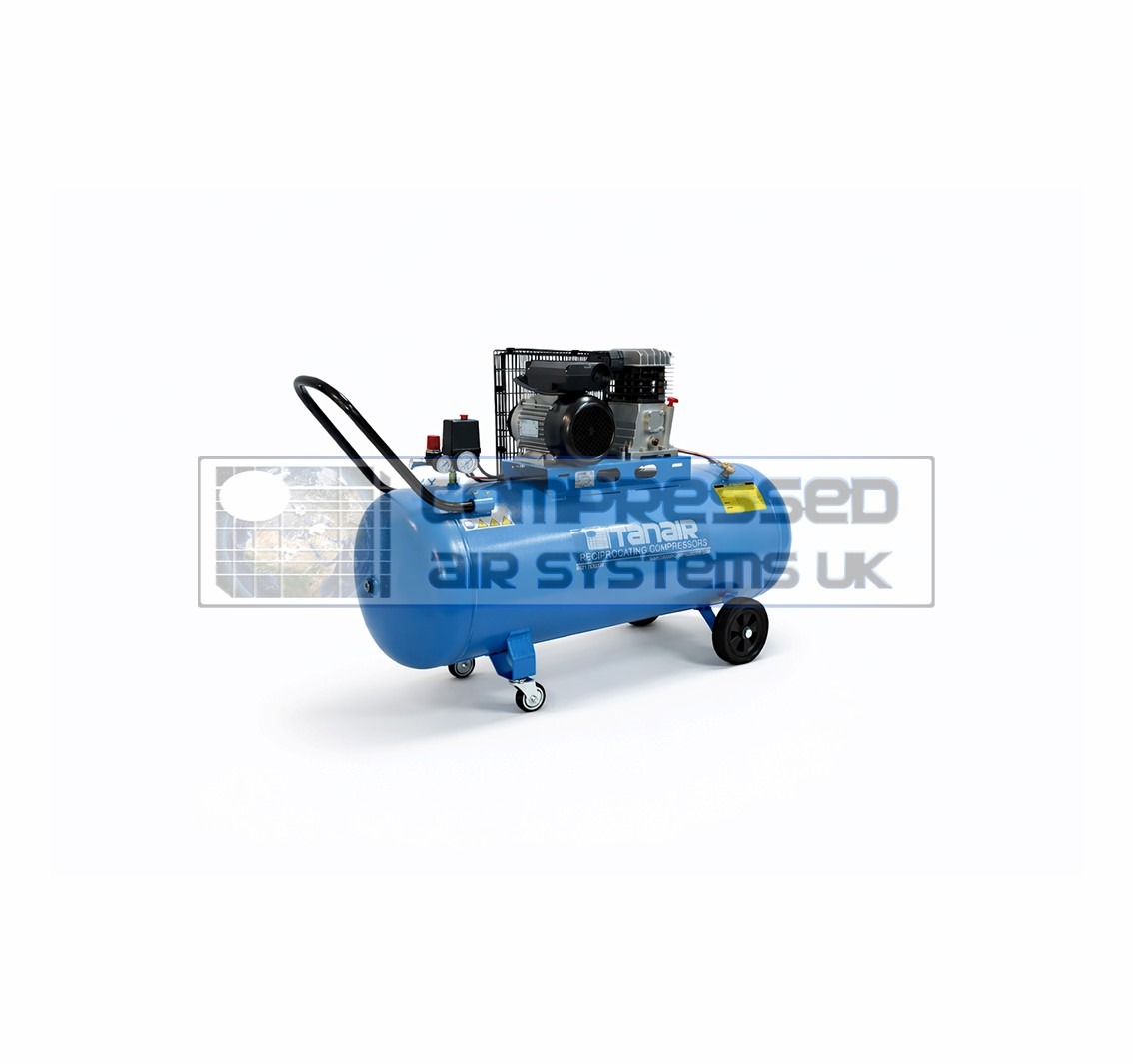
230V belt-driven piston compressor with 150 litre receiver.
View Product →
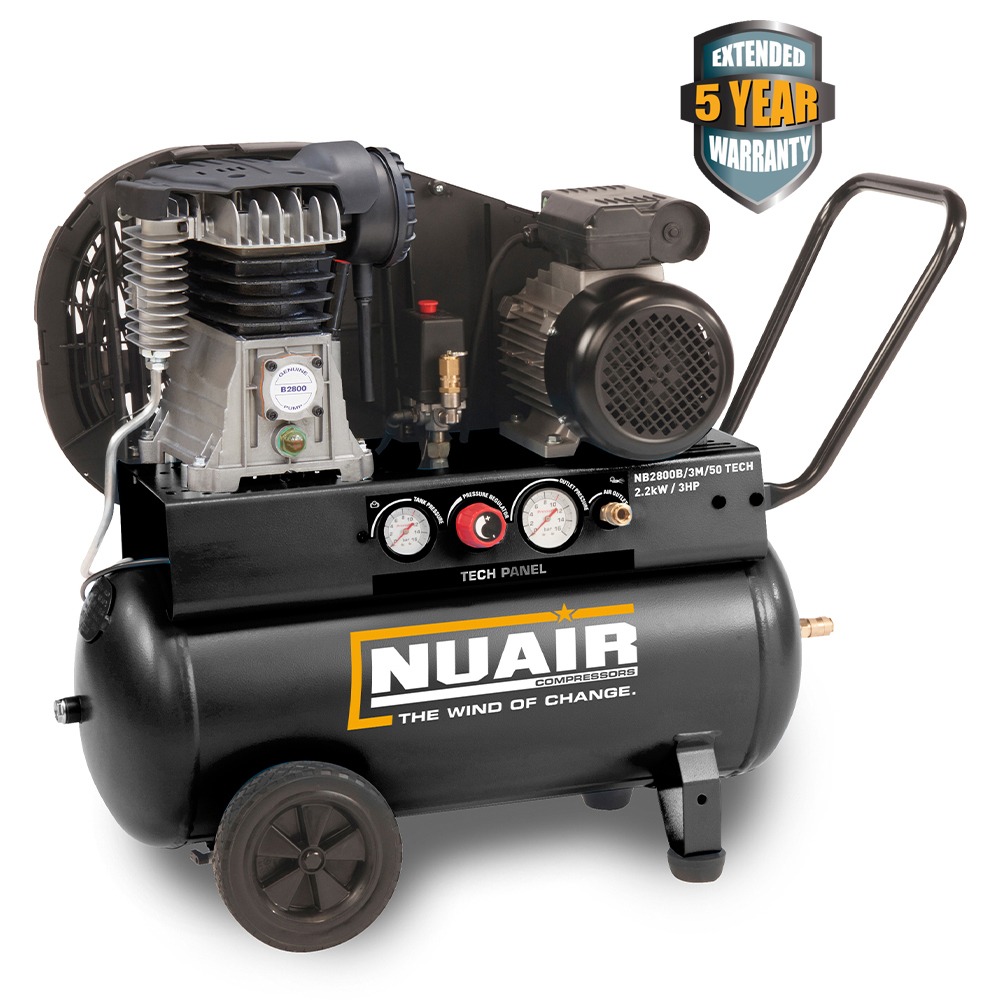
230V portable belt-driven TECH PRO compressor.
View Product →
415V heavy-duty belt-driven piston compressor with 200 litre receiver.
View Product →
There is no single compressor dB figure that is automatically suitable for every workplace. The correct decision depends on exposure duration, distance, surrounding equipment, building acoustics and the site's noise-risk assessment.
If people work close to the compressor for extended periods, installation location and acoustic treatment can be just as important as choosing a lower-noise machine.
The existing article links customers to Compressed Air Systems UK for selection advice, and that route is retained.
Call 0121 753 3330 or use the Contact Us page if you need help comparing CFM, pressure, voltage and noise specifications.
Offices, Trade Counter & Warehouse
Compressed Air Systems UK
Unit 15, Fortnum Close
Birmingham, B33 0LG
Sound power describes the acoustic energy emitted by the compressor. Sound pressure describes the sound level at a particular measurement position and is affected by distance and surroundings.
No. LWA is an A-weighted sound-power level. A sound-pressure figure such as LpA must be stated with its measurement conditions and position to make a meaningful comparison.
As sound energy spreads away from the source, measured sound pressure generally falls. Reflections and room acoustics can change the real-world result.
It can be relatively quiet compared with many conventional piston compressors, but always check how and where the 65 dB(A) figure was measured.
Noise matters, but the compressor must first deliver the required CFM, pressure and duty. The best choice balances acoustic performance with the actual air requirement.
Tell us your required airflow, pressure, voltage and where the compressor will be installed and we can help compare suitable low-noise options.
Contact Compressed Air Systems UKBUSINESS ENERGY ADVICE SERVICE Could the BEAS Grant Help Towards Your Next Air Compressor? Eligible West Midlands businesses could access
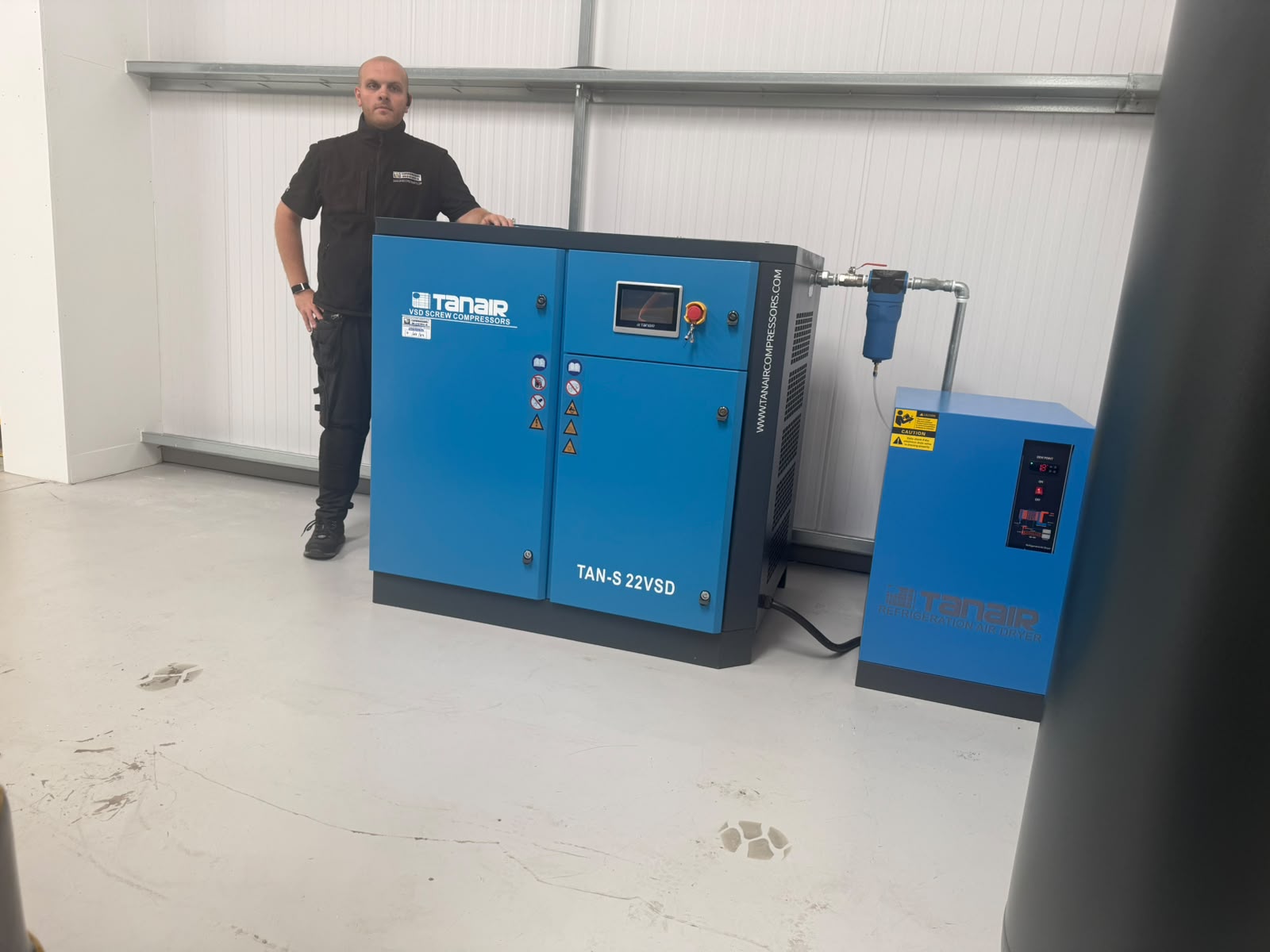
Hire Compressor Guidance Preparing Your Site for a Hire Compressor and Choosing the Right Hire Length Did you know that
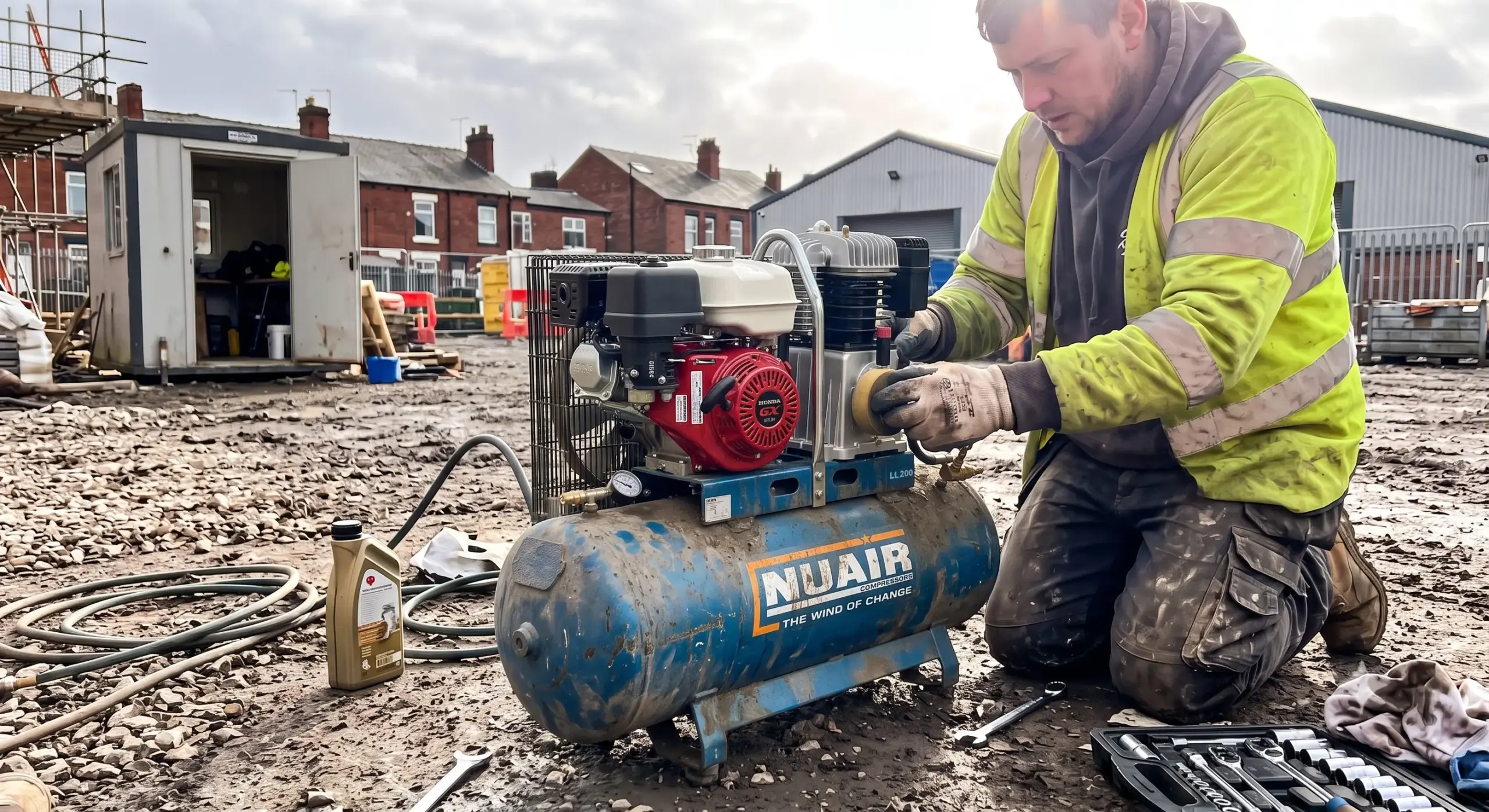
Portable Compressed Air Without Mains Power Petrol Compressors Guide for UK Sites & Workshops Petrol-powered compressors can provide practical compressed
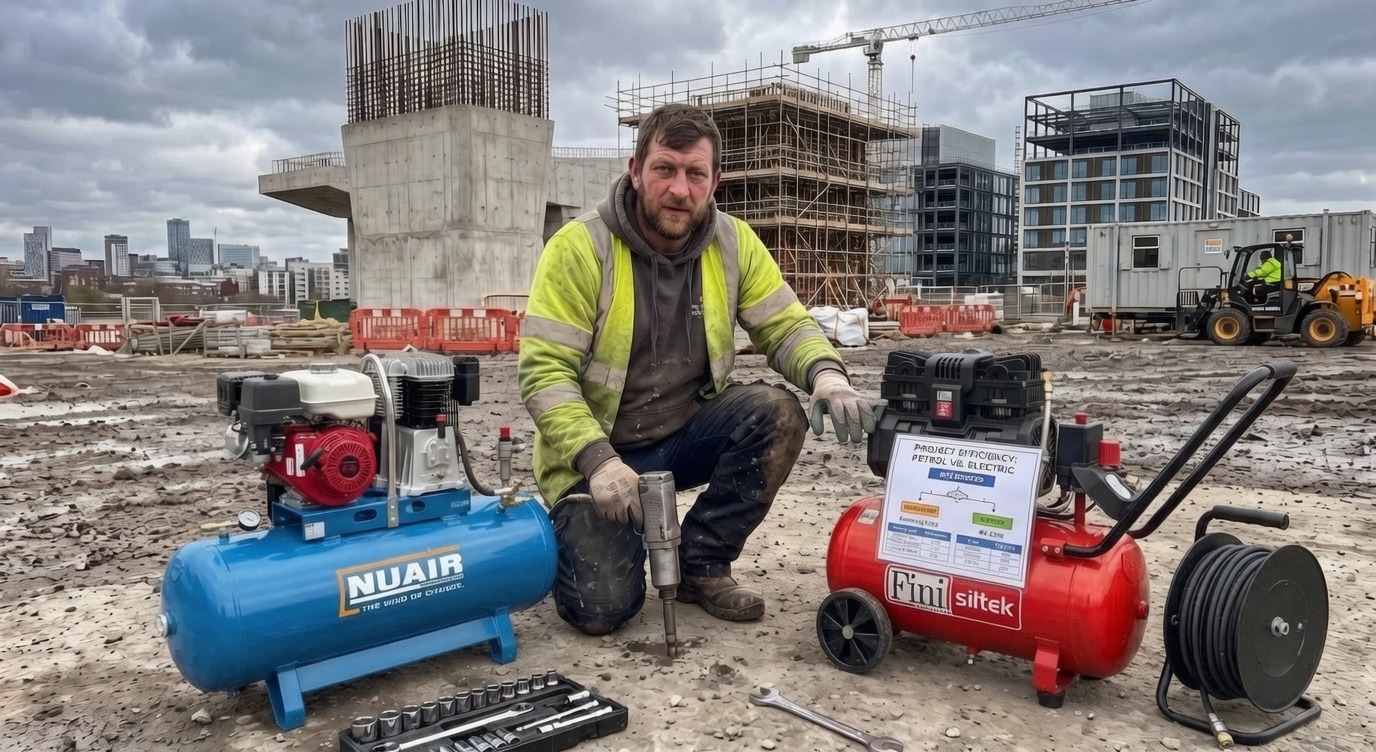
Portable Site vs Workshop Compressors Petrol vs Electric Air Compressors: Which Is Best? Petrol is often the practical choice when
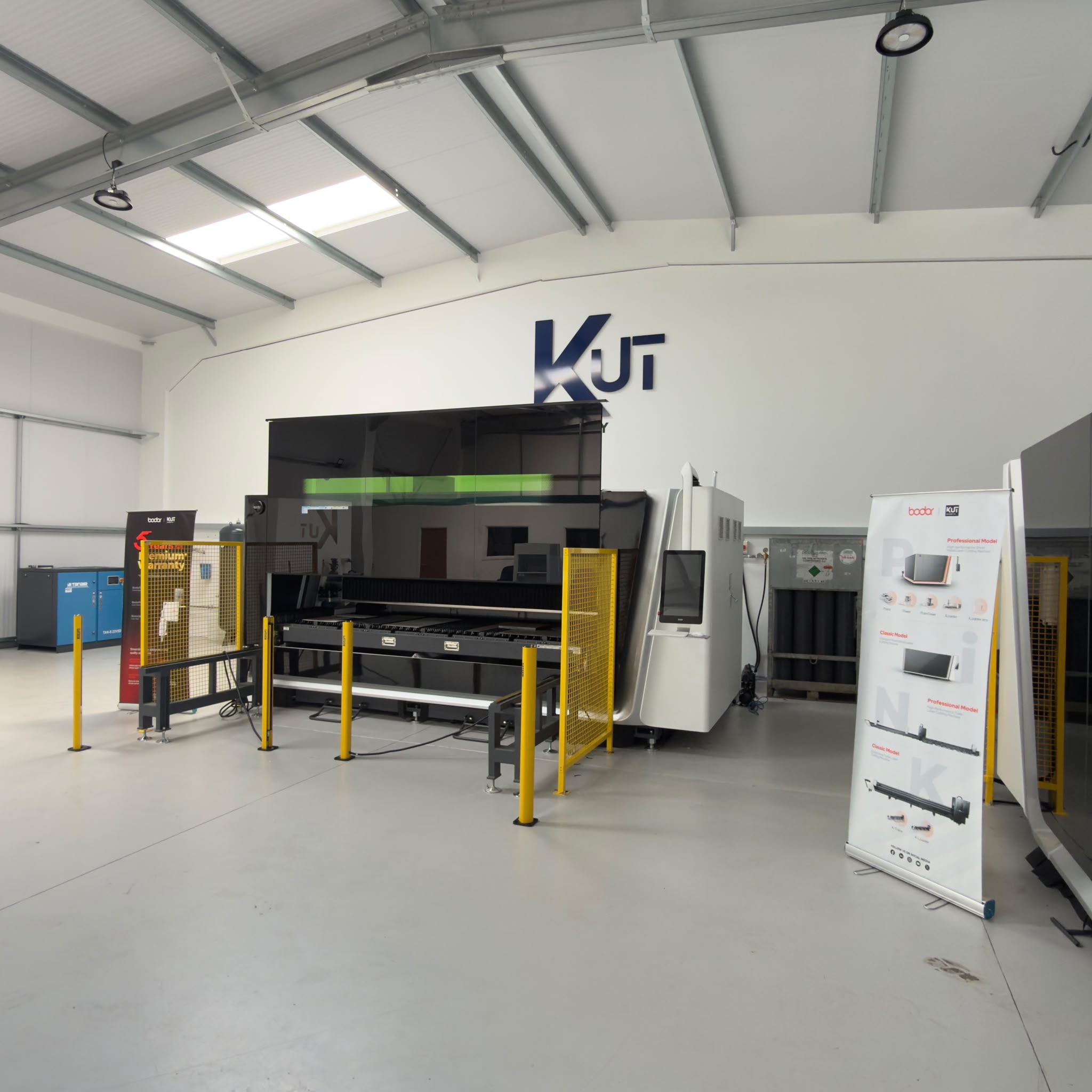
Compressed Air Storage for CNC & Manufacturing What Size Air Receiver Do I Need for a CNC Workshop? Receiver size
CNC & Manufacturing Compressor Selection Variable Speed vs Fixed Speed Compressors for CNC Equipment Fixed speed can be an excellent