

Comparative Analysis: Electric vs. Diesel Air Compressors
Electric and diesel compressors can both deliver dependable compressed air, but they solve different problems. The right choice depends on electrical availability, mobility, operating hours, ventilation, noise, fuel logistics and the actual CFM and pressure required at the job.
Mains ElectricDiesel / Off-GridIndoor vs OutdoorRunning CostMobilityCFM & Duty
Electric or Diesel: The Short Answer
Choose Electric When…
A suitable electrical supply is available and the compressor will mainly operate from a fixed workshop, factory or indoor plant area.
Choose Diesel When…
You need compressed air where suitable mains electricity is unavailable, impractical or too remote from the work area.
Neither fuel type determines CFM on its own. Compare actual compressor output and duty. A diesel compressor is not automatically more powerful than an electric compressor, and industrial electric screw compressors can supply very large air volumes.
Side-by-Side Comparison
| Factor | Electric | Diesel |
|---|---|---|
| Power source | Requires suitable electrical supply | Self-contained engine and fuel supply |
| Indoor use | Generally well suited when correctly installed | Exhaust emissions make indoor/enclosed operation unsuitable without an engineered solution |
| Mobility | Depends on available electrical connection | Strong option for remote/site duties |
| Noise | Often lower, especially enclosed screw compressors | Engine and exhaust add noise |
| Routine servicing | Compressor maintenance plus electrical system | Compressor maintenance plus engine, fuel and exhaust systems |
| Point-of-use emissions | No combustion exhaust from the compressor | Produces combustion exhaust gases |
| Typical best fit | Factory, workshop, fixed production | Construction, agriculture, mobile and off-grid work |
Existing Electric Compressor Recommendations — First 8 Preserved
The first product section on the live article contains eight electric compressors. Their existing product routes and article images are retained below.

Existing Electric Product
Tanair TAN-BM-1.5/415
7.6 CFM • 10 Bar • 415V • Basemount

Existing Electric Product
Tanair TAN-BM-1.5/230
7.6 CFM • 10 Bar • 230V • Basemount

Existing Electric Product
Power Systems NOBEL 5.510 (LGN)
25 CFM • 10 Bar • 5.5 kW • Floor Mounted

Existing Electric Product
Power Systems NOBEL 5.510-270 DF (LGN)
25 CFM • 10 Bar • 270L • Dryer & Filters

Existing Electric Product
Tanair TANB28B-BM-230
9 CFM • 230V • Electric Basemount

Existing Electric Product
Power Systems NOBEL 7.510 DF (LGN)
37 CFM • 10 Bar • Floor Mounted • Dryer & Filters

Existing Electric Product
Power Systems NOBEL 5.510-270 (LGN)
25 CFM • 10 Bar • 270L Receiver

Existing Electric Product
Power Systems NOBEL 7.510-270 (LGN)
37 CFM • 10 Bar • 270L Receiver
Benefits of Electric Air Compressors
No Engine ExhaustElectric drive avoids local combustion exhaust, making it much easier to use in enclosed industrial environments.
Lower Routine ComplexityNo diesel engine means no engine oil, fuel system or exhaust maintenance on top of the compressor itself.
Fixed-Site EfficiencyFor high-hour production with suitable power available, electric compression is usually the more practical long-term choice.
“Electric” does not automatically mean carbon-neutral. Overall environmental impact depends on electricity generation, compressor efficiency, demand, leakage and operating hours.
Limitations of Electric Compressors
The biggest limitation is infrastructure. High-output industrial machines may require a suitable three-phase electrical supply, correct protection, isolation and cabling. A remote construction site may simply not have that available.
Existing Diesel / Engine-Driven Recommendations — All 8 Preserved
The live article’s diesel section contains eight Nuair and Tanair engine-driven products. The two Nuair machines retain their actual article images; the older Tanair listings previously showed generic “image coming soon” artwork, so they use the existing Tanair diesel-range image instead.

Existing Diesel Product
Nuair NB7/270F/10DIESEL
33.3 CFM • 10 Bar • 270L • Diesel

Existing Diesel Product
Nuair NB7/500/F/10DIESEL
33.3 CFM • 10 Bar • 500L • Diesel

Existing Diesel Product
Tanair B38B-6-100.DSSES
15 CFM • Yanmar 6HP • 100L • Diesel
Existing Diesel Product
Tanair B38B-6-150.DSSES
15 CFM • Yanmar 6HP • 150L • Diesel
Existing Diesel Product
Tanair B38B-6-50.DSSES
15 CFM • Yanmar 6HP • 50L • Diesel
Existing Diesel Product
Tanair B60-10-200.DSSES
26 CFM • Yanmar 10HP • 200L • Diesel
Existing Diesel Product
Tanair B70-10-200.DSSES
41 CFM • Yanmar 10HP • 200L • Diesel
Existing Diesel Product
Tanair TANB38B-6-BM.DSSES
15 CFM • Yanmar 6HP • Basemount • Diesel
Benefits of Diesel Air Compressors
Off-Grid OperationNo external mains supply is required, making diesel useful for remote and temporary work.
Site MobilityEngine-driven units can be positioned closer to the job where electrical distribution would be difficult.
Professional Site DutyAvailable in configurations designed for construction, agricultural, service-vehicle and remote maintenance work.
Never operate an engine-driven compressor in an inadequately ventilated enclosed space. Diesel exhaust contains hazardous combustion products, including carbon monoxide.
Diesel Running Cost & Maintenance
Diesel systems add fuel consumption plus engine servicing to the normal compressor maintenance requirement. Actual cost depends on fuel price, load, engine efficiency, compressor design and operating hours, so a universal weekly saving figure is not credible without measured duty data.
Existing Electric Compressor Recommendations — Second 8 Preserved
The live article contains a further eight electric Tanair and Fini compressors after the diesel section. Those existing product recommendations and article images are retained as well.
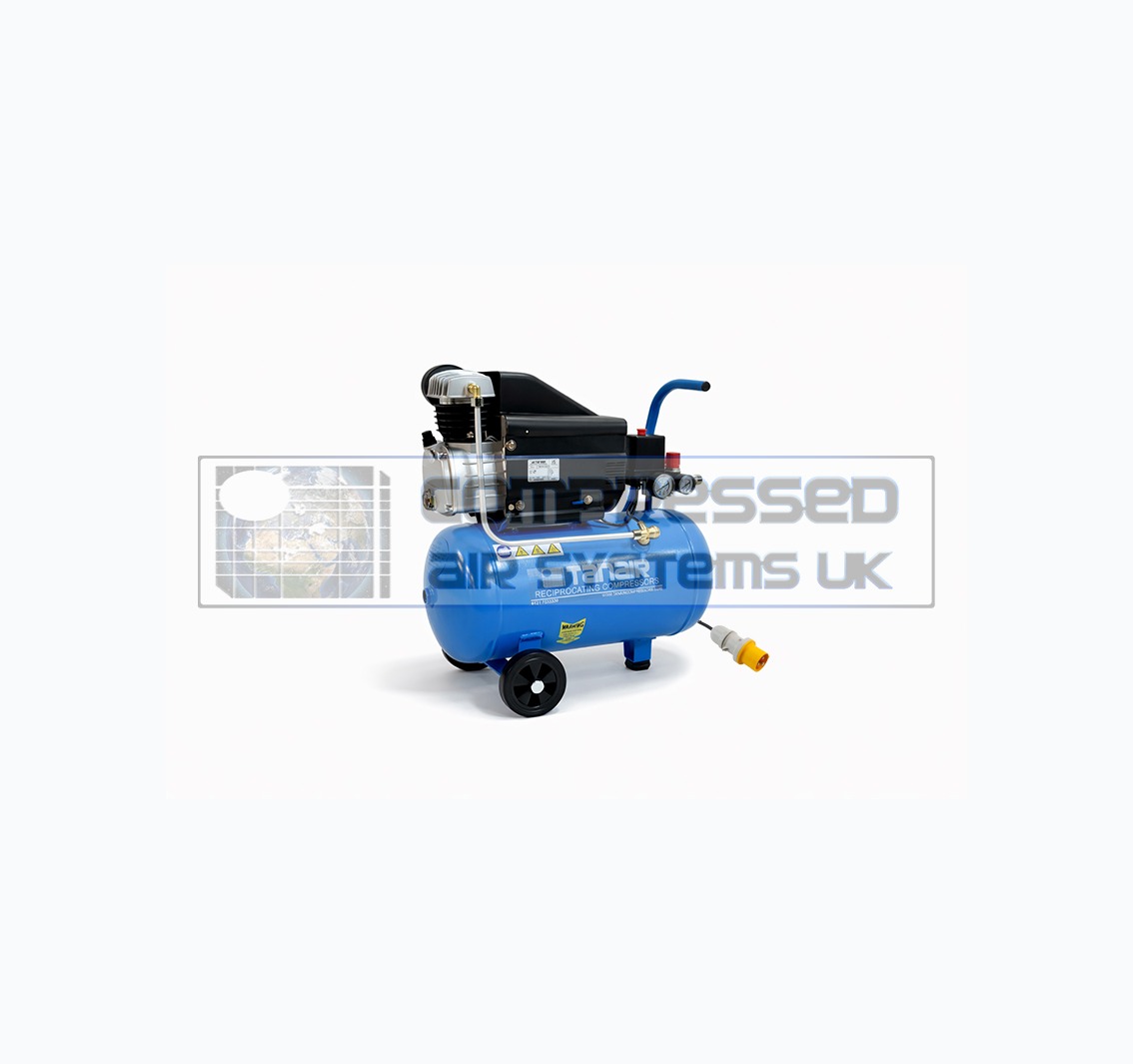
Existing Electric Product
Tanair TAN-PC 1.5/110/25L
6.7 CFM • 8 Bar • 25L • 110V

Existing Electric Product
Fini MICRO SE 2.208 M-200 ES
11.5 CFM • 230V • 200L • Dryer

Existing Electric Product
Fini PLUS 18.508 ES
99 CFM • 8 Bar • Floor Mounted • Dryer

Existing Electric Product
Fini CUBE 410-270 ES
16.2 CFM • 415V • 270L • Dryer

Existing Electric Product
Fini MICRO SE 2.208 M-200
11.5 CFM • 230V • 200L

Existing Electric Product
Fini VISION 808-270
44 CFM • 8 Bar • 270L

Existing Electric Product
Fini CUBE 410
16.2 CFM • 415V • Floor Mounted

Existing Electric Product
Fini PLUS 808-270
44.1 CFM • 8 Bar • 270L
Which One Performs Better?
Performance should be compared by delivered CFM, pressure and duty rather than by fuel type. Electric industrial screw compressors can deliver far more air than small diesel piston compressors; large engine-driven compressors can equally outperform small workshop electric models.
The correct question is: which compressor can deliver the required air at the location, for the required operating hours, at the best whole-life cost?
Indoor, Urban & Noise-Sensitive Sites
Electric machines are generally the logical choice where a suitable electrical supply exists, especially for workshops, manufacturing plants and other enclosed environments. Purpose-built silenced electric screw and piston compressors can also reduce noise compared with exposed engine-driven equipment.
Remote, Construction & Agricultural Work
Diesel becomes attractive when getting sufficient electrical power to the job would be difficult or temporary. Typical examples include construction, mobile maintenance, agriculture and remote infrastructure work.
Could Temporary Electric Power Be Better?
Sometimes. If a site already has generator capacity or temporary three-phase power, an electric compressor may still make sense. Equally, running an electric compressor from an undersized generator can create starting and reliability problems. Size the complete electrical arrangement rather than assuming a generator automatically solves the issue.
Useful Related Guides
Diesel Air Compressor GuideMore detail on off-grid and engine-driven compressor selection.Read Diesel Guide →
Tanair VSD CompressorsVariable-speed electric compressors for industrial sites with changing demand.View VSD Range →
Energy Saving AuditsMeasure real compressor demand before choosing or replacing industrial equipment.View Audits →
Electric vs Diesel Compressor FAQs
Are electric air compressors cheaper to run than diesel?
Often on fixed high-hour sites, but the answer depends on electricity tariffs, diesel price, compressor efficiency, loading and maintenance. Compare actual operating costs rather than using a universal saving figure.
Can a diesel air compressor be used indoors?
Engine exhaust creates a serious hazard in enclosed or inadequately ventilated areas. Diesel compressors should be sited and ventilated in accordance with the manufacturer and site risk assessment.
Are diesel compressors more powerful?
Not inherently. Both electric and diesel compressors are available across different airflow and pressure ranges. Compare the actual CFM, pressure and duty of the models.
Why choose diesel?
The strongest reason is independence from mains electricity. Diesel is particularly useful for remote, mobile and temporary site work.
Why choose electric?
Electric drive is normally a strong fit for fixed industrial sites because it avoids local combustion exhaust and does not require an engine fuel system.
Compressed Air Systems UK
For help comparing electric and diesel compressor options, call 0121 753 3330 or use the Contact Us page.
Offices, Trade Counter & Warehouse
Compressed Air Systems UK
Unit 15, Fortnum Close
Birmingham, B33 0LG
Electric or Diesel? Start With the Job, Not the Fuel
Tell us the required CFM, pressure, operating hours, site location and available power and we can help narrow down the most practical compressor type.